
Explainer: How many more? inside Kenya’s rising femicide crisis
2mon agoadminvideo
According to AMWIK, more than 70 per cent of femicide cases occur within private domestic spaces.


Audio By Vocalize
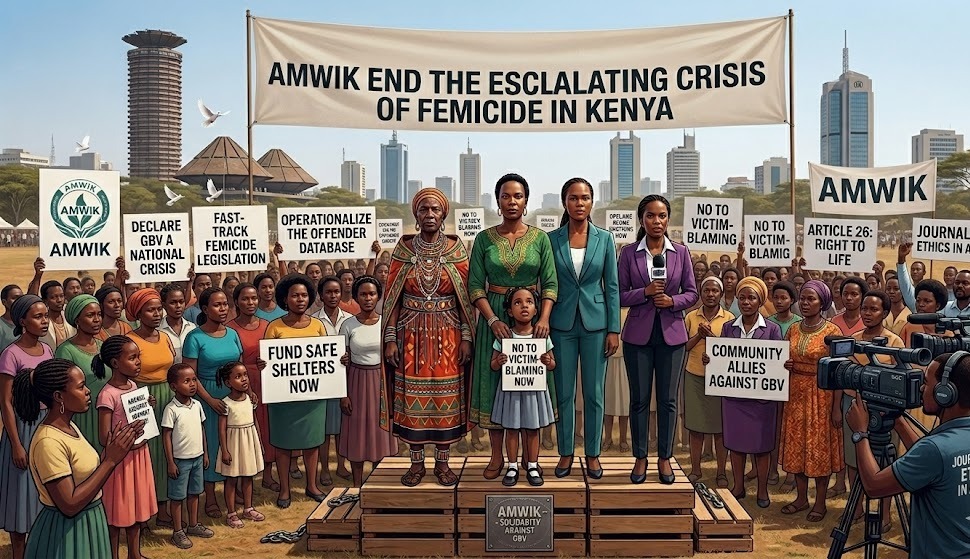
The Association of Media Women in Kenya has raised alarm over what it described as an escalating national crisis of gender-based violence and femicide, warning that women and girls across the country are increasingly being killed, assaulted and abused in spaces meant to guarantee safety.
The media women’s lobby said the country was no longer dealing with isolated domestic disputes but a widespread crisis in which women were being systematically targeted, often by people known to them, including intimate partners and family members.
In a statement issued on Thursday, the organisation accused the State of failing to adequately protect women and called for urgent legal, institutional and societal reforms to address the growing cases of femicide and gender-based violence.
“We are no longer dealing with isolated incidents of domestic disputes but a full-blown national security and public health crisis where women are systematically targeted simply for being women,” AMWIK said.
The organisation said the continued killings of women and girls across different counties had exposed deep failures in protection systems, criminal justice responses and public attitudes towards violence against women.
“Our mothers, sisters, daughters, children and colleagues are being murdered, assaulted, abused and silenced in their homes, in their communities and in spaces that should offer safety,” the statement added.
AMWIK said media reports continue to document multiple femicide cases every week, painting what it termed as a “terrifying picture” of the dangers many women face daily.
The organisation cited several recent killings, including that of a mother of two in Migori County whose body was allegedly being disposed of after her murder, a woman in Nakuru reportedly killed in front of her child and another woman found dead in Lang’ata.
According to AMWIK, more than 70 per cent of femicide cases occur within private domestic spaces, with most victims allegedly attacked by intimate partners, former partners or people they know.
The organisation said the killings continue to leave families devastated and children traumatised.
AMWIK further accused sections of the media of contributing to harmful narratives around gender-based violence through sensational reporting, victim-blaming and invasive coverage of victims’ private lives.
“We have watched with growing disappointment as sections of the media resort to sensationalism, victim-blaming and click-bait headlines when reporting on GBV,” the organisation said.
“Digging into a deceased woman’s private life, her past choices or what she wore to justify or rationalise her murder is a violation of journalistic ethics and a secondary assault on the victim’s dignity,” it added.
The organisation urged journalists, editors, bloggers and digital content creators to adopt gender-sensitive reporting practices and focus coverage on perpetrators and systemic failures rather than the conduct or lifestyle of victims.
AMWIK also demanded that the government formally declare gender-based violence and femicide a national crisis.
The organisation called on Parliament to fast-track legislation recognising femicide as a distinct criminal offence separate from homicide, arguing that such a move would strengthen prosecution and sentencing frameworks.
“We demand that the government immediately declare Gender-Based Violence and femicide a national crisis,” AMWIK said.
It also pushed for the establishment of a digitised national database for tracking serial offenders, increased funding for safe shelters, stronger forensic investigation capacity and provision of free psychosocial and legal support for survivors.
The organisation appealed to civil society groups, religious leaders, community elders and youth organisations to actively challenge cultural practices and attitudes that normalise violence against women.
AMWIK also called on men to take a leading role in confronting gender-based violence within homes and communities.
“We call upon Kenyan men, fathers, brothers, colleagues and neighbours to be allies in the protection of women’s lives. Speak out against GBV in your homes and communities,” the statement said.
The organisation further urged international development partners to sustain financial and technical support for GBV prevention programmes, warning that funding cuts could weaken interventions aimed at protecting women and survivors.
![[PHOTOS] The new Ngong –Naivasha Road viaduct](https://cdn.radioafrica.digital/image/2026/06/64d4f771-4432-4aee-ba3c-2f304c4436ec.jpg)





![[PHOTOS] 'Mr Speaker Sir' Gen Z protester in court](https://cdn.radioafrica.digital/image/2026/06/b3e62d8e-25c3-4780-90f9-4eb48b1ce8a7.jpg)