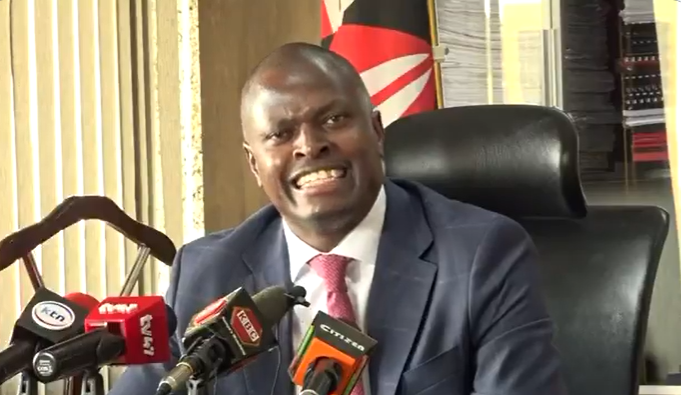
 Securitisation has become central to the debate over whether the government can afford to cut fuel taxes and levies to lower pump prices. /AI ILLUSTRATION
As Kenyans grapple with high fuel prices, one word has repeatedly surfaced in public debate: securitisation.
It is the term often cited by government officials and economists when explaining why reducing the fuel levy may not be as straightforward as some politicians suggest.
For many Kenyans, however, the concept remains largely unfamiliar.
At its simplest, securitisation is a way of turning future income into money that can be spent today.
Imagine a landlord who knows they will collect rent from tenants every month for the next 10 years. Instead of waiting to receive the rent gradually, the landlord approaches a financier and uses those future rental payments as security for a large lump-sum payment upfront.
The financier advances the money immediately and is then repaid gradually from the future rent collections. That, in essence, is securitisation.
Governments use the same principle when they need large amounts of money quickly and have reliable revenue streams expected to continue flowing into the future to pay off the debt.
In Kenya’s case, the revenue stream in question is the Road Maintenance Levy Fund (RMLF), popularly known as the fuel levy.
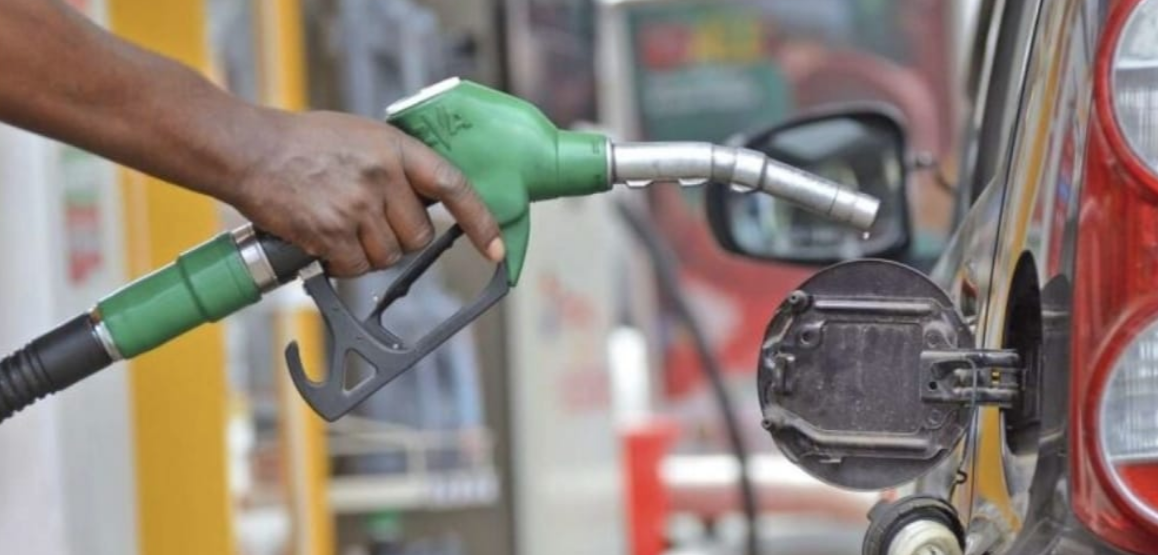
Every litre of petrol and diesel sold in Kenya attracts a Road Maintenance Levy currently set at Sh25.
The levy is collected by the Kenya Revenue Authority at the pump and channelled into the Road Maintenance Levy Fund, which is managed by the Kenya Roads Board.
Traditionally, the money has been used to maintain roads across the country through the Kenya National Highways Authority (KeNHA), Kenya Urban Roads Authority (KURA) and Kenya Rural Roads Authority (KeRRA) for activities such as pothole repairs, drainage maintenance, vegetation control and rehabilitation of damaged roads.
For years, the arrangement functioned as a pay-as-you-go model where motorists paid the levy through annual road license fee before the Road Maintenance Levy was introduced in 1993.
That changed as the licensing system faced enforcement challenges and proved inadequate for funding the rapidly expanding road network amid growing pressure from stalled infrastructure projects and mounting pending bills owed to contractors.
The new legislation shifted the fee collection burden directly to the fuel pump, initially set at Sh3 per liter, to create a more sustainable, usage-based revenue stream.
As years passed and Kenya's road network expanded rapidly, the government needed a substantial amount of money immediately but did not want to wait years for the fuel levy collections to accumulate.
The solution was securitisation. In April 2025, the government securitised part of the Road Maintenance Levy Fund by using Sh7 from the Sh25 levy as collateral to raise Sh175 billion through bonds.
Rather than waiting for years of future collections, the government received the money upfront and directed it towards clearing pending bills associated with stalled road projects.
A few months later, in November 2025, Cabinet approved securitisation of an additional Sh5 per litre from the levy to raise another Sh120 billion.
Combined, the two transactions committed Sh12 out of every Sh25 collected through the fuel levy to service the debt for 10 years from the issuance of each tranche.
In practical terms, nearly half of the fuel levy is now earmarked for servicing the debt raised through securitisation.
This means that for the next decade, road agencies will effectively have direct access to only Sh13 of the Sh25 levy for road maintenance activities.
It is this reality that has thrust securitisation into the centre of the current fuel-price debate.
Following the sharp increase in fuel prices announced by the Energy and Petroleum Regulatory Authority (EPRA) on May 14, transport operators staged a nationwide strike that paralysed movement in major towns and cities for two days.
Matatus, online taxi operators, cargo transporters and motorcycle riders withdrew services in protest after the price of Super Petrol rose by Sh16.65 per litre and Diesel by Sh46.29.
The demonstrations triggered renewed calls for government intervention to reduce fuel prices.
Among the proposals put forward by Kiharu MP Ndindi Nyoro and Siaya Governor James Orengo is a reduction of the fuel levy by Sh7 per litre back to the 2024 benchmark of Sh18.
The two leaders argue that the move, combined with other tax adjustments, could significantly reduce diesel prices and ease the cost of living.
On the surface, the proposal appears straightforward. If motorists pay less levy, fuel prices should fall. But critics argue the matter is far more complicated because of the commitments already attached to the levy.
Former Transport Principal Secretary Irungu Nyakera has emerged as one of the strongest voices cautioning against expectations of a major reduction.
“The problem is not the levy itself, but the fact that almost 50 per cent of it has already been securitised,” he said.
According to Nyakera, reducing the levy without addressing the securitisation agreements would significantly undermine road maintenance financing and potentially affect the government's ability to meet obligations attached to the bonds.
Reducing the remaining Sh13 available for maintenance by another Sh7 would leave only Sh6 per litre for upkeep of the country's roads.
That would create a new dilemma - cheaper fuel but deteriorating roads. The government has largely echoed the same concerns.
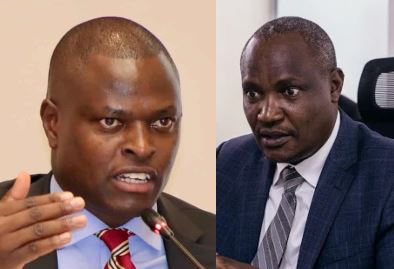
Deputy President Kithure Kindiki has defended retention of the levy, arguing that taxes collected from fuel are essential for maintaining road infrastructure and funding other public services.
Treasury CS John Mbadi has similarly maintained that the government cannot simply eliminate fuel-related taxes and levies without creating wider fiscal challenges.
At the same time, the government insists it has already spent billions subsidising fuel to cushion consumers from the impact of the Middle East conflict, which has disrupted global oil markets and pushed up shipping, insurance and logistics costs.
Supporters of securitisation point to its advantages. It allows governments to unlock large amounts of capital quickly, complete stalled projects, clear pending bills and stimulate economic activity without increasing taxes or borrowing more.
Critics, however, warn that the approach effectively commits future revenue before it is collected, reducing flexibility for future administrations and limiting policy options when economic conditions change.
Nyoro has been particularly vocal about the securitisation of fuel levies on social media platforms, saying the arrangement is tantamount to "auctioning the future of the country".
As Kenyans await the outcome of the talks between the government and transport stakeholders over soaring pump prices, all eyes are on Parliament as the relevant committees wait to engage the Kiharu MP over his proposal to reduce the fuel levy by Sh7.
For ordinary motorists, the debate ultimately boils down to a simple question: why can't the government just cut the fuel levy?
The answer is simple — it can't. The government has already spent tomorrow's fuel levy revenue today.
For the next decade, a significant share of what motorists pay at the pump will continue flowing not to road maintenance directly, but towards repaying the debt raised against those future collections.

![[PHOTOS] The new Ngong –Naivasha Road viaduct](https://cdn.radioafrica.digital/image/2026/06/64d4f771-4432-4aee-ba3c-2f304c4436ec.jpg)





![[PHOTOS] 'Mr Speaker Sir' Gen Z protester in court](https://cdn.radioafrica.digital/image/2026/06/b3e62d8e-25c3-4780-90f9-4eb48b1ce8a7.jpg)