The latest increase in fuel prices has once again pushed the Energy and Petroleum Regulatory Authority (EPRA) to the centre of public anger, with Kenyans questioning how the regulator arrives at the monthly pump prices that directly affect transport fares, food costs and the overall cost of living.
The sharp rise in diesel prices in particular has triggered protests, transport disruptions and renewed scrutiny of the government’s taxation policies, with matatu owners, truck operators and motorists accusing authorities of overburdening consumers.
Under the latest review which prompted the protests as announced by EPRA last week, super petrol in Nairobi retailed at Sh214.25 per litre, diesel at Sh242.92 and kerosene at Sh208.74.
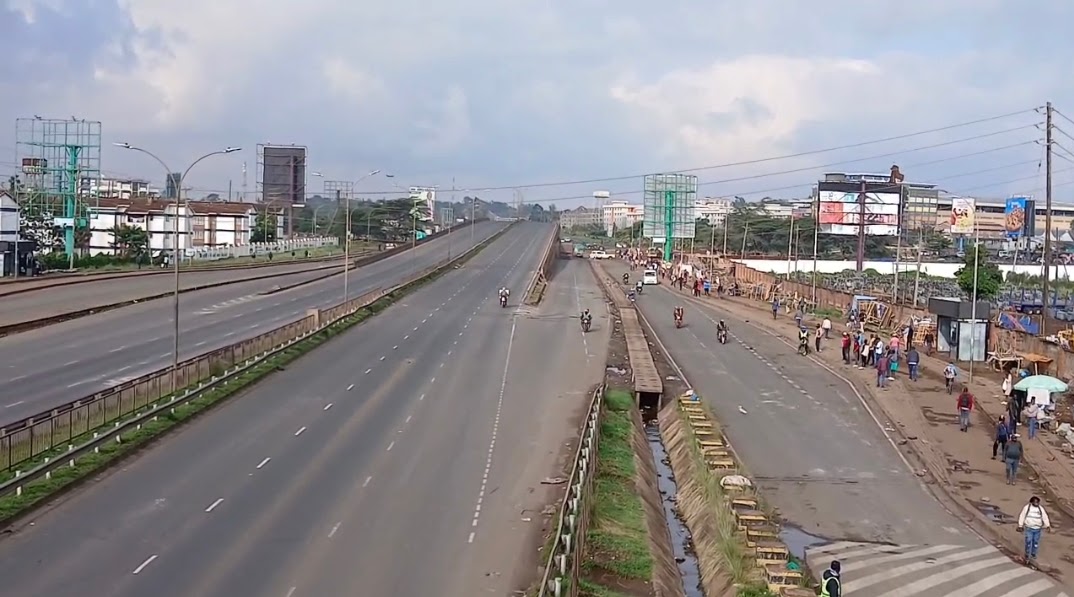
The increases sparked demonstrations in several towns and a transport strike that paralysed movement in parts of Nairobi, Mombasa, Kisumu and Nakuru as matatu operators protested the soaring cost of fuel.
While many Kenyans blame EPRA directly for the painful prices, the regulator insists the figures are arrived at through a strict formula provided for under the Petroleum Act and Energy Regulations.
At the heart of the pricing system is what EPRA calls the “landed cost”, the amount it takes to import fuel into the country through the Port of Mombasa.
The maximum retail price is calculated using the following formula: Pr = Pw + Ts + Mri + Mro + VAT.
Pr is the maximum retail price of petroleum products
Pw is the wholesale price
Ts is the cost of transporting fuel from a secondary depot to a fuel station
Mri is the retail investment margin (cost of setting up and investing in a fuel station)
Mro is the retail operating margin (running costs of the fuel station)
VAT is Value Added Tax
The landed cost includes the price of petroleum products in the international market, freight charges, marine insurance and exchange rate costs.
Because Kenya imports almost all its fuel, changes in global crude oil prices and fluctuations in the value of the shilling against the US dollar have a direct impact on local pump prices.
Once fuel arrives in Kenya, EPRA then factors in several local costs before arriving at the final retail price.
These include pipeline transportation charges, depot handling fees, storage costs, distribution expenses and marketers’ margins.
Taxes and levies are then added, forming one of the biggest components of the final price consumers pay at the pump.
Among the charges included in the formula are VAT, excise duty, the Road Maintenance Levy, Petroleum Development Levy, Railway Development Levy and Import Declaration Fees.
In simple terms, the retail price is the wholesale price plus transport costs, retail business costs, and taxes.
Analysts estimate that taxes and levies now account for nearly half of the final pump price in Kenya.
This has become one of the biggest sources of anger among motorists and transport operators, especially after comparisons emerged showing that some landlocked neighbouring countries were recording lower fuel prices than Kenya despite relying on Kenyan infrastructure for imports.
The latest price increases have particularly hit diesel consumers hard, with transporters warning that the cost will eventually be passed on to ordinary wananchi through higher fares and food prices.
Matatu Owners Association (MOA) chairman Albert Karakacha said matatu operators were struggling to survive under the current fuel prices.
“We have not agreed on anything. The strike is still on,” Karakacha said after a meeting between transport operators and government officials failed to reach a deal on reducing fuel costs.
He said diesel prices had become unsustainable for operators already dealing with rising spare parts costs, insurance charges and taxes.
Rig Owners Association chairman Cornelius Chepsoi on his part criticised EPRA of operating an opaque pricing system that leaves industry players and the public in the dark over how fuel prices are determined.
“The problem with EPRA is that it has become a black box. When you make the formula for setting fuel prices a black box, where nobody really understands how you arrive at these figures, it creates suspicion,” Chepsoi said.
He faulted the government for failing to make public details surrounding the government-to-government fuel importation deal, saying Kenyans deserve full disclosure on a matter that directly affects the economy.
“Nobody consults anyone on the landed price, and stakeholders are not involved. One of the things the government needs to do is make the G-to-G agreement a public document. What is secret about a national decision that the government took on behalf of its own people?” he posed.
“Let Kenyans see the agreement and decide for themselves whether the G-to-G arrangement is helping or not.”
Matatu operators demanded a reduction of at least Sh46 per litre on diesel, arguing that the latest EPRA review had pushed many operators to the brink.
However, after a meeting on Monday evening with the relevant stakeholders, the Energy Cabinet Secretary Opiyo Wandayi said the government intended to narrow the price gap between diesel and petrol in an effort to curb fuel adulteration and protect diesel-powered vehicles from possible mechanical damage.
“For prudence purposes and to eliminate the risk of fuel adulteration on account of this huge disparity,” Wandayi said, “we are going to bridge the gap between the prices of diesel and petrol.”
Under the latest adjustments issued by EPRA for the period May 19- June 14, the applicable pump price per litre in Nairobi for diesel decreased by Sh10.06 per litre and that of kerosene increases by Sh38.60 per litre.
The price for super petrol remained unchanged.
In Nairobi, commuters were left stranded for hours as many matatus stayed off the roads in protest.
Truck owners also warned that the diesel increases would trigger a ripple effect across the economy because almost all goods transported across the country depend on diesel-powered vehicles.
Long-distance transporters said the rising cost of fuel was making it difficult to operate profitably.
“This increase affects everything,” said a transporter at the Nairobi Inland Container Depot. “When fuel goes up, food prices go up, transport costs go up and eventually the ordinary mwananchi suffers.”
The Transport Sector Alliance, bringing together truck owners, motorists, matatu operators and boda boda associations, accused the government of failing to cushion Kenyans from global shocks.
The alliance even called for the disbandment of EPRA, claiming the regulator had become disconnected from the realities facing ordinary citizens.
The protests have also exposed growing frustration with the government’s fuel taxation policies.
Many Kenyans have questioned why neighbouring countries such as Uganda and Tanzania continue to record lower pump prices despite importing fuel through Kenya’s port and pipeline infrastructure.
President William Ruto recently defended the pricing structure, arguing that Kenya maintains a larger road network and requires higher revenues to sustain infrastructure projects.
He said some of the levies collected from fuel go toward road maintenance and development projects across the country.
Treasury Cabinet Secretary John Mbadi also defended the government, saying global oil prices and the weakening shilling had placed pressure on local fuel costs.
“The government is monitoring the situation closely,” Mbadi said during a media interview following the protests.
He maintained that Kenya was already cushioning consumers through stabilisation mechanisms and warned that prices could have been even higher without government interventions.
Mbadi said the next EPRA review would take into account movements in the global oil market and currency exchange rates.
Interior Cabinet Secretary Kipchumba Murkomen linked the demonstrations to criminal elements who infiltrated the protests and turned violent in some areas.
“We lost four Kenyans in today’s violence,” Murkomen said during a press briefing after protests escalated in parts of Nairobi and other towns.
He warned against destruction of property and said security agencies would deal firmly with those engaging in violence during demonstrations.
Even as the government defends the current pricing structure, pressure continues mounting on EPRA to explain the formula more transparently to the public.
Economists argue that while global oil prices play a role, Kenya’s heavy tax regime remains the biggest reason local pump prices remain among the highest in the region.
Energy analysts say the situation has become politically sensitive because fuel prices now affect nearly every aspect of the economy.
Diesel powers public transport vehicles, trucks, generators, factories and agricultural machinery, meaning any increase immediately pushes up the cost of goods and services.
For many Kenyans, however, the technical explanations behind EPRA’s formula matter less than the daily reality of surviving in an increasingly expensive economy.
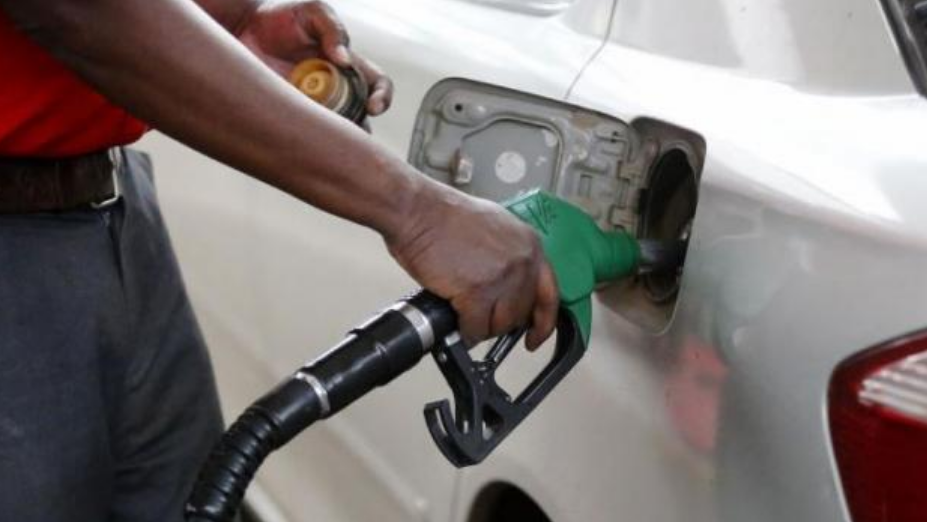
At petrol stations across Nairobi, motorists expressed frustration over the monthly price reviews, saying every increase stretches household budgets further.
“We are suffering,” said a taxi driver in the city centre adding every month prices go up but our income remains the same.






![[PHOTOS] The new Ngong –Naivasha Road viaduct](https://cdn.radioafrica.digital/image/2026/06/64d4f771-4432-4aee-ba3c-2f304c4436ec.jpg)








![[PHOTOS] 'Mr Speaker Sir' Gen Z protester in court](https://cdn.radioafrica.digital/image/2026/06/b3e62d8e-25c3-4780-90f9-4eb48b1ce8a7.jpg)