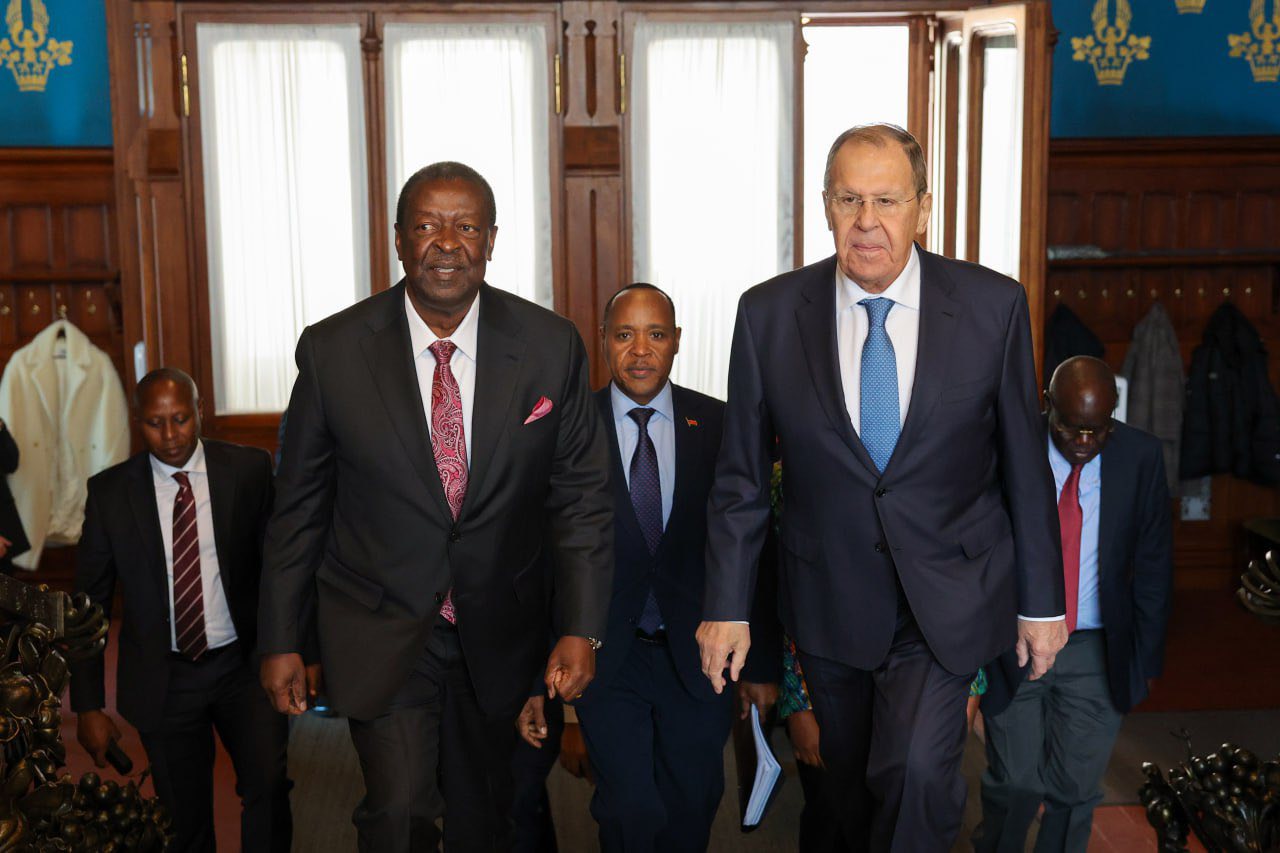
 Prime Cabinet Secretary Musalia Mudavadi with Russian
Foreign Minister Sergey Lavrov/HANDOUT
Prime Cabinet Secretary Musalia Mudavadi with Russian
Foreign Minister Sergey Lavrov/HANDOUTKenyan authorities are facing mounting pressure to dismantle
recruitment networks accused of luring young men into Russia’s war against
Ukraine through false promises of jobs, money and migration opportunities.
A new international investigation has identified Kenya as
one of the African countries most affected by the expanding recruitment drive
feeding foreign fighters into Russian military ranks.
The report, produced by the International Federation for
Human Rights (FIDH), Truth Hounds and the Kazakhstan International Bureau for
Human Rights and Rule of Law, says Russia’s foreign fighter programme
increasingly targets economically vulnerable populations across Africa,
including in Kenya.
Researchers estimate that between 1,700 and 4,000 Africans
have joined Russian forces since the beginning of Moscow’s full-scale invasion
of Ukraine in 2022.
Kenyan recruits are believed to form part of that growing
number.
The report describes a sophisticated transnational system
involving online recruiters, intermediaries, migration facilitators and alleged
links to Russian state structures.
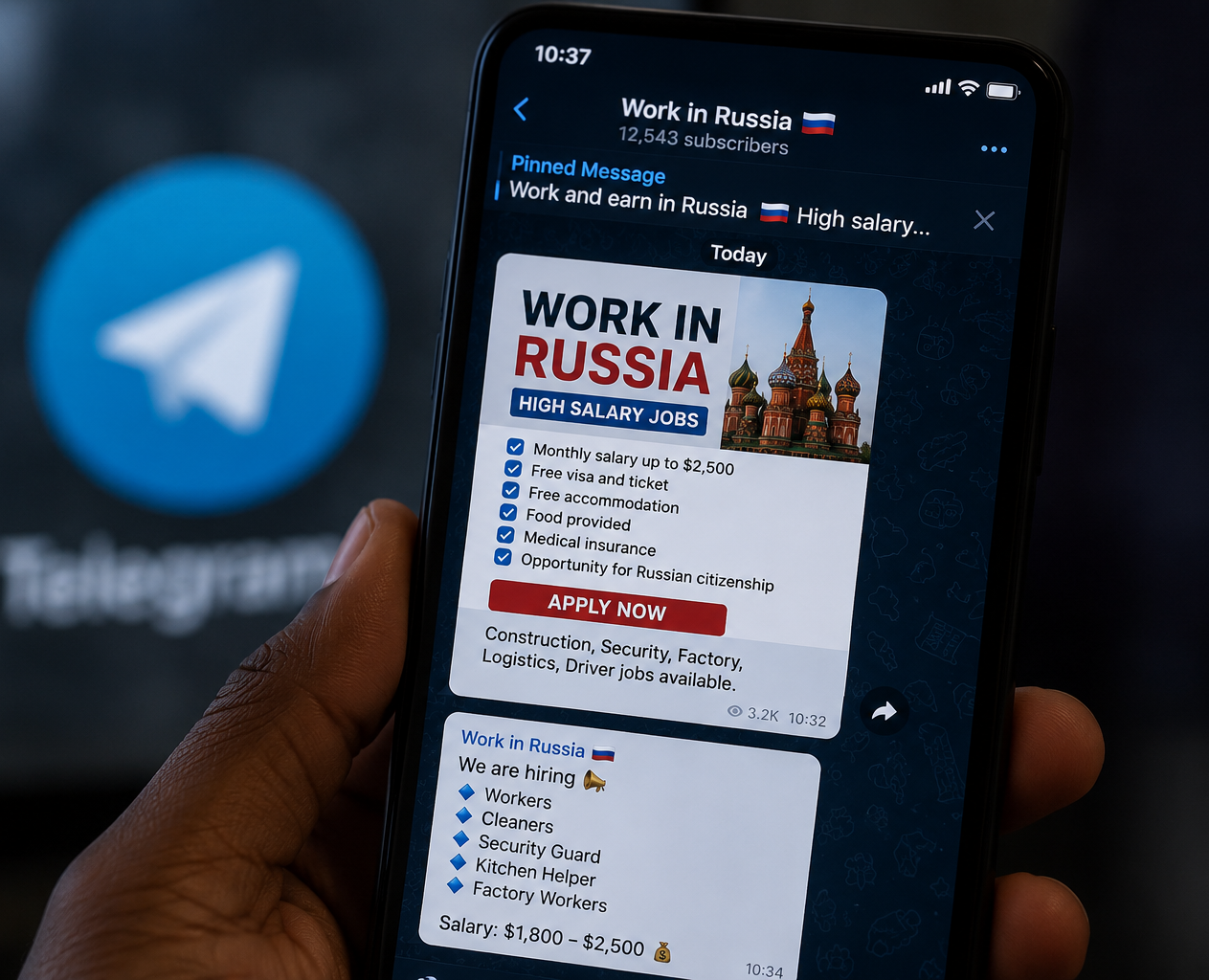
For many Kenyans, recruitment reportedly begins online.
Advertisements circulated on Telegram, Facebook and
messaging platforms often promise lucrative jobs in Russia, security work,
logistics opportunities or pathways to Europe.
In some cases, recruiters allegedly presented the jobs as
civilian positions unrelated to combat.
But investigators say many recruits later discovered they
had been enlisted into the Russian military.
“In many cases, individuals complained of having been
deceived, initially offered civilian employment, educational opportunities, or
non-combat roles, only to later find themselves enlisted into the Russian
military,” the report states.
The report says Russia’s recruitment campaign accelerated
sharply after heavy battlefield losses in Ukraine and resistance to domestic
mobilisation inside Russia.
Instead of relying solely on Russian citizens, Moscow
allegedly expanded recruitment into poorer regions of Africa, Asia and Latin
America.
The report claims Russia institutionalised the system
through legal changes that relaxed recruitment requirements for foreigners,
introduced citizenship incentives and expanded financial rewards.
Russian Foreign Minister Sergey Lavrov has previously denied
allegations that foreign nationals from Kenya and other African countries are
being forcibly recruited to fight in the Russia-Ukraine war
“Russia is not forcing anyone to enlist. Just as in the case
of participation in the special military operation, volunteers join this
operation in full compliance with Russian law,” Lavrov said.
According to Ukrainian authorities cited in the report, more
than 27,000 foreign nationals from over 130 countries have joined pro-Russian
forces since February 2022.
The number continues to rise.
Researchers say the growing use of Africans reflects what
they describe as the “weaponisation of poverty.”
“By 2024, the recruitment of African nationals seeking to
escape extreme poverty had likewise become a significant pillar of Russia’s
recruitment strategy,” the report notes.
Many recruits were allegedly attracted by salaries far above
what they could earn at home.
Monthly payments reportedly ranged from the equivalent of
€2,000 to €3,500, alongside substantial signing bonuses and promises of Russian
citizenship.
Yet the reality on the battlefield was often deadly.
The report says many foreign recruits received only brief
military training before being deployed to dangerous assault missions on the
frontlines in Ukraine.
According to Ukrainian estimates referenced in the report,
at least 3,388 foreign fighters have died in combat.
Some reportedly died within months of deployment.
The investigation also highlights cases involving coercion
and abuse.
Researchers documented reports of migrants inside Russia
being threatened with detention, deportation or prosecution unless they signed
military contracts.
Others allegedly had passports confiscated or were
physically assaulted.
Foreign recruits interviewed by investigators said contracts
were often presented entirely in Russian without interpretation.
Many claimed they were never fully informed they would be
deployed into combat.
“Of the 16 prisoners of war interviewed for this report, 13
stated that they had been told they would not be required to fight,” the report
says.
Kenya’s response has drawn particular attention from
researchers.
Unlike some countries that have struggled to react, Kenya
has launched investigations into recruiters and attempted to disrupt
trafficking routes.
The report says Kenyan authorities have combined diplomatic
engagement, criminal prosecutions and travel restrictions in an effort to stem
the flow of recruits.
“Kenya has mounted the most sustained institutional response
among the states examined,” the report states, although it adds that
recruitment “appears to have continued through modified routes.”
The report argues that Kenya’s challenge reflects a broader
global problem in which existing international laws have failed to keep pace
with modern forms of mercenary recruitment and trafficking.
Researchers say many recruits do not fit traditional
definitions of mercenaries because they were allegedly deceived, coerced or
economically exploited.
The report concludes that some cases may amount to human
trafficking and forced labour under international law.
It accuses Russia of operating a recruitment system that
exploits vulnerable populations while failing to investigate or prevent abusive
recruitment networks operating for its benefit.
“At the state level, the report concludes that the
recruitment practices documented here support a prima facie finding that Russia
bears responsibility for the operation of a global human trafficking scheme
targeting vulnerable individuals through coercion or deception,” the report
says.
Researchers are now urging Kenya and other African states to
intensify prosecution of recruiters, strengthen labour migration oversight and
improve public awareness campaigns warning citizens about deceptive overseas
job offers.
The report also calls on governments to support families of
missing recruits and seek repatriation of nationals trapped in the conflict,
including prisoners of war.
Following a meeting between Lavrov and Prime Cabinet
Secretary Musalia Mudavadi, Kenya and Russia agreed to stop the recruitment of
Kenyans to fight against Ukraine.
“I want to make it clear that we have agreed that Kenyans
will no longer be enlisted for special operations through the Ministry of
Defence,” Mudavadi said, adding that future engagement would be conducted
through official diplomatic channels in line with international law.
He noted that Kenya and Russia share a relationship spanning
more than six decades, saying the decision reflects efforts to protect and
strengthen that partnership.
According to the Prime CS, both countries also agreed to
explore the signing of a labour cooperation framework aimed at preventing
exploitation and improving oversight of Kenyans working in Russia.
![[PHOTOS] The new Ngong –Naivasha Road viaduct](https://cdn.radioafrica.digital/image/2026/06/64d4f771-4432-4aee-ba3c-2f304c4436ec.jpg)




![[PHOTOS] 'Mr Speaker Sir' Gen Z protester in court](https://cdn.radioafrica.digital/image/2026/06/b3e62d8e-25c3-4780-90f9-4eb48b1ce8a7.jpg)