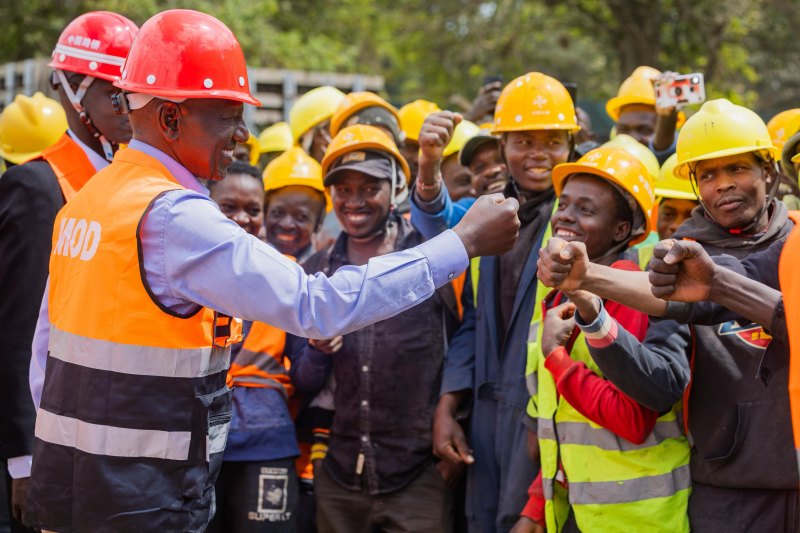
President William Ruto and ODM leader Oburu Oginga have
launched efforts to reconcile feuding leaders within their political camps in a
strategic move aimed at consolidating support bases ahead of the 2027 polls.
The move comes amid growing internal wrangles among leaders
allied to both ODM and UDA in various regions.
The development raised fears that continued divisions could
weaken the broad-based political arrangement forged between the two parties.
Insiders say the disputes, largely fuelled by political
ambitions, succession battles, and ideological differences, have threatened to
destabilise the coalition’s influence in key regions across the
country.
To contain the fallout, ODM and UDA have formed a joint
reconciliation team tasked with bringing together rival leaders and cooling
political tensions ahead of the campaigns.
National Assembly Minority Leader and ODM’s director of campaigns
and elections, Junet Mohamed, confirmed the initiative.
The Suna East MP said the two parties had recognised the
danger posed by internal conflicts and agreed to intervene early.
“We noted the problem and decided to form a team as ODM and
UDA to resolve these issues. So far, the efforts have worked,” Junet said.
One of the first major political rivalries targeted Mombasa Governor Abdulswamad Nassir and UDA
secretary general Hassan Omar.
The two leaders have been locked in a bitter political
rivalry since the 2022 elections, with Omar openly criticising Nassir’s
administration in Mombasa as he positions himself for a gubernatorial
contest in 2027.
“You can see, Omar has toned down.
He is no longer fighting the governor the way he used to. We are talking and
resolving these issues as we head to the election,” Junet said.
The public clashes between the two had threatened to split
supporters in the Coast region and complicate President Ruto’s efforts to
strengthen ties with ODM in the area.
Political leaders allied to ODM had previously accused Omar
of undermining the fragile cooperation between the two parties.
Last month, Homa Bay Town MP Peter Kaluma accused the UDA
secretary general of fuelling divisions within the broad-based alliance.
“Hassan Omar is a political novice and an agent of division
and confusion and his continuing as secretary general of UDA will destabilise the
party’s relationship with ODM and risk the landslide win by the broad-based coalition in 2027,” Kaluma said.
However, signs of reduced hostilities emerged late last month when the
two rivals appeared together during a high-profile Coast leaders’ meeting that
brought together senior political figures from the region.
The meeting was attended by Mining Cabinet Secretary Hassan
Joho, Senate Speaker Amason Kingi, Sports Cabinet Secretary Salim Mvurya,
Kilifi Governor Gideon Mung'aro, Nassir and Omar.
Political observers interpreted the meeting as a deliberate
attempt to project unity among Coast leaders aligned to the broad-based
government.
In Western Kenya, ODM leaders have also intensified efforts
to restore calm within the party following months of political hostility among
senior leaders, especially in Kakamega county.
On Monday, Oburu chaired a reconciliation meeting at
Kakamega Golf Club that brought together Cooperatives Cabinet Secretary
Wycliffe Oparanya, Kakamega Governor Fernandes Barasa and Kakamega Woman
Representative Elsie Muhanda.
The meeting, dubbed “Unity for the Party”, also attracted
several ODM lawmakers from the county and senior party officials,
including deputy party leader Simba Arati.
The gathering was aimed at ending more than a year of
political rivalry between Barasa and Oparanya camps, which had increasingly
exposed divisions within ODM’s Western stronghold.
Junet said the party leadership had successfully managed to
bring the rival factions together.
“We brought them together and managed to reconcile them.
Their differences are now over and they are forging ODM unity in Kakamega,” he
said.
In a statement released after the meeting, ODM said the
talks were aimed at strengthening the party and preserving Kakamega as one of
its key bastions.
“The meeting was aimed at solidifying the party in Kakamega county and cementing its base as a stronghold of the ODM party,” the statement
said.
The fallout between Oparanya and Barasa became more visible
during the recent Linda Jamii grassroots mobilisation drives in Kakamega, where
the two leaders organised separate meetings in different locations despite both
events being attended by ODM leaders.
Oparanya, who enjoys the backing of a majority of MPs
from Kakamega, hosted his meeting in Butere, where speakers openly criticised Barasa’s leadership and political style.
At the same time, Barasa convened a parallel gathering at
Kakamega Golf Club attended by Oburu and several county leaders.
The divisions within Kakamega ODM politics have also drawn
in Lugari MP Nabii Nabwera, whose political differences with Barasa stem from
disputed county party elections.
Nabwera protested the outcome of the ODM Kakamega county
elections, claiming the process had been manipulated in favour of Barasa, who
was eventually declared county chairman.
The MP later aligned himself with Oparanya during the Linda
Jamii campaigns and urged the party leadership to recognise him as the
legitimate county chairman.
Sources within ODM say similar reconciliation efforts are
now underway in several counties where tensions among party leaders continue to
simmer.
Junet revealed that the reconciliation team is also focusing
on Homa Bay where Governor Gladys Wanga and Treasury Cabinet Secretary
John Mbadi are said to have strained political relations.
According to insiders, the ODM-UDA committee has already
started engaging leaders in Homa Bay, Kisumu, Siaya and Nairobi in a bid to
avert further fallout ahead of the elections.
INSTANT ANALYSIS
President William Ruto and ODM leader Oburu Oginga have
launched joint efforts to reconcile feuding ODM and UDA leaders ahead of the
2027 elections. The move targets growing rivalries in Coast, Western and Nyanza
regions involving leaders such as Hassan Omar, Abdulswamad Nassir, Wycliffe
Oparanya and Fernandes Barasa. The reconciliation drive signals an attempt to
strengthen the ODM-UDA alliance, contain internal divisions and consolidate
regional political support bases before campaigns intensify.

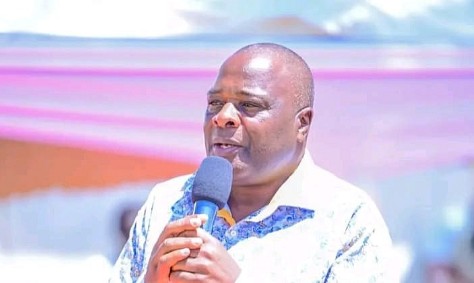
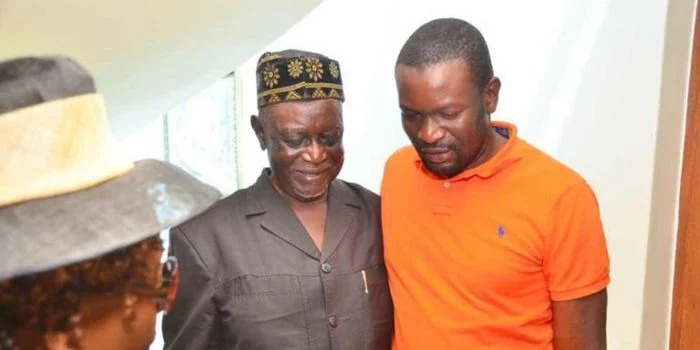
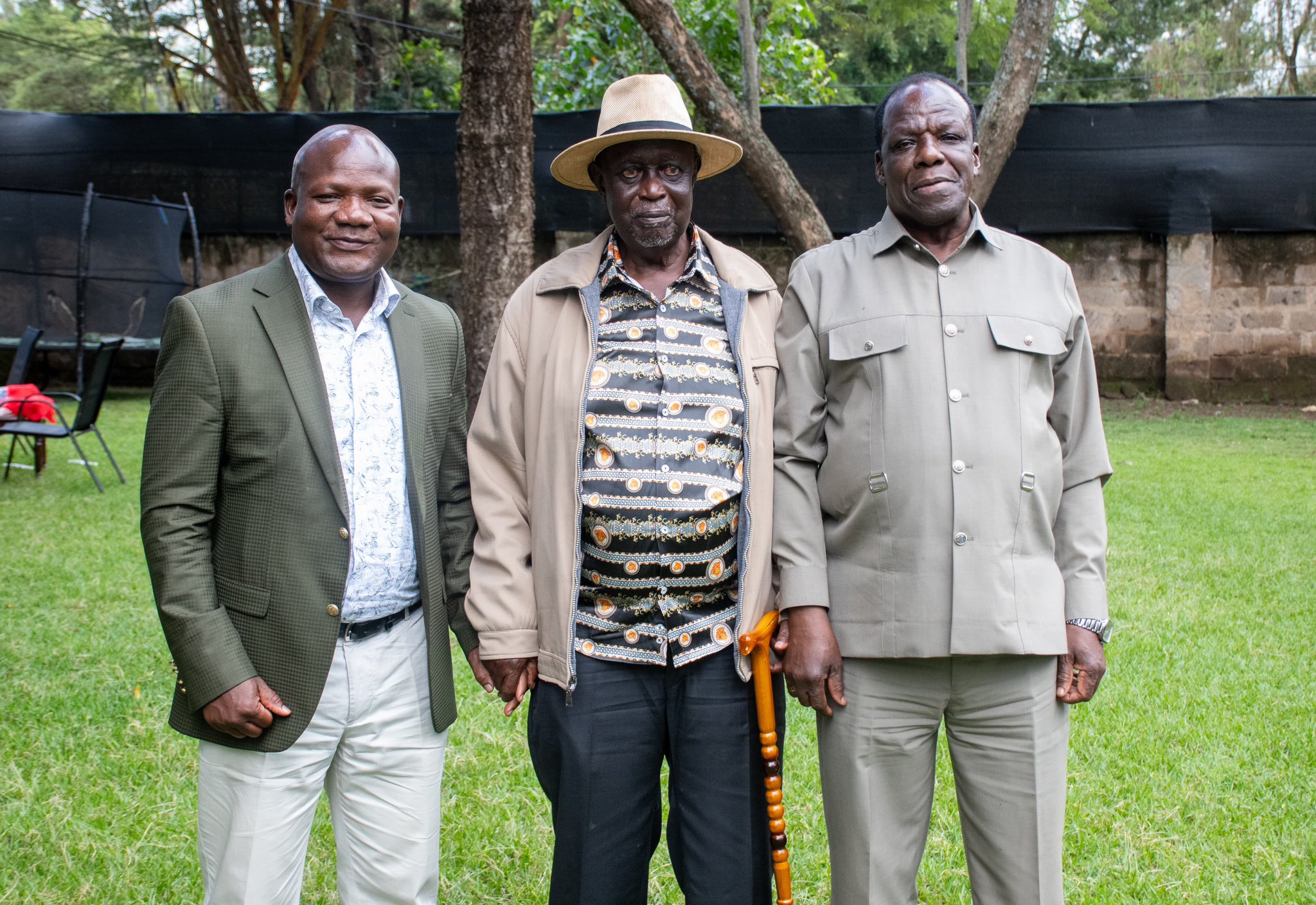 ODM
party leader Oburu Odinga with Cooperatives and MSMEs CS Wycliffe Oparanya and
Kakamega Governor Fernandes Barasa during a meeting on May 11, 2026, in
Nairobi/HANDOUT
ODM
party leader Oburu Odinga with Cooperatives and MSMEs CS Wycliffe Oparanya and
Kakamega Governor Fernandes Barasa during a meeting on May 11, 2026, in
Nairobi/HANDOUT


![[PHOTOS] The new Ngong –Naivasha Road viaduct](https://cdn.radioafrica.digital/image/2026/06/64d4f771-4432-4aee-ba3c-2f304c4436ec.jpg)

![[PHOTOS] 'Mr Speaker Sir' Gen Z protester in court](https://cdn.radioafrica.digital/image/2026/06/b3e62d8e-25c3-4780-90f9-4eb48b1ce8a7.jpg)