Regional climate and disaster experts have raised concerns over inadequate
climate financing reaching vulnerable communities, warning that the gap is
undermining efforts to mitigate the growing impact of climate-related disasters
across the Horn of Africa.
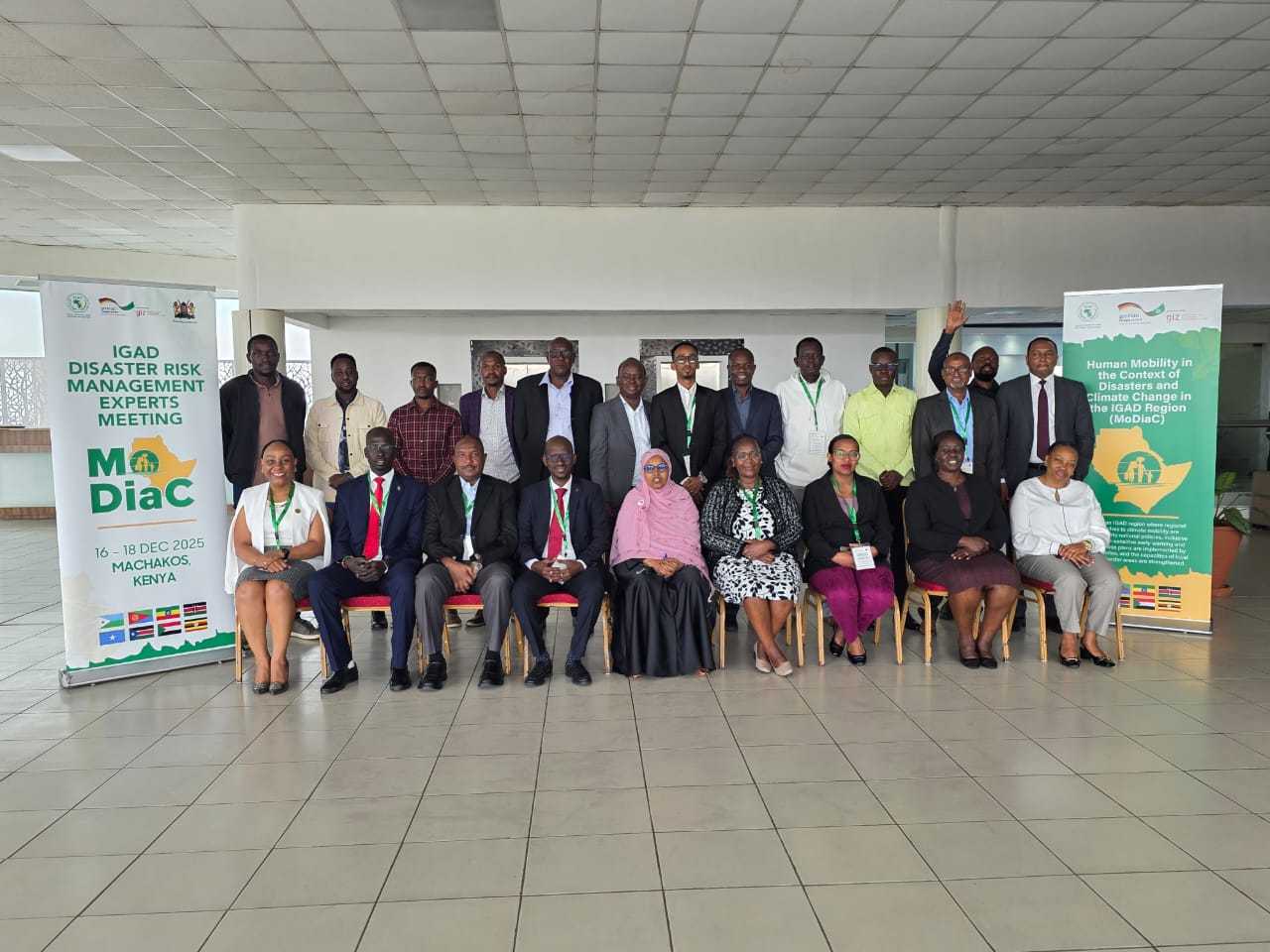
Speaking during the opening of the IGAD Disaster Risk Management Experts
Meeting dubbed Mobility in the Context of Disaster and Climate Change in
the IGAD Region (MoDiac), senior officials from the Intergovernmental
Authority on Development (IGAD) said current global and regional responses
remain insufficient in the face of worsening climate shocks.
Dr Ahmed Amdihun, Head of the Disaster Risk Management Unit at ICPAC, said
only a small fraction of climate funding is reaching communities most affected
by climate change.
“The funding has never been enough. If I start globally, what has been
invested in climate and climate action is very much less than what is coming to
the communities,” he said.
“The rough estimate is about 10 to 15 per cent of the climate fund is
reaching communities that really need them.”
Dr Amdihun stressed the need to move beyond issuing warnings to implementing
practical measures that protect lives and livelihoods.
“It's time that we translate the warnings issued from our centre, also from
national meteorological services, into early action,” he said.
He noted that IGAD, working through ICPAC, is co-developing an anticipatory
action roadmap with member states to ensure early warning information leads to
timely response.
“We want to make sure that our early warnings are translated into early
actions,” he added.
He said the MoDiac meeting was convened as part of IGAD’s broader efforts to
work closely with member states to confront disasters such as droughts and
floods.
“This particular workshop is convened as part of IGAD efforts to work with
member states and address the disaster, drought and floods head on,” Dr Amdihun
said.
Dr Victoria Anib, Head of Social Development at the IGAD Secretariat, warned
that climate change is increasingly driving human mobility across the region,
compounding existing humanitarian challenges.
She cited rising temperatures, landslides in Sudan and Kenya, and flooding
in South Sudan and other parts of the region as major drivers of displacement.
“This is causing a lot of disruption in livelihoods and causing a lot of mobility,” she said.
Anib said IGAD has designed a regional project to address mobility linked to disasters and climate change by strengthening institutional capacity and supporting member states.
“The IGAD secretariat has designed this project on mobility in the context
of disaster and climate change to address the challenges in a way that looks
into the institutional capacity of the IGAD secretariat as well as supporting
member states to build capacity,” she said.
She noted that climate change has become a key factor pushing people to
cross borders, alongside conflict.
“Nowadays, people are not only moving because of conflict. Climate is one of
the reasons that make people move across borders,” she said.
Dr Anib stressed the importance of ensuring safe and dignified movement for
climate-affected populations.
“For them to have a safe and dignified way of moving, we need to provide
necessary support for those moving due to climate, not only those moving from
conflict.”
She added that ongoing conflicts in countries such as South Sudan, Somalia
and Sudan are being intensified by climate shocks.
“Unfortunately, people move because of conflict, and this conflict is
compounded by climate change, so it becomes a double burden,” Anib said.
The experts said strengthening early action, improving access to climate
finance at community level and integrating climate-induced mobility into
national plans are critical steps if the region is to withstand escalating
climate risks.