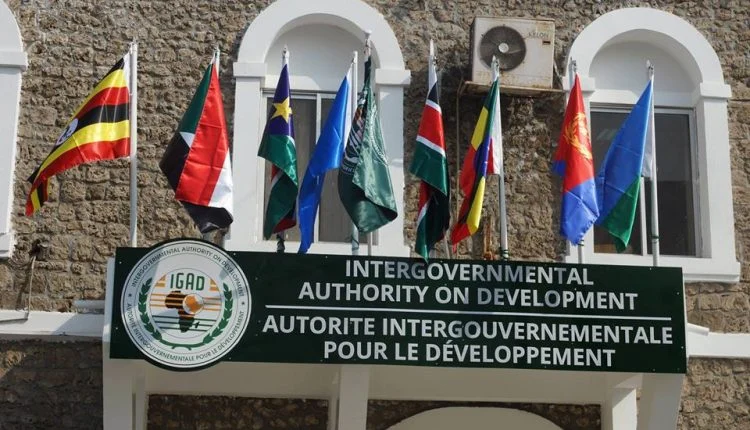
The Intergovernmental Authority on Development (IGAD) has expressed regret over Eritrea’s decision to withdraw from the regional bloc, following a formal notice from the Eritrean government to the IGAD Secretariat.
IGAD recalled that Eritrea had previously self-suspended its participation in the organisation for nearly two decades before formally rejoining during the 14th Ordinary Summit of Heads of State and Government held in June 2023.
At that summit, Eritrea was warmly welcomed back by all member states, reflecting a shared commitment to regional solidarity, inclusivity, and cooperation.
“Since June 2023, Eritrea has not participated in IGAD meetings, programmes, or activities,” the Secretariat claimed in a statement.
"Throughout this period, IGAD has exercised patience and goodwill, remaining open and available for constructive engagement.”
IGAD expressed disappointment that Eritrea’s decision to withdraw came without tangible proposals or dialogue on institutional or policy reforms, noting that the organisation has consistently maintained open channels for consultation.
The Secretariat affirmed its ongoing commitment to reach out to Eritrea and encouraged the country to reconsider its position to advance shared regional objectives for stability and development.
Eritrea officially communicated its withdrawal on Friday through a notice dated December 12, 2025.
This marked a significant turning point in its relationship with the regional body, which has seen periods of active participation, suspension, and re-engagement over the past three decades.
In a statement from the Ministry of Foreign Affairs in Asmara, Eritrea cited long-standing concerns regarding IGAD’s performance and strategic relevance.
The ministry noted that Eritrea had played a pivotal role in revitalising the organisation in the early 1990s, contributing to its transformation into a platform for regional peace, stability, and economic integration.
“Over time, and especially since 2005, IGAD has failed to meet the aspirations of the peoples of the region,” the ministry said.
Eritrea suspended its membership in 2007 but rejoined in June 2023 with hopes for reforms.
Following a review of its engagement since rejoining, Eritrea concluded that continued membership offered “no discernible strategic benefit” and therefore decided to withdraw.
Eritrea emphasised that its decision reflects its current stance on regional cooperation frameworks and the organisation’s trajectory.
IGAD, headquartered in Djibouti City, continues to lead initiatives on conflict mediation, humanitarian coordination, political process support, economic integration, and infrastructure development across the Horn of Africa.
Its eight member states include Djibouti, Eritrea, Ethiopia, Kenya, Somalia, South Sudan, Sudan, and Uganda.
Founded in 1986 as the Intergovernmental Authority on Drought and Development (IGADD) and revitalised in 1996 as IGAD, the organisation’s mandate has expanded from environmental challenges to encompass broader political, economic, and social development goals in the region.