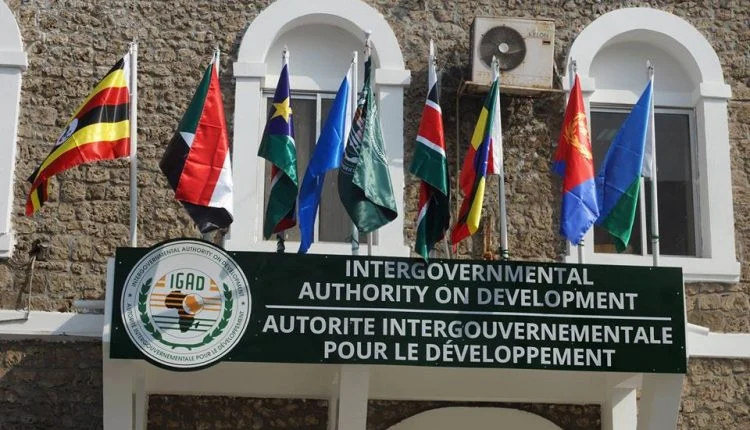
 Intergovernmental Authority on Development (IGAD)/HANDOUT
Eritrea has formally withdrawn from the Intergovernmental Authority on Development (IGAD).
The decision was communicated through a notice dated December 12, 2025, officially informing the bloc’s Secretary General.
The move marks a turning point in Eritrea’s relationship with the regional organisation, which has included periods of active participation, suspension, and re-engagement over the past three decades.
In its statement, the Ministry of Foreign Affairs outlined the reasons behind the decision, referencing Eritrea’s long-standing view of IGAD’s evolution.
The ministry noted that Eritrea had been an active participant when the organisation was revitalised in the early 1990s.
“Eritrea played a pivotal role when IGAD was revitalised in 1993,” the statement said, adding that the country had worked with other member states “for its transformation and effectiveness so that it would serve as the primary vehicle for enhancement of regional peace and stability, thereby paving the ground for viable regional economic integration.”
According to Asmara, Eritrea’s perception of IGAD’s performance changed over time.
The ministry said that “over time and especially since 2005, IGAD has failed to meet the aspirations of the peoples of the region,” a view that contributed to Eritrea suspending its membership in April 2007.
Eritrea later reactivated its membership in June 2023, expressing a renewed expectation of reforms within the organisation.
The Foreign Ministry, however, said that its withdrawal follows its assessment of developments since rejoining.
The statement further adds that, in Eritrea’s view, the development "offered no discernible strategic benefit to any of its constituencies."
As a result, the Ministry stated that following a review of its engagement, Eritrea “finds itself compelled to withdraw its membership from the organisation.”
Eritrea emphasised in its statement that its decision was based on its assessment of IGAD’s trajectory and its role within the organisation.
The ministry concluded by noting that the withdrawal reflected Eritrea’s position at this time regarding regional cooperation frameworks.
Eritrea’s withdrawal comes at a time when IGAD continues to engage in regional initiatives, including conflict mediation, humanitarian coordination, and support for political processes in several member states.
The Intergovernmental Authority on Development (IGAD) is a regional organisation in Eastern Africa, established to promote economic cooperation, peace, and security among its member states.
Originally formed in 1986 as the Intergovernmental Authority on Drought and Development (IGADD) to address drought and environmental challenges, the organisation was revitalised in 1996 and renamed IGAD, expanding its mandate to include broader political, economic, and social development objectives.
IGAD’s key focus areas include conflict prevention and resolution, humanitarian coordination, economic integration, infrastructure development, trade facilitation, and regional security.
The organisation has been active in mediating conflicts and political crises in the Horn of Africa, including initiatives in Somalia, South Sudan, Sudan, and Ethiopia.
It also supports programmes on food security, climate change adaptation, and cross-border cooperation.
The Secretariat, headquartered in Djibouti City, coordinates activities across the region, working with member states, international partners, and regional institutions to achieve its goals.
The organisation comprises eight member states: Djibouti, Eritrea, Ethiopia, Kenya, Somalia, South Sudan, Sudan, and Uganda.
Through collaboration among these countries, IGAD aims to foster sustainable development, stability, and integration in the Horn of Africa and Eastern Africa region.