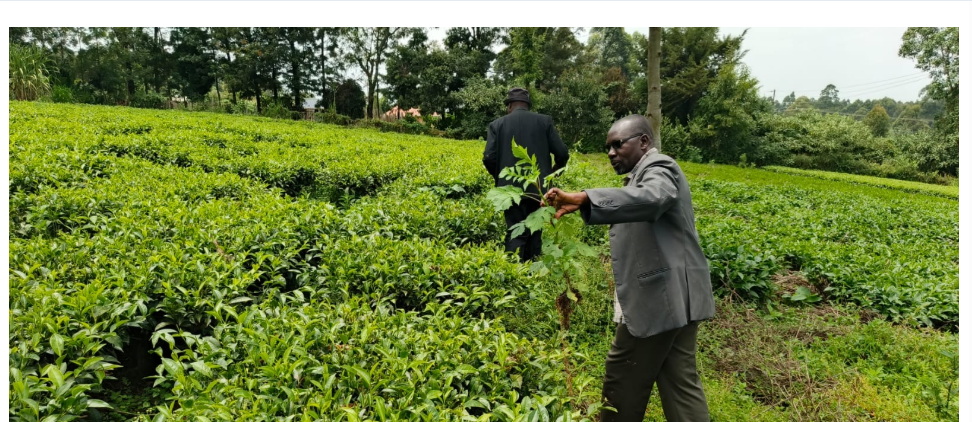
 Gatundu South MP Gabriel Kagombe with other delegates during the KTDA Factory Directors’ Conference in Nairobi./HANDOUT
The Kenya Tea Development Agency (KTDA) has strongly opposed the proposed Direct Settlement System (DSS), which seeks to enable direct payments to tea farmers, replacing the current model where earnings are channeled through farmers’ tea factories.
Speaking during the KTDA Factory Directors’ Conference in Nairobi, KTDA Chairman Chege Kirundi said farmers are neither ready nor willing to surrender control of their earnings to a third party.
He warned that such an entity may not fully understand farmers’ needs or the operational realities of the tea sector, potentially exposing growers to financial risks.
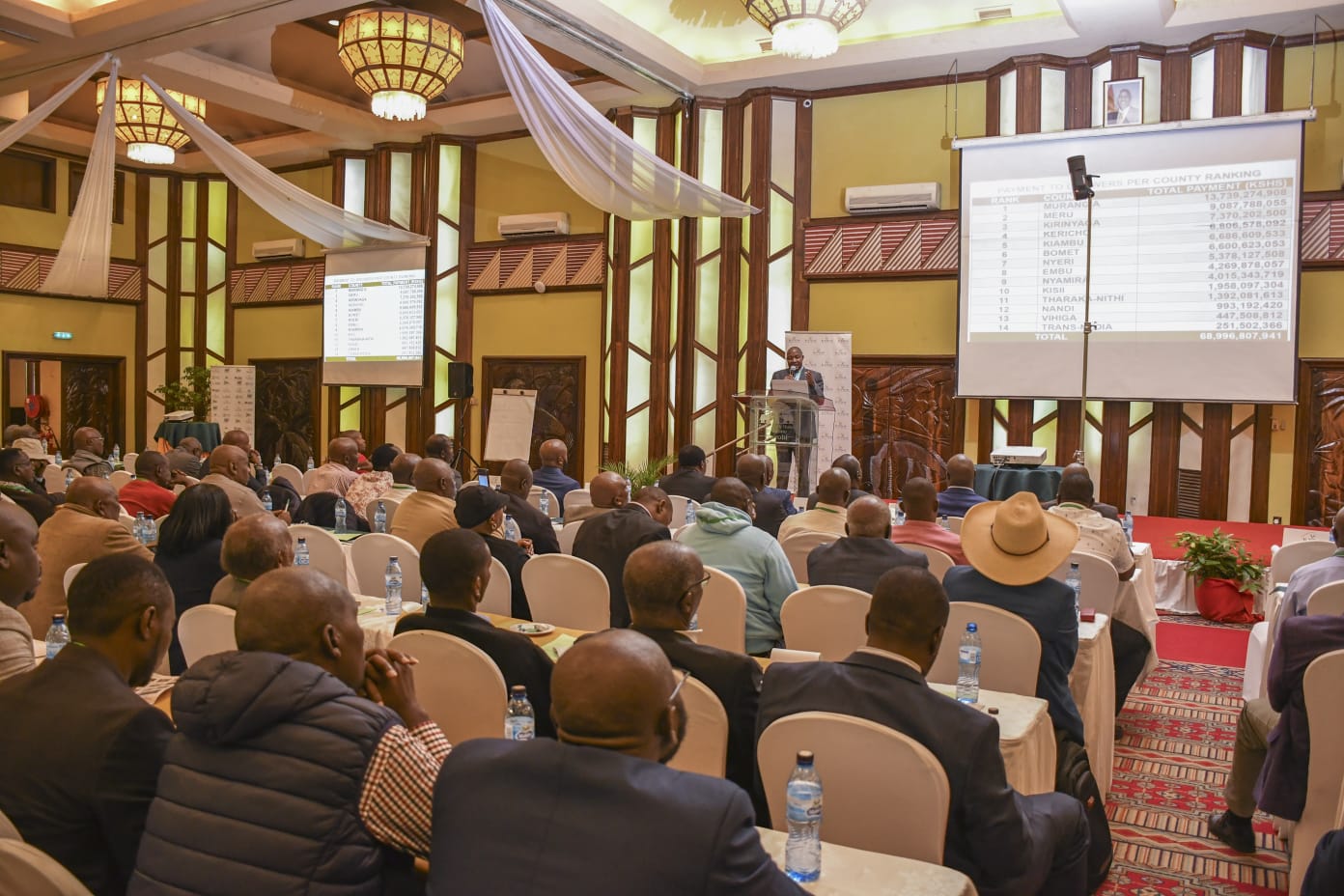 Degates follow proceedings during the KTDA Factory Directors’ Conference in Nairobi./HANDOUT
He said the industry requires stability, predictable policies, and industry-led decision-making to remain competitive locally and internationally.
On tea quality assessment, Kirundi said KTDA would only consider shifting from the current manual tea tasting methods to scientific testing if buyers formally demanded the change.
 Delegates during the KTDA Factory Directors’ Conference in Nairobi./HANDOUT
Meanwhile, KTDA Group Chief Executive Officer Wilson Muthaura called on tea farmers to diversify their farming activities to stabilize household incomes.
He said diversification would also strengthen the sector’s resilience against market volatility and climate-related shocks.
KTDA maintained that decisions affecting the tea industry should prioritise farmers’ interests and be guided by industry stakeholders rather than political pressure.
Mr Muthaura also praised tea sales recorded in 2025, describing the year as one of the toughest periods for the global tea market.
He said that despite declining global prices, rising operational costs, and adverse weather conditions, the smallholder tea model demonstrated remarkable resilience.
Speaking at the 2025 KTDA Directors’ Conference in Nairobi on Thursday, Mr Muthaura attributed the performance to disciplined operations and prudent management.
“The task ahead is to convert this operational resilience into sustainable profitability for farmers,” he said.
Green leaf production declined by 12.1 per cent due to low rainfall, while made-tea volumes fell by 11.55 per cent.
However, factories sold 319 million kilograms of made tea, a 10 percent increase compared to the previous year.
Mr Muthaura said digital transformation will be central to KTDA’s recovery and future growth.
He highlighted the rollout of Phase II of the Electronic Weighing System across all 71 factories, noting that the installation of 69 weighbridges has reduced inefficiencies and improved transparency in green leaf collection.