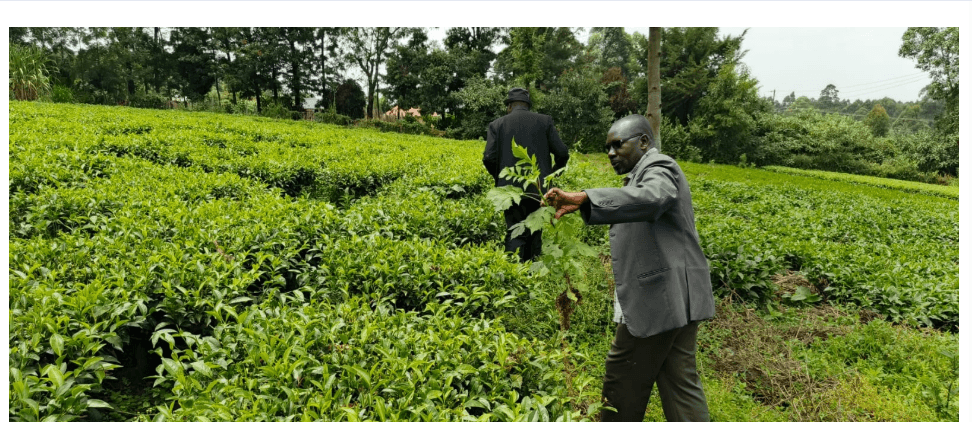


Kenya Tea Development Agency (KTDA) says the smallholder tea system has once again proven its resilience, offering renewed hope for farmers despite one of the toughest years in global tea markets.
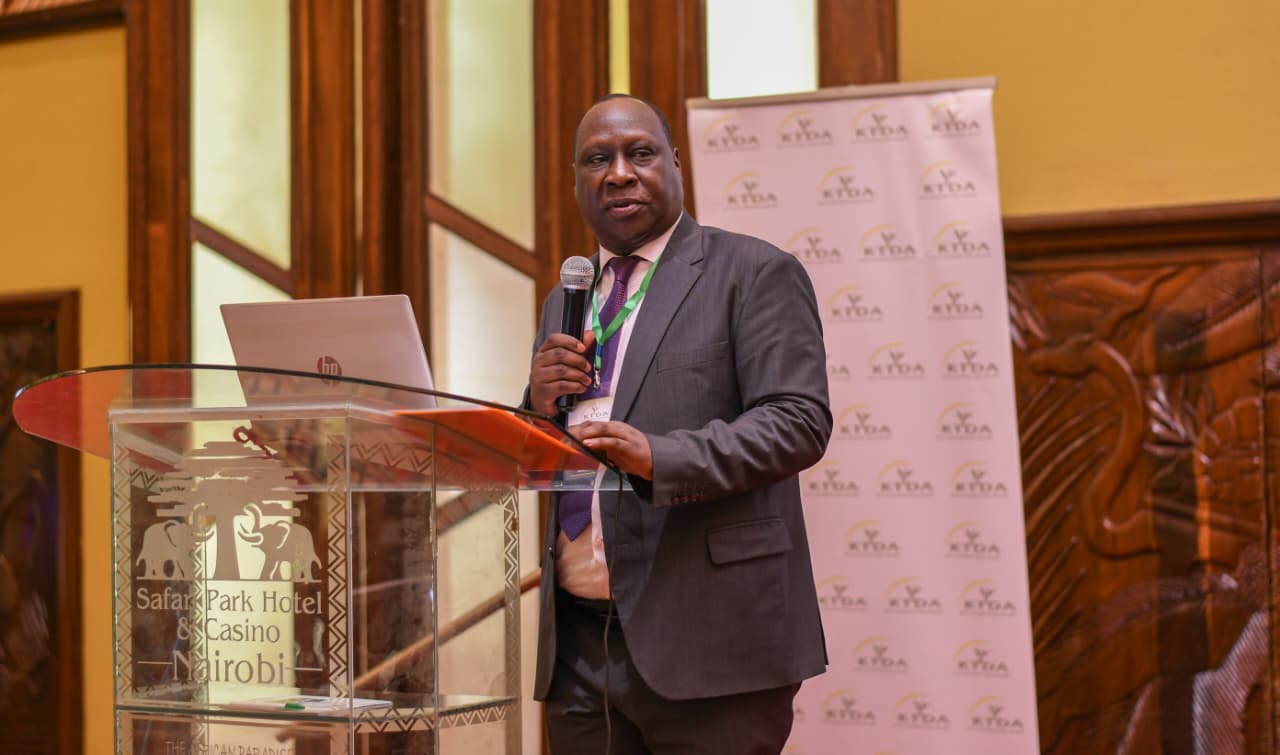
Speaking at the 2025 KTDA Directors Conference at the Safari Park Hotel, Group CEO Wilson Muthaura said that although the year brought significant headwinds, including depressed global prices, a stronger shilling, and high operational costs, the smallholder model continued to defy pressure.
Green leaf production fell by 12.1 per cent due to inadequate rainfall, and made-tea volumes dropped by 11.55 per cent.
Yet factories sold 319 million kilograms of made tea, marking a surprising 10 per cent increase from the previous year.
“This is the strength of the smallholder system. Disciplined operations and optimised processes enabled us to deliver strong results even under immense pressure. The task ahead is to convert this operational resilience into sustainable profitability,” Muthaura said.
While acknowledging the difficult operating environment, he urged directors to view the period not as a setback but as a launching pad for transformation.
“Adversity brings clarity and forces transformation. Our focus remains firm: stabilise performance, enhance operational efficiency, and unlock new, reliable revenue streams for the long term,” he noted.
Digital transformation, he emphasised, will be central to KTDA’s revival.
The full rollout of EWS Phase II across all 71 factories and the installation of 69 weighbridges have significantly reduced leaf collection inefficiencies.
The SAP system is boosting transparency, data accuracy, and real-time reporting. “Digital adoption is the heartbeat of our competitiveness. It empowers us to make faster, smarter decisions,” he said.
On the farmer-focused agenda, the CEO highlighted ongoing sustainability efforts such as replacing moribund tea bushes with climate-resilient cultivars and income diversification initiatives, including avocados and livestock, supported by the KTDA Foundation.
KTDA’s membership in the UN Global Compact, he added, positions the organisation as a responsible, forward-looking global player.
“When the farmer thrives, KTDA thrives,” he affirmed.
Across KTDA’s subsidiaries, performance was mixed but with notable strengths.
Chai Trading faced a decline due to forex losses, while Ketepa posted a strong turnaround from loss to profitability.
KTDA Power recorded a higher profit before tax, driven by new revenue streams, and Majani Insurance maintained stability.
“The message is clear: synergy and diversification are no longer optional. They are strategic imperatives that will define our next phase,” he said.
He also stressed KTDA’s strengthened governance framework, pointing to tighter enterprise risk management, stronger audit processes, and enhanced conflict-of-interest compliance, measures he said are vital for safeguarding assets, building investor confidence, and maintaining farmer trust.
“Good governance remains our anchor,” he asserted.
Muthaura further underscored the importance of people and culture in the organisation’s transformation journey. Investments in digital capability, leadership development, performance structures and accountability, he said, are reshaping KTDA into a modern, agile and farmer-centric organisation.
“Our people remain the centrepiece of KTDA’s transformation. With the right talent and culture, we will achieve remarkable growth.”
The CEO told directors that KTDA stands at a pivotal moment, one filled with challenges but rich with opportunity. “Resilience will carry us forward,” he said.
“Together, we will strengthen governance, deepen digital transformation, grow our subsidiaries, and secure the prosperity of the smallholder tea farmer for generations to come.”
The annual conference brings together KTDA directors from across the country to set priorities and chart a unified strategic agenda for the year ahead.