Today, August 8, we
lay to rest one of the pioneers of women empowerment in Kenya and arguably the
movement’s poster girl. Mama Phoebe Asiyo straddled the women’s movement like a
colossus. She encapsulated the objectives of the movement and represented women
with amazing grace and ease, not only in Kenya but also in Africa and the
globe.
Born in September 1932,
Phoebe Nyagoro Asiyo went to Gendia Primary School before joining what was then
the only, and the prestigious Seventh-day Adventist intermediate school,
Kamagambo. She proceeded to Kangaru Teachers College and was raised in devote
Christian family set up. She always
defied the odds and so left the teaching profession to join the Prisons
Department where she rose to become the first woman superintendent and senior
superintendent. Her footprints in the correctional service are still
celebrated, especially her successful push to separate male and women inmates.
On the sidelines of her official responsibilities, she devoted time and
personal resources to champion the education of girls at a time when this was
not considered especially necessary.
Asiyo shared in one of her
many public lectures that the Prisons Department restricted her efforts to
promote women’s empowerment, and therefore she teamed up with other women to
found the giant Maendeleo Ya Wanawake Organisation in 1953. Though Europeans
first headed it, Asiyo became its first African woman president in 1958. The
organisation has been credited with supporting women’s enterprise by providing
grants for start-ups and training for entrepreneurial skills. The organisation
is also renowned for encouraging women to join political leadership through
training and mentorship. This experience would later be instrumental in her
establishing and chairing the Caucus for Women’s Leadership in 1997. The lobby
actively sought financial support for women seeking political leadership. It
was the first women’s organisation to openly agitate for and encourage women’s
active participation in politics.
It confronted
discrimination against women and campaigned against retrogressive cultural
practices that limited women in social spheres. Women, therefore, found in Mama
Asiyo a matriarch on whose shoulders they would lean and climb to greater
heights of leadership. In dealing with authorities, she was diplomatic but very
firm. This was a stark difference from the approach and strategies taken by her
counterparts at the helm of the National Council of Women of Kenya, which was
formed 10 years later in 1964. This streak of assertiveness would eventually
elevate her to become the ambassador to the United Nations Development Fund for
Women, Unifem.
As the foremost women
leaders in the country members of Unifem were critical in mobilising popular
support for the release of political prisoners held at Kapenguria. They visited
them in 1960 and began in earnest to lobby for the guarantee of political
representation and protection of women in leadership. When Jaramogi Oginga
Odinga parted ways with his erstwhile friend Jomo Kenyatta, Mama Asiyo
maintained a close relationship with the doyen of opposition politics. In the
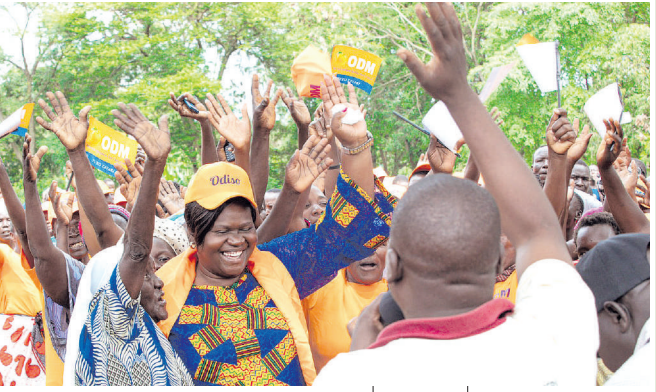
1979 general election soon after the demise of Kenyatta, Asiyo dived into
mainstream competitive politics, vying for the Karachuonyo parliamentary seat.
The support from Jaramogi and Luo Council of Elders led by Paul Mbuya propelled
her to victory. But these were supplementary to her exceptional organisational
and mobilisation skills and abilities.
Coincidentally, Mbuya was
closely related to her. She staved off a fierce challenge from the oratorically
gifted David Okiki Amayo. It should be remembered that Okiki was originally in
Kadu with then-President Daniel Moi. She repeated the feat in 1983 but opted
out during the infamous mlolongo elections of 1988. At the reintroduction of
multiparty democracy in 1992, Asiyo clinched the seat once again with great
ease. Dr Adhi Awiti will always be remembered as her most trusted confidant and
would later succeed her in 1997 when she voluntarily
exited politics.
In her illustrious
parliamentary career, Asiyo was instrumental in initiating and pushing for
affirmative motion that was the key milestone in the gender reform movement. It
also addressed electoral violence against women, child marriage and widow
inheritance and disinheritance, female genital mutilation and inadequate access
to quality healthcare for women and girls. Most importantly, it provided the
framework for the two-thirds gender rule that was anchored in the 2010
Constitution. Due to her advocacy and soft power, Asiyo was unanimously
endorsed as a commissioner in the Constitution of Kenya Review Commission, chaired
by the venerable Prof Yash Pal Ghai. Together they delivered the Bomas Draft of
the Constitution, which was later promulgated in 2010. The commission undertook
its mandate during the immediate post Narc victory.
The political environment
was toxic and poisoned by the incessant tussles among the ministers of the Mwai
Kibaki Cabinet. The divisions arose from both the sense of betrayal by the
coalition partners and the incompatibility of ideological orientation of key
political players. Mama Asiyo’s experience and vast diplomatic skills always
came in handy. She was the natural arbiter and the calming hands during stormy
debates. In a rare show of appreciation of her unique leadership talents and
skills, the Luo Council of Elders recognised her as an elder. The ceremony
presided over by Ker Riaga Ogallo was a first for the patriarchal community and
so far, the only one.
In her career, women and
leaders of all walks can learn that collaboration and persuasion are the most
effective tools of transformation and progress. They enable a leader to carry
along every stakeholder, and the beneficiaries enjoy the benefits fulfilling
their most felt needs. This was as opposed to confrontation and antagonism,
which are usually exclusivist and divisive. They create results that are not
mutually beneficial to stakeholders and often lead to rejection by groups of
society.
Asiyo also demonstrated
that one could successfully aspire to and achieve political leadership goals
while successfully building a distinguished family. The offspring with her
cherished husband, Richard Asiyo, are trailblazers in their own right. Mama
understood so well that the woman was the pillar of society and sought to
demonstrate that the family was the best focal point for community peace and
social development. She is associated with numerous projects in Karachuonyo
constituency in South Nyanza and the world at large. Phoebe Asiyo has shown
that women’s empowerment promotes their independence but not exclusivity. She
has shown that the success on this front is better assured through the
partnership of both genders and the collaboration of all stakeholders. May Mama
continue to shine our paths.

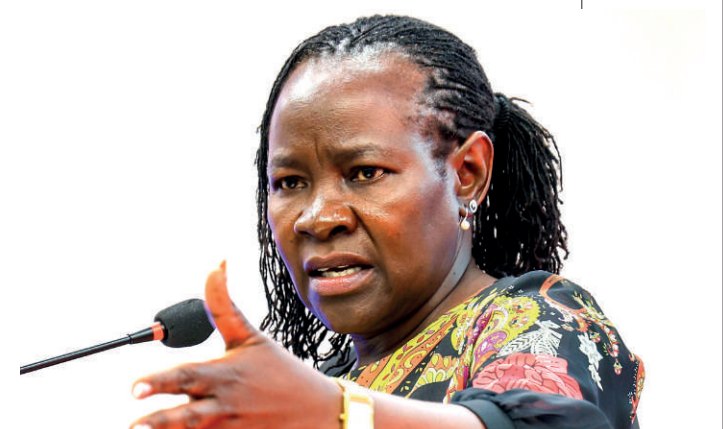
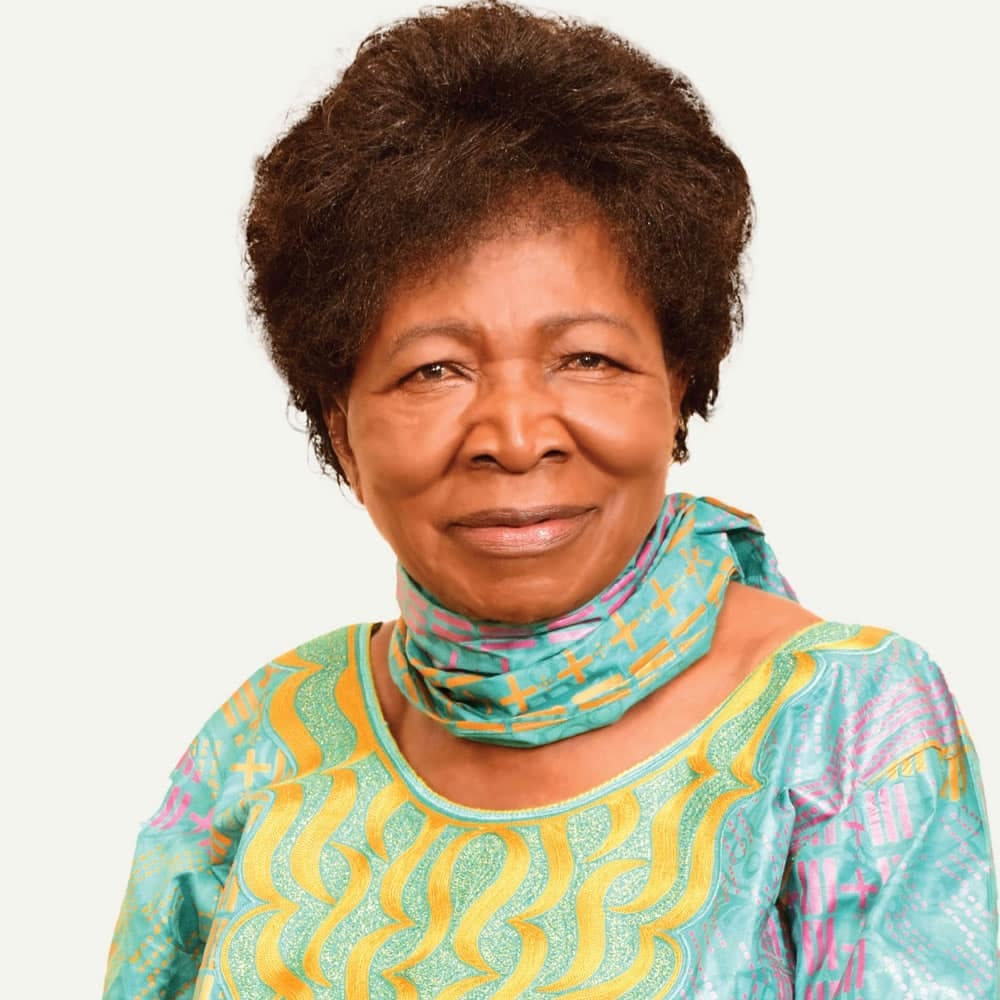 Mama Phoebe Asiyo./HANDOUT