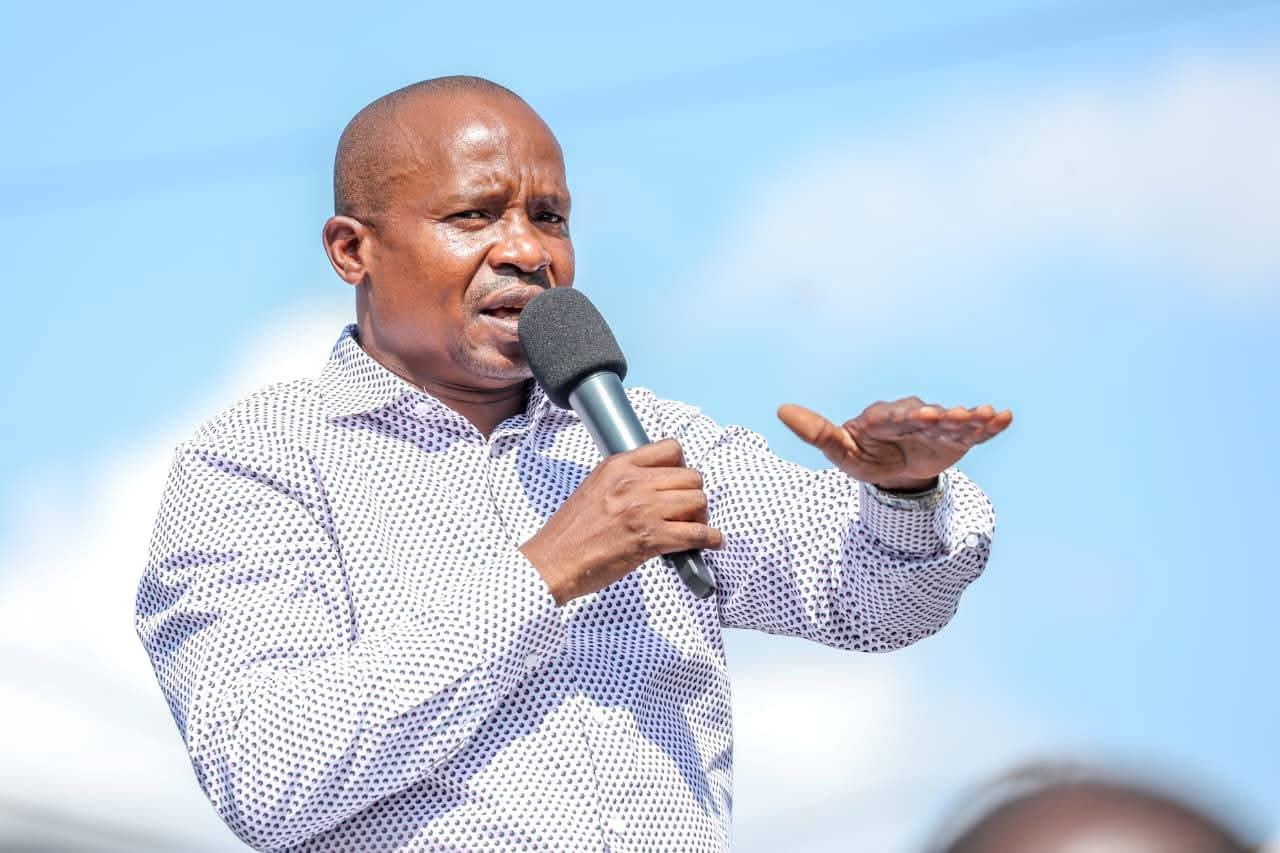
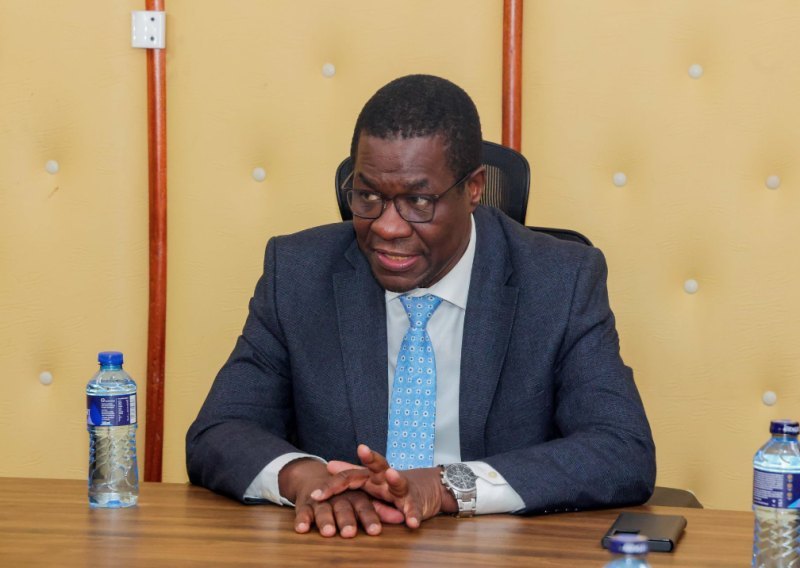
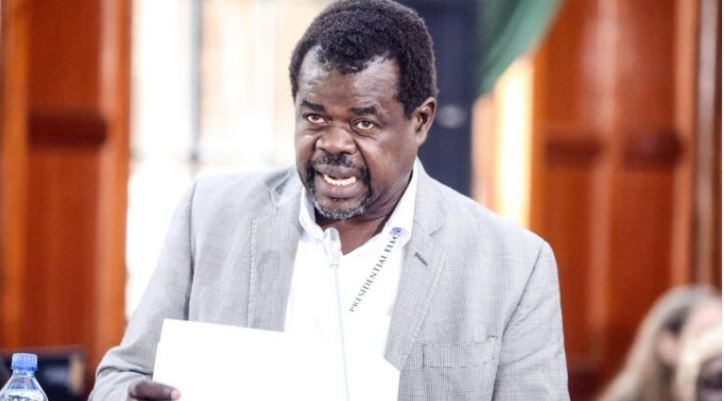
 Busia Senator Okiya Omtatah /HANDOUT
Busia Senator Okiya Omtatah has raised an alarm on what he calls budgeted corruption amounting to more than Sh100 billion through unspecified expenditure allocations.
Omtatah said instead of being allocated to clearly defined programmes and activities, these funds have been grouped under the vague and undefined "Other Operating Expenses" category.
“I have reviewed the recurrent and development expenditure estimates contained in the proposed National Government Budget for the Financial Year 2026-27 and established that a total of Sh101,370,569,266 (one hundred and one billion, three hundred and seventy million, five hundred and sixty-nine thousand, two hundred and sixty-six shillings) remains untied to any specific vote, programme, or identifiable purpose as required by law,” he says.
The senator said the amount comprises of Sh26.3 billion in development expenditure (capital expenses); and Sh74,974,556,546 in recurrent expenditure (operating expenses).
“This is not an isolated occurrence. In the FY 2025-26 Budget Estimates, the National Assembly approved a total allocation of Sh116.2 billion under "Other Operating Expenses," comprising: Sh23,892,940,122 in Development Expenditure; and Sh92.3 billion in Recurrent Expenditure,” he said.
A proper financial interpretation of this budgetary allocation, according to the senator, reveals that all classified operating expenses, including, among others, salaries, allowances and rental of produced assets.
Others include hospitality supplies and services, training expenses, office and general supplies and services, fuel, oil and lubricants, and routine maintenance of vehicles and other transport equipment that were adequately allocated funds.
Each respective State Department, he said, had a balance from its share of the sector-working group budget ceiling, which it then allocated to the so-called "Other Operating Expenses."
“Consequently, tens of billions of shillings continue to be allocated annually under the "Other Operating Expenses" category – a category that lacks the specificity, transparency, and accountability required by law. This practice undermines fiscal discipline, erodes public trust and imposes an unjustifiable burden on Kenyan taxpayers,” Omtatah said.
According to his analysis, for instance, State House had been allocated Sh7.3 billion as Aggregate Allocation of Classified Operating Expenses with Sh3,514,063,195 shown as ‘Other Operating Expenses’ which represents 47.69 percent of the allocation under the category.
In State Department for Internal Security & National Administration (HQ), Sh4.7 billion provided under Aggregate Allocation of Classified Operating Expenses yet another Sh10,356.864,112 is given under “Other Operating Expenses’ representing 219.93 per cent in the category.
The National Treasury has Sh7.1 billion in the “classified operating expenses” while Sh13 billion is indicated as “other operating expenses” which accounts for 181.37 per cent of the total allocation in the category.
“The continued allocation of substantial sums under the nebulous heading of "Other Operating Expenses" constitutes budgeted corruption. This practice directly contravenes the express provisions of the Constitution of Kenya, the Public Finance Management Act (Cap 412A), and the Public Finance Management (National Government) Regulations, 2015 (Legal Notice No. 34 of 2015),” the Senator warns.
Article 221(2)(b) of the constitution requires that estimates of revenue and expenditure submitted by the Cabinet Secretary for Finance to the National Assembly be presented "in the form, and according to the procedure, prescribed by an Act of Parliament."
On Thursday, June 18, 2026, the National Assembly passed the Finance Bill 2026, approving amendments to Kenya's tax laws projected to raise an additional approximately Sh98.5 billion from Kenyan taxpayers.
“Strikingly, this Sh98.5 billion is less than the Sh101.37 billion currently allocated to the opaque "Other Operating Expenses" in the FY 2026-27 estimates. Furthermore, in FY 2025-26, this same ineligible expenditure item amounted to Sh116.26 billion, whereas the Finance Bill 2025 was enacted to raise approximately Sh30 billion, thus imposing taxes on Kenyans to finance the budgeted corruption,” Omtatah says.
"This reveals a glaring truth: existing taxation rates are already more than sufficient to finance the FY 2026/2027 national budget. There is absolutely no basis for imposing on Kenyans the taxes contained in the recently approved Finance Bill 2026.”
If the National Assembly does its constitutional duty and thoroughly cleanses the budget estimates to eliminate such budgeted corruption, Omtatah argues that Kenyans would not need to be taxed an extra shilling.