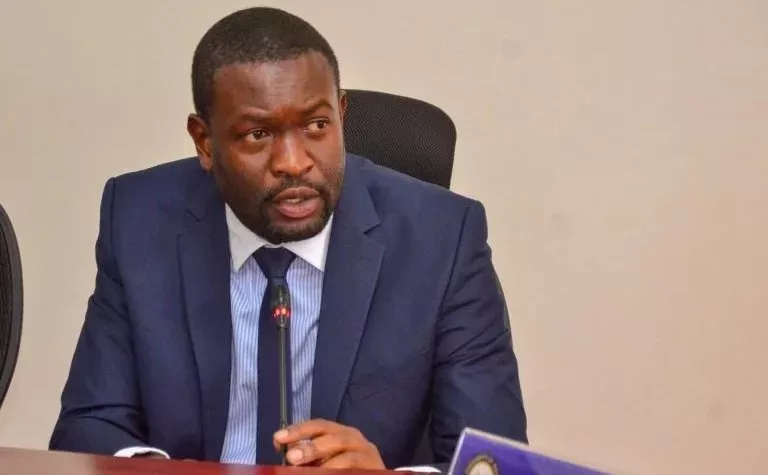
On Tuesday last week, ODM secretary general Edwin Sifuna went on prime-time TV and did what Kenyans love to refer to as “burning the school with all certificates inside.”
You didn’t need to wait until the end of the interview to know that trouble would be coming. In fact, even before trouble found the right door to knock on, the interview trended atop most Kenyan media conversations, mainstream and social, for a good three days.
The punchlineswere so many that anyone asking, “Did he just say that?” may have done so for the entire duration of the interview.
Predictably, the ODM faction that finds warmth in the comfortable embrace of the broad-based government was utterly enraged.
Party leader Raila Odinga was then visiting Nigeria, and his faction waited anxiously for him to return and read the riot act to his SG.
But as fate would have it, the next public ODM function happened to be last Friday in Kakamega County, in Sifuna’s native Western region, which also happened to be the first time since the interview that the party leader and his SG were sharing a podium.
To be fair, no one really expected the ODM-In-Government faction to go after Sifuna while in Western. But that was only as far as it extended the grace of restraint. Once out of Western, where Raila had voiced support for his SG, the knives were back out.
The ODM central committee, the party’s top management organ, met on Tuesday this week to deliberate on the issues. The consensus on the political street is that fireworks are expected.
But if you put aside the tone displayed by Sifuna during his TV interviews, at public rallies, and in the Senate, you will begin to understand the frustration expressed by many ordinary party members over the direction taken by their movement.
Make no mistake: of all ODM bases, the broad-based arrangement only appears popular in its Luo Nyanza backyard. And mostly because elected leaders there have taken to fashioning cooperation with President Ruto as the genesis of newfound state largesse supposedly flowing to the region.
Outside Luoland, as with most parts of Kenya, the disenchantment with Ruto and the Kenya Kwanza regime has now become a twin to the disillusionment within ODM circles about the confusion over the future of their party.
Days before Sifuna’s interview, former PM Raila himself had been on a TV show, stating the party’s support for the President would run only until 2027, when Ruto’s first current term ends. But this begs the question: at what point will the Orange party withdraw from the cooperation framework and begin its own 2027 preparations in a country where campaigns begin long before elections?
The ODM boss has been a major part of the confusion. In between declaring his party is not in government and that ODM will run a presidential candidate in 2027, he pops up at a Cabinet retreat, embraces his so-called ODM experts in government.
Raila appears to give free rein to elected leaders in the party who routinely declare that, indeed, they are stuck with Ruto until 2032.
This August, the next election will be exactly two years away, and I wonder if that is the sort of political environment that a 20-year movement, the most consequential in Kenya’s electoral history, should find itself in, with only months to spare.
There is yet another burning issue that has alienated the ODM leadership. It is that the co-operation with the Kenya Kwanza regime is seen mostly as one between Ruto and the Luo community, as opposed to the entire ODM party.
It doesn’t help that the salespeople for the broad-based arrangement are almost always Luo politicians who love to point to the benefits accruing from that framework are always in Luo Nyanza.
In their naivety, elected Luo leaders forget that such powerful and traditional ODM bases such as Kilifi, Busia, Kakamega, Kisii, Mombasa, and Kajiado, among others, are left out of the vociferous flaunting of the supposed benefits of government access.
Because of the foregoing, Sifuna has in fact emerged as the face of the non-Luo ODM, involuntarily representing the hopes of the larger party base that something good lies ahead.
Luo leaders such as Homa Bay Town MP Opondo Kaluma, who demands removal of Sifuna, do not realise that move will confine ODM further into a corner of Luoland, as it will represent the aspirations of only one region.
Which brings me to a second question: might it have been Ruto’s plan all along to destroy the cross-country foundations of ODM as a national movement, blunt its impact and confine it to being a regional party?
Considering how long the destruction of Raila and his powerful mass appeal has remained a political doctrine in the country, it is difficult not to speculate that Ruto may have planned this all along, to make the post-Raila ODM party an easier, tamer force to deal with.
Nothing demonstrates this fast ODM decline better than the ongoing campaigns in Kakamega’s Malava constituency, left vacant by the death of MP Malulu Injendi.
Well, the writs haven’t been issued yet by the Speaker to declare the vacancy, but of course, this wouldn’t be Kenya if campaigns for that seat weren’t already on. In Kakamega county, ODM holds the vast majority of the 12 constituencies.
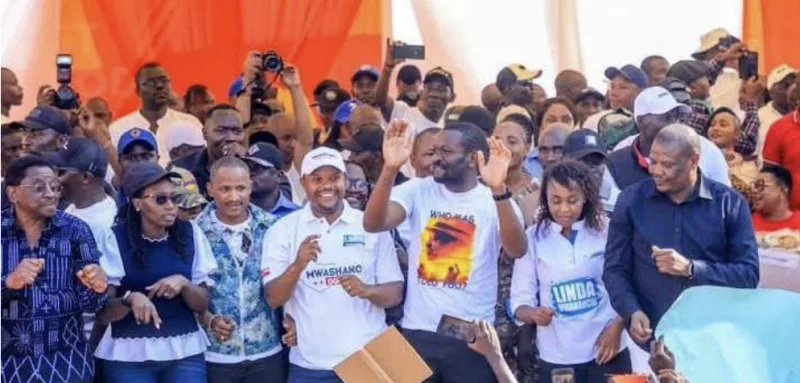
But a visit to the electoral zone shows that former DP Rigathi Gachagua’s DCP and former CS Eugene Wamalwa’s DAP-K, are the parties creating excitement the ground with massive rallies. Like a forlorn movement, ODM is yet to hit the ground, and no major candidate has shown interest in its ticket.
ODM may take the easier route of taking a roll call among those who want Sifuna removed and those who want him to stay on. But for its leader, Raila, you get the feeling the dilemma is bigger than this.
After ODM’s 20 spectacular years as a powerful movement, does he allow the party and its legacy to fade away now to please the loud Luo voices within it, those who are unable to see the roadmap because they are blinded by state privileges?
Or should he now oversee a credible transition of the party into the hands of a younger, more liberal leadership, regardless of what his Luo base says? What is the ultimate motivation for leading such a powerful multi-tribal movement if it ends up reverting to a tribal party?
Raila himself was there when the transition in Ford Kenya after the death of his father, Jaramogi Oginga Odinga, ended up as a violent stillbirth, forcing many to abandon it.
The party never recovered its prestige and luster. But one could make the argument that it was handled badly and Wamalwa Kijana himself was an uninspiring leader. Unlike Ford Kenya in 1994 and the period immediately after that, ODM has grown proper structures and networks that can easily oversee a proper transition post-Raila.
These networks, in their leaders’ wisdom, must understand that ODM’s survival after Raila will depend largely on retaining its non-Luo political base. Thus, the Luo leaders, who spend their waking hours trying to chase party stars from other regions, are unwittingly killing their own party and with it, the Raila dream of a liberal and sustainable left-of-centre movement!

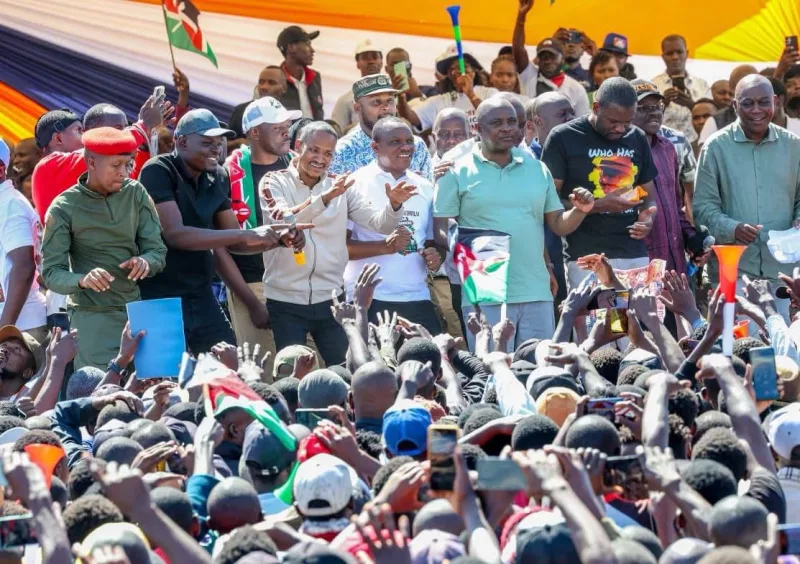
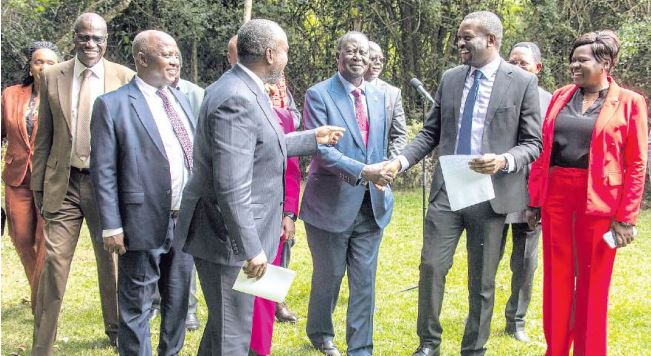 ODM central committee members (From third left) Godfrey Osotsi, Junet Mohamed, Raila Odinga, Edwin Sifuna, Stewart Madzayo and Gladys Wanga /FILE