Several days before retired Chief Justice David Maraga appeared on TV last week, I was part of a small team carrying out spontaneous Q&A sessions with young Kenyans about their choices for president in 2027.
I was surprised by how many times the name of the CJ emeritus popped up.
Quite incredibly, these were urban youths in Nairobi, not their typical village-based counterparts whom many would readily accuse of being influenced by ethnic considerations.
By the time the former CJ turned up for the much-publicised interview, we had been asking ‘Why?’ and ‘How?’ for days.
How had the elderly Maraga, aged 74, emerged as the presidential choice of Gen Z voters, a demographic we had largely presumed would settle for a younger presidential candidate?
Even before that, the common response to the “Why” was that ‘he nullified an election and is therefore the only brave Kenyan who can slay impunity.’ Fair enough.
As for the TV interview itself, the feedback was as diverse as it was divisive.
A group of Kenyans dismissed Maraga as flat and boring, prompting his supporters to say that ‘those exciting ones’ were responsible for running down the country, and it was about time to go with boring but high-functioning.
Yet others viewed the celebrated jurist as a Johnny-come-lately, encroaching on the turf of more established candidates. They sought to caricature him as a spoiler and one lacking seriousness because he admitted he lacked the requisite billions to run a presidential campaign.
However, the national conversation following that interview was an eye-opener.
First, it is clear that a large part of the nation is so disillusioned by the current state off affairs that it is looking for ‘someone different’, a politician with a human face, so to speak, who may resonate with the pulse of the nation.
When Maraga declares he is not a rich man and readily acknowledges he doesn’t have instant answers to some interview questions, the political class may dismiss him as being out of touch with the big-man image dominating our politics.
Many members of the public, however, find a rallying figure in him.
In 2002, Raila Odinga’s sudden words, “Kibaki Tosha” turned opposition leader Mwai Kibaki into a national cult hero and swept him into power in the polls.
But long before those words and that victory, the country was hugely disenchanted with both President Danial Moi and Kanu’s long rule.
The elections turned into a change referendum, of sorts, and created the biggest multi-tribal electoral wave in Kenya’s history.
In many ways, what mattered to most voters was the defeat of Kanu, through its candidate Uhuru Kenyatta, but more importantly, they wanted to end anything in public sphere that represented the Moi era.
It is difficult to say if the Ruto regime is as unpopular as the Moi regime may have been in 2002, but certainly, large sections of the country are seeking change via a 2027 presidential candidate who can excite the nation again, as Kibaki did.
Indeed, if Maraga tends to come across as too laid-back, it is important to note that Kibaki himself had the same image.
In some political circles, many people had even dismissed him as a coward who never saw a fence he didn’t want to sit on.
But a closer look at Kenya’s political history will show that the calm type of personality creates the feeling of safety among different actors, and can easily create consensus. Two such personalities have already been President here.
There is another way to look at it. That Maraga, with deep religious convictions and a Pope-like demeanour, would do very well on a ticket paired with a credible leader of the opposite more exciting mien.
A day after his TV show, social media was awash with what was seen as an ideal pairing of Maraga and Nairobi Senator Edwin Sifuna.
Whereas Maraga is measured and calm in approach, the ODM secretary general is abrasive and bold.
And whereas the former CJ has a pastor-like public persona, Sifuna is the quintessential “waziri wa sherehe”, the young people’s “Minister of Fun”, liberal in actions and religious leanings.
The genius of that hypothetical ticket struck me. To begin with, Sifuna is young and would easily appeal to the burgeoning Gen Z electoral bloc.
In fact, the youths’ only quarrel with Maraga him his refusal to leave ODM, even after the party entered into a deal with the Kenya Kwanza administration that they find unacceptable.
But as a running mate to a popular and fatherly figure like Maraga, Sifuna’s aggressive style, especially in campaigns and among the youth, would add crucial value and balance Maraga’s.
A friend of mine aptly summarised this as the “Gin and Soya Dream Mix.” I couldn’t agree more.
To his great credit, Maraga has resisted the temptation to make a homecoming Kisii tour.
Unlike his kinsman and former CS Fred Matiang’i, the retired CJ seems to have already figured that his strength lies in ‘the rest of Kenya’, a population already worn out by the tribal lords in Kenya’s politics.
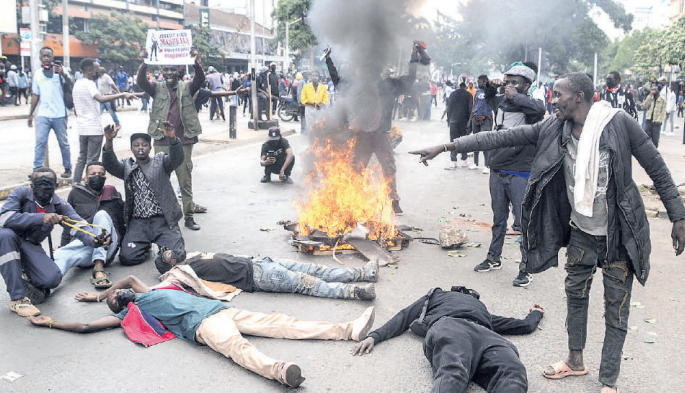
His most public appearance was on the streets, joining the Gen Z supporters in protests to commemorate the first anniversary of the June 25, 2024, demonstrations in which more than 60 young people died.
When he appeared on the streets this June 25 to join the youths, Maraga was promptly tear-gassed, a necessary baptism ahead of the difficult campaign ahead of him.
There are advantages to be drawn from the ex CJ’s acknowledged frugal nature. As it seems now, Maraga is rising to the level of a consensus candidate for competing interests, and his campaign is funded largely by Kenyan contributions.
As such, he would bring the ‘clean’ image to the job on Day one, and shun the big money networks that usually hold elected leaders hostage. Being seen as a candidate owned by the citizens, and not by the notorious big money consortia, would be a refreshing break from the past.
The past in which primitive acquisition of campaign war chests tends to define campaigns, with their attendant ‘favours to be returned’, which turn leaders in zombies of vested interests.
The delicate two-year balancing act that Maraga faces until the ballot, will revolve around how to sustain the attention of a young voting population whose patience runs very thin.
It wasn’t long ago that Busia Senator Okiya Omtatah was their preferred future president, forcing the senator to act all presidential for a time, before young people moved on and left the hapless Omtata reverting to his more familiar activist nature.
The other fight will be for the former CJ to swim above the fray of tribal politics, where many Kisii political interests, seeing his rise, will demand to own him. He is already doing very well as a candidate of the people.
Any attempt to lower that will only kill his ambition before he reaches the ballot. But perhaps the biggest challenge will be that no winning presidential candidate or coalition has ever been unveiled such a long time before the general elections.
Most tend to be products of last-minute agreements and concessions.
Can Maraga ride out two years at the top as the Gen Z favourite candidate? And could he then turn out to be the Tosha candidate, akin to Kibaki in 2002? Time will tell.

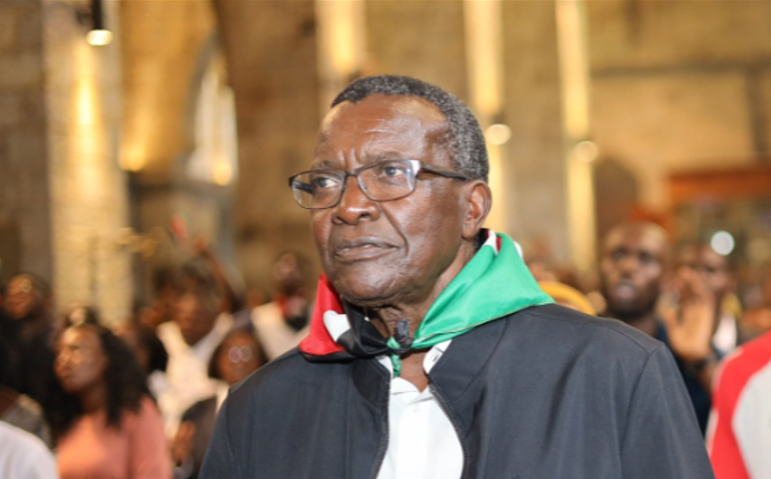 Retired Chief Justice David Maraga during a past function in Nairobi’s All-Saints Cathedral. PHOTO/@dkmaraga/X