President William Ruto on Tuesday announced that the government will henceforth fully cater for higher education, citing the failure of the current and previous funding models to deliver the desired results.
While the proposal could ease the financial burden on thousands of families and stabilise struggling universities, implementing it would require billions of shillings in additional public spending at a time when Kenya is grappling with fiscal constraints.
The plan will also require parliamentary approval before it can take effect.
The President said all students placed in universities or TVET institutions by the Kenya Universities and Colleges Central Placement Service (KUCCPS) would benefit.
"It will not matter the background of any child in Kenya, it will matter how good they are," he said at State House, Nairobi.
"We tried the differentiated model. It didn't work because it made most of our universities almost close down because while we promised 80 per cent funding, we went down to 40 per cent and most universities suffered."
The President said the current funding model, which allocates scholarships and loans to students based on financial need, was also "not good enough".
"Now we are moving to universal under the amendments we have taken to Parliament. So going forward, any student, so long as they have passed their exam and they have been placed in a college or university, each one of them will get full funding," he said.
He added that parents who are willing to contribute towards their children's education will be free to do so.
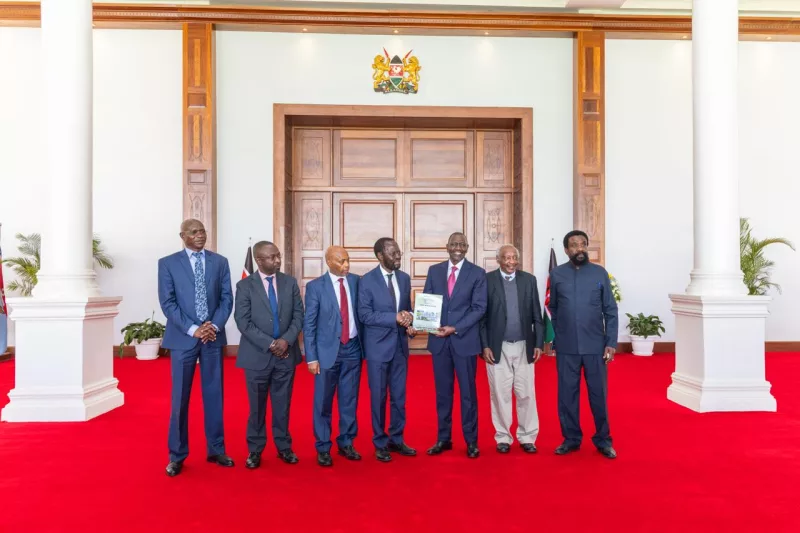
The President spoke while receiving a report on proposals outlining strategic guidelines for Kenya's long-term transformation into a first-world economy.
The proposal has since sparked debate over whether the government can sustainably finance universal higher education.
The proposed 100 per cent tuition funding will require parliamentary approval and must be anchored in law before it can be integrated into national budget allocations.
In the 2026-27 financial year, the government allocated Sh784.5 billion to the education sector, of which Sh163.9 billion went to higher education.
Another Sh58.5 billion was allocated to Technical and Vocational Education and Training (TVET) institutions, while Sh1.3 billion was set aside for research, science and innovation.
The allocation accounts for 26.4 per cent of the national budget and represents an increase of Sh81.8 billion from the Sh702.7 billion allocated in the previous financial year.
Despite the record allocation, the government has previously maintained that fully funding higher education and free schooling is unsustainable because of fiscal constraints.
National Treasury CS John Mbadi told Parliament that the state can only heavily subsidise, rather than fully meet, the cost of education for all enrolled students.
Ruto's announcement therefore marks a significant shift in government policy, with implementation likely to require substantially higher education spending, increased revenue collection or reduced allocations to other sectors such as health and infrastructure.
To put the proposal into perspective, KUCCPS placed 293,869 students in higher education institutions for the 2026-27 academic year, including 202,133 admitted to degree programmes.
Under the student-centred New Higher Education Funding Model, the annual cost of educating a public university student ranges from about Sh150,000 to more than Sh600,000, depending on the course.
Humanities programmes cost considerably less, while medicine and surgery can exceed Sh612,000 per student annually.
KUCCPS said there were 702 medicine and surgery slots across public and private universities.
Currently, the government meets between 60 per cent and 95 per cent of the cost through scholarships and loans, while households contribute between 5 per cent and 40 per cent depending on the student's financial need band.
Based on the 2026-27 placement figures, fully funding the 202,133 university students could cost the government roughly Sh30.6 billion annually.
In public TVET institutions, the annual cost of training each student is standardised at Sh67,189, inclusive of assessment charges.
With about 92,000 students placed in TVET institutions, the annual bill would rise by approximately Sh6.2 billion, bringing the combined cost of university and TVET education for the 2026-27 cohort to about Sh36.8 billion.
That amount is equivalent to more than 22 per cent of the total annual allocation to higher education, suggesting that fully funding tuition and related student support would require significantly higher exchequer allocations than current levels, which already face persistent funding gaps.
Restricting student admissions to fit available budgets may also be difficult, given the President's assurance that all qualifying students placed through KUCCPS will receive full funding.
Without corresponding investment in infrastructure, increased enrolment could overcrowd lecture halls, stretch laboratory and training facilities, and ultimately affect the quality of education.
In addition, shifting the entire cost of higher education to the government would eliminate household contributions, placing a substantial long-term financial burden on taxpayers.
On the brighter side, public universities and TVET institutions would benefit from predictable funding, potentially ending years of financial strain, mounting pending bills and recurring staff strike threats.

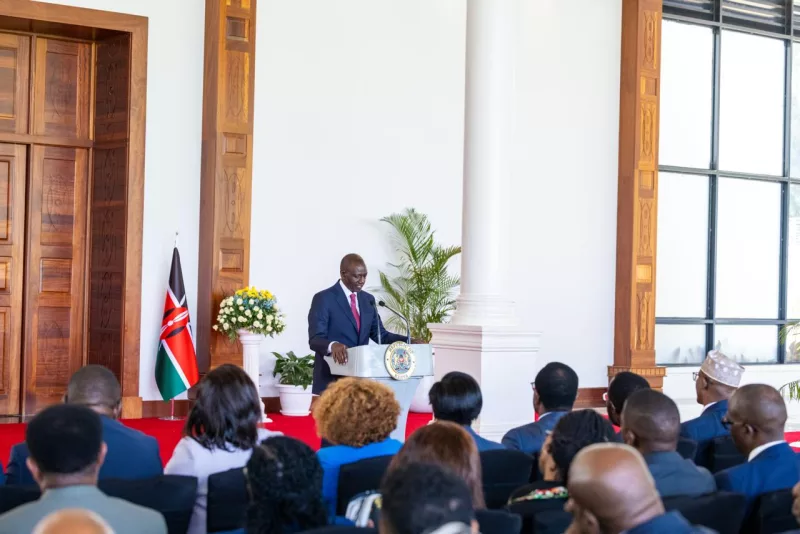
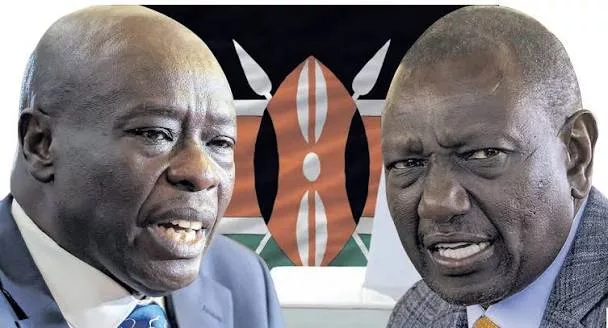
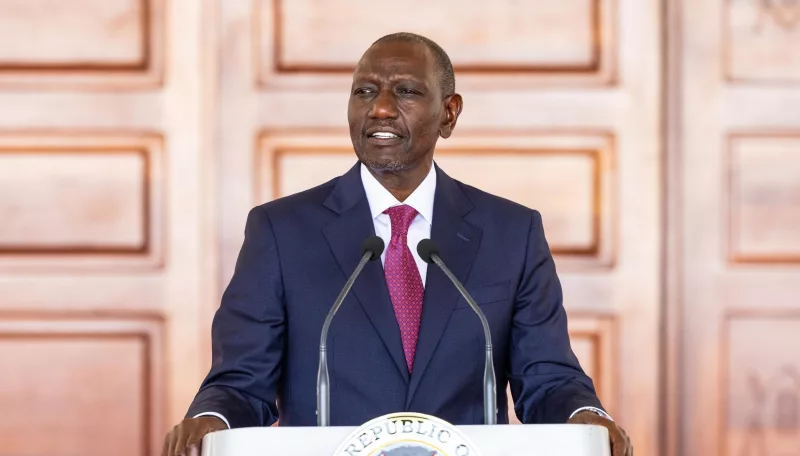 President William Ruto speaks when he received a report on proposed strategic guidelines for Kenya's transformation to a First World country at State House, Nairobi, July 21, 2026. /PCS