What's one thing you’d want to change about KMTC, the biggest health training college in East Africa?
I just want to ensure we have the highest quality trained human resources for health and train sufficient numbers of health professionals with the right attitude, to take care of our population, from the primary level of healthcare to referral levels.
The reason for this is in the constitution, Article 43, says every Kenyan has a right to the highest level of healthcare. One of the pillars in healthcare is human resources for health. KMTC produces 85 per cent and above of human workers in Kenya.
We receive many applicants with very high grades to even attend universities, preferring to come to Kenya Medical Training College. And we want to encourage this.
My vision for the institution is that we become the model institution in training healthcare professionals. To do this, number one, we have to ensure quality at the highest level. Number two, we must ensure we are the preferred institution in training and number three, we need to have resources to run the institution.
Going forward we will not only be supplying the local market with a health workforce but also other countries that may need health workers
According to the Ministry of Labour, Kenya will send 20,000 nurses to the UK. What’s your role in this arrangement?
Going forward we will not only be supplying the local market with a health workforce but also other countries that may need health workers.
We have started with the UK, where we are preparing our graduate nurses to work in the UK through English training and also pre-departure training. Recently, our Health CS Mutahi Kagwe flagged off the first 19 to go to the UK. Now we have stepped up to ensure we have as many as 50 learners qualifying every month to be ready for the UK market. These are graduates who have worked at least one year in the Kenyan market.
We are also negotiating with Australia for opportunities. We have our eyes trained on Canada and the US. We also want the institution to be a centre for examination that allows health professionals to work in other countries. For example, we are in discussions to have NCLEX examination done in the institution. This exam tests the competency of nursing school graduates in the US and Canada.
Right now, the only country that is doing it in Africa is South Africa.
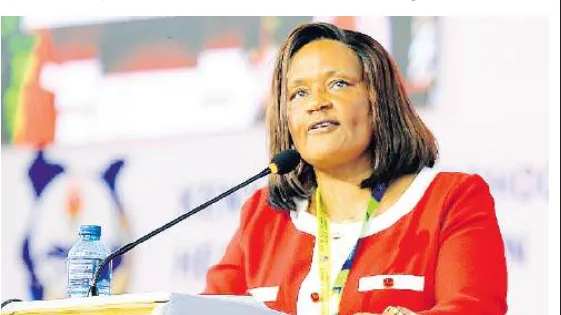
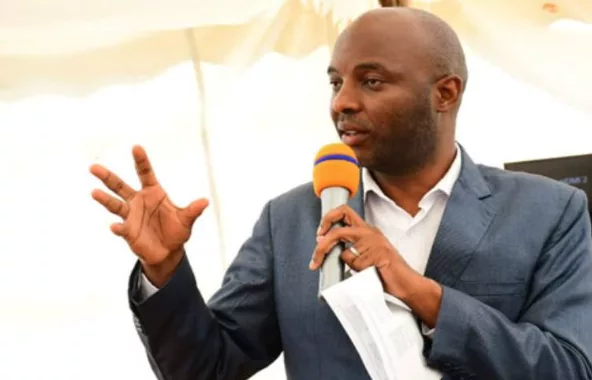
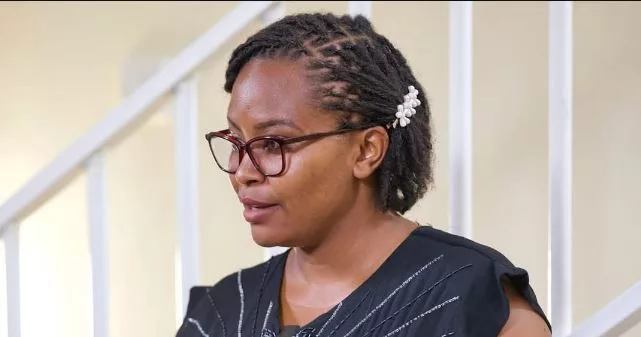
KMTC CEO Dr Kelly Oluoch with the Star's head of commercial John Gachahi at an interview in Nairobi on July 19
Are we training an excess workforce so as to encourage outmigration?
We are not training excess nurses. In fact, the demand is more than the supply. The human resource immigration policy that was recently concluded looks at the critical human resources for health and determines what number can you export without affecting the local human resource workforce for health.
This ensures that nurses who have already graduated, but employment is still not yet coming forth, are able to find employment out of the country.
The market is inexhaustible for now because Covid-19 pandemic exposed the soft underbelly in terms of human resources for health in most countries. And KMTC wants to position itself to be a foreign exchange earner for this country through human resources for health. We want to follow in the footsteps of countries like the Philippines, who have successfully utilized their capacity to train human resources for health, to earn foreign exchange for the country.
But we want to do this in a responsible way so that we do not starve our country of the critical human resource for health. But at the same time, we want to afford opportunities for our locally trained health workers, to access employment in other countries.
Again, it is beneficial for this country because eventually, these immigrants come back to the country with new knowledge, with new experiences. And most of them are able to establish businesses in the country, and also support the economy through remittances.
We started in 1927 with four students. At that time, the four students were being trained only to dress wounds. Then, the college started training compounding (mixing drugs to create a medication tailored to the needs of an individual patient), which is the current pharmacy training. KMTC started at the current Kenya School of Government and then moved here.
At the moment, we have 51,371 students and we have 72 campuses in 44 counties. The college has 18 faculties and the number of courses we train in is 93. And all our courses are now accredited by the Kenya National Qualifications Authority.
So, which counties do not have a campus?
We are not in Kirinyaga, Marsabit and Samburu. But we have a collaboration with Marsabit county. They have built a facility, but the insecurity still does not allow us to establish the campus right there. In Samburu, the county under the CDF is working on it so we will have our campus there.
How many students do you admit annually?
In March, we admitted more than 11,000 students, and we continue to admit for September this year. So annually, there is a growth in admissions. Last year, we admitted 16,000 and clearly this year, we will surpass 20,000.
How many applications do you receive?
In March, we got more than 31,000 applications for various courses. And you see, our admission must be responsive to the issue of equity. That means we ensure every community is well represented.
Number one, we have to ensure quality at the highest level. Number two, we must ensure we are the preferred institution in training and number three, we need to have resources to run the institution
Do you have enough trainers for all your courses?
Right now, KMTC is adopting an e-learning platform, where all our learners are registered. So some courses are being offered centrally through the e-learning platform, and that enables us to share the human resource. Yes, we are constrained; remember there is a moratorium on employment, and that also affected the KMTC. But we quickly moved on to look at innovative ways of teaching, and that is through e-learning.
We also in the process of putting in place an e-library so anybody can access learning material from whichever campus they are in. We are ensuring Internet connectivity is on each campus. So yes, we are constrained in the number of lecturers in some courses, but that does not really affect the quality because of the mitigation measures we put in place.
And what are your most popular courses?
All our courses are popular, but it depends on our capacity to accommodate learners. What I mean here is we have what we call rehabilitative health courses, such as occupational therapy. You know, some children are born with congenital defects, like Downs Syndrome and cerebral palsy. To enable those children to live normal lives, you need occupational therapists, who are in short supply.
However, we cannot train a large population because of the need to rationalise the equipment. So those courses will attract fewer students because of the equipment. We also have something like orthopaedic technology, also under rehabilitative health. This enables people who've had broken bones to again be able to live normal lives.
That also requires a lot of equipment to train. And so you cannot admit so many students at the same time. We have other courses like dental technology, which allow us to correct dental defects. This is also a popular course, but because of the limited equipment, we will not admit a larger number of students.
However, there are those courses that are popular because we have enough or sufficient practical areas, like nursing, clinical medicine, pharmacy, medical imaging and medical engineering. So these ones will absorb more students.
So we have courses which are popular, but they cannot take a high number of students because of restrictions in placement areas and also the special equipment required.
And are there new courses you've introduced because of the emerging health challenges?
When Covid struck, it should be remembered that KMTC was at the forefront in taking care of returnees from other countries, who could not be released to the community immediately. So our 44 campuses served as quarantine and also as isolation facilities.
So we developed courses to adapt to that new challenge by ensuring we have our curricula adjusted to accommodate infection prevention. The other thing we put in place is the issue of community health assistance.
We realised that the cost of practising preventive health, that is proper hygiene, proper nutrition and proper health information, is lower compared to curative health. So we decided as an institution that a portion of our curricula will address healthy living, healthy nutrition and healthy hygiene practices at a community level.
And so we developed courses like community health to take care of that.
We also strengthened community health extension workers' training. So we've invested a lot in courses that deal with primary healthcare. Again, we've also introduced courses to address curative issues. If you remember, most of the patients with Covid used to get admitted with breathing challenges. So we saw the need for critical care nursing.
This refers to anaesthesia nursing and anaesthesia specialities in clinical medicine. During that time, we also had investments in simulation laboratories, a technology that enables us to train students using models that mimic natural patients in the facilities.
Medical courses are expensive for students without sponsorship.
That is why in the recent past, you’ve seen us collaborating with the Higher Education Loans Board to make sure students who are bright but deserving do not drop out of school because they have no capacity to pay fees. For this, we have worked with Parliament. We've worked with the Ministry of Health for our learners' access to the much-needed loans (about Sh39,000 a year). So our students can apply to Helb directly like other tertiary college students.
Any legal challenges that hinder the college from executing its mandate more efficiently?
There are a few things. For example, currently, medical books that come to the country are taxable, making them expensive and inaccessible to learners. It's something we need to address to enable legislation of waiver.
Any country that wants to progress must avail learning materials to its learners. Costly material means learners will have to make do with the little available material. And that means you hinder the quality of training.
Help us continue bringing you unbiased news, in-depth investigations, and diverse perspectives. Your subscription keeps our mission alive and empowers us to provide high-quality, trustworthy journalism. Join us today to make a difference!