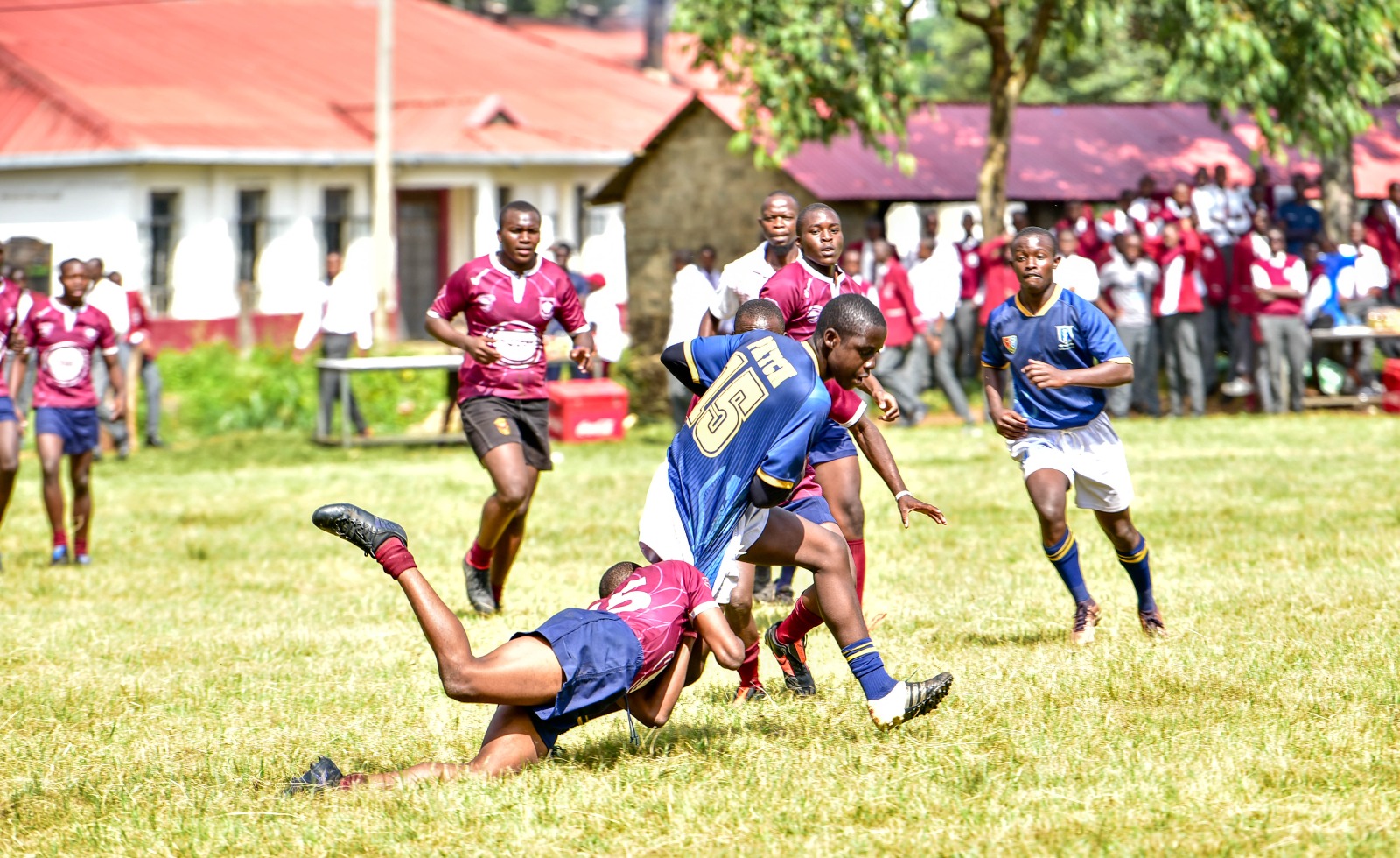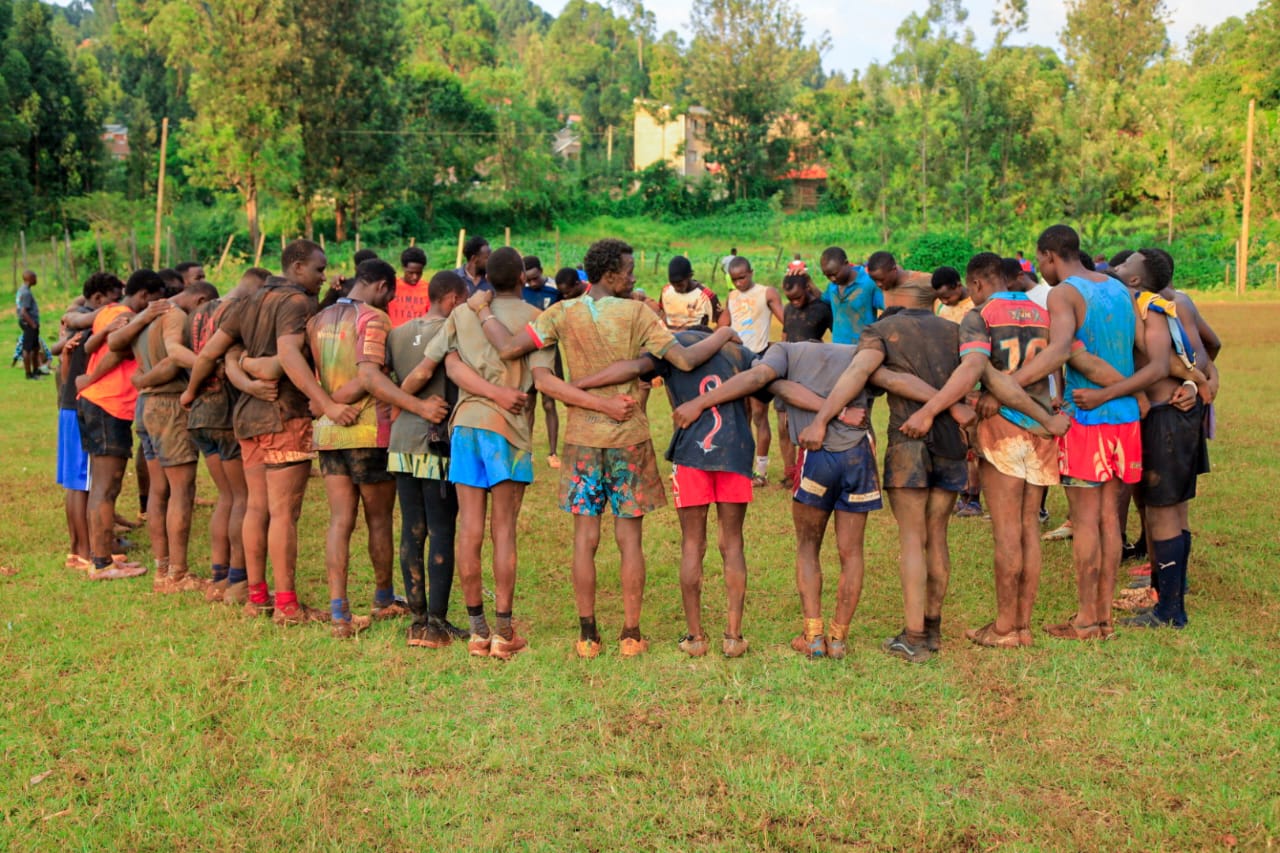
 KCB's Festus Shiasi fends off Impala's Quinto Ongo and George Okowa en route to scoring a try during a recent Kenya Cup match/ HANDOUT
 The Kenya Rugby Union (KRU) is planning a major restructuring of the Kenya Cup over the next year to restore competitiveness and attract greater commercial support.
Under the proposed format, Tier One would comprise the top six clubs, while Tier Two would comprise the bottom six clubs. Promotion and relegation would be enforced, with the bottom two teams in Tier One dropping to Tier Two, and the top two in Tier Two moving up.
The proposals come amid a spate of lopsided results in the opening weeks of the season. Former champions Impala have endured heavy defeats, including 123–0 to Kabras, 97–6 to Menengai Oilers and 87–5 to KCB.
Other one-sided scorelines include Oilers beating Kisumu 69–3, KCB thrashing Strathmore Leos 72–14, and debutants Daystar Falcons losing 76–16 to Oilers, among others.
Speaking recently, KRU director of fixtures, Leslie Mwangale, said the Union is exploring ways to make the league more competitive, with a two-tier structure among several proposals under consideration.
“We are looking at ways to make the league competitive, maybe next season or the one after. It’s worrying when teams are losing by such big margins, so we must find solutions that will strengthen the league and make it attractive to sponsors both in the short and long term,” he said.
Mwangale noted that the gap between the traditional big three—champions Kabras, Oilers and KCB—and the rest of the league has been widening for the past six to eight years, leaving community clubs struggling to stay afloat.
“What we are seeing now didn’t start today. It has been building for years, and we must come together to find a solution,” he added. He emphasised the need to channel more resources to clubs, attract top talent and bolster technical benches if teams are to compete more effectively with the leading trio.
“A strong league will ultimately strengthen the national team. A competitive league will boost our Simbas in the upcoming international fixtures,” he said. Impala RFC head coach Malik Ndemi, speaking earlier this month, echoed similar concerns, saying community clubs are battling financial hardships.
“It’s not easy. The top three are semi-professional clubs with big budgets, and something needs to be done,” Ndemi said.