

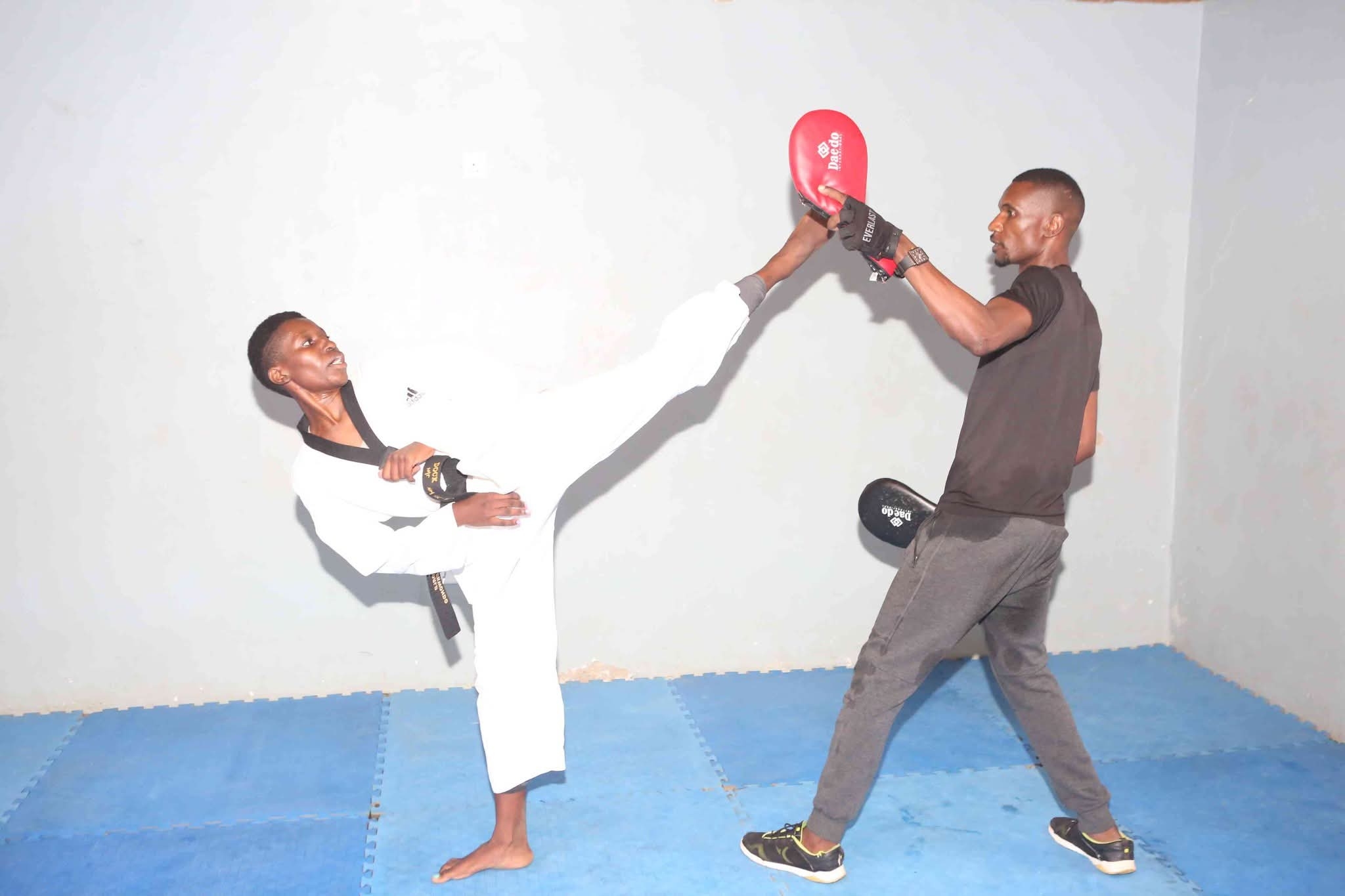
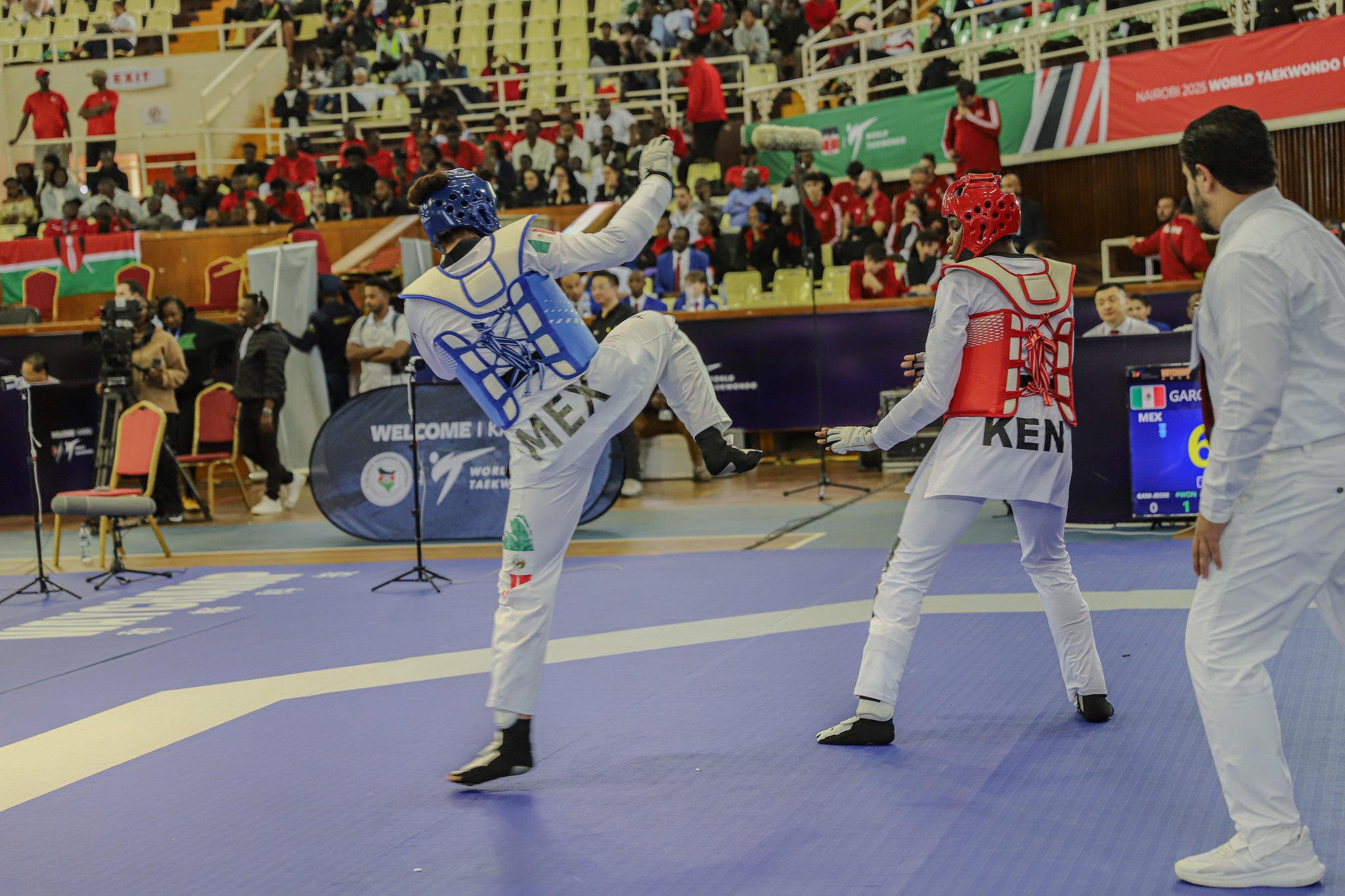
 Kenya's Waida Nechesa in action against Mexico's Paloma Garcia/ HANDOUT
With the World U-21 Taekwondo Championships now concluded, Kenya’s national team has turned its attention to securing vital ranking points as part of a renewed push toward future Olympic qualification.
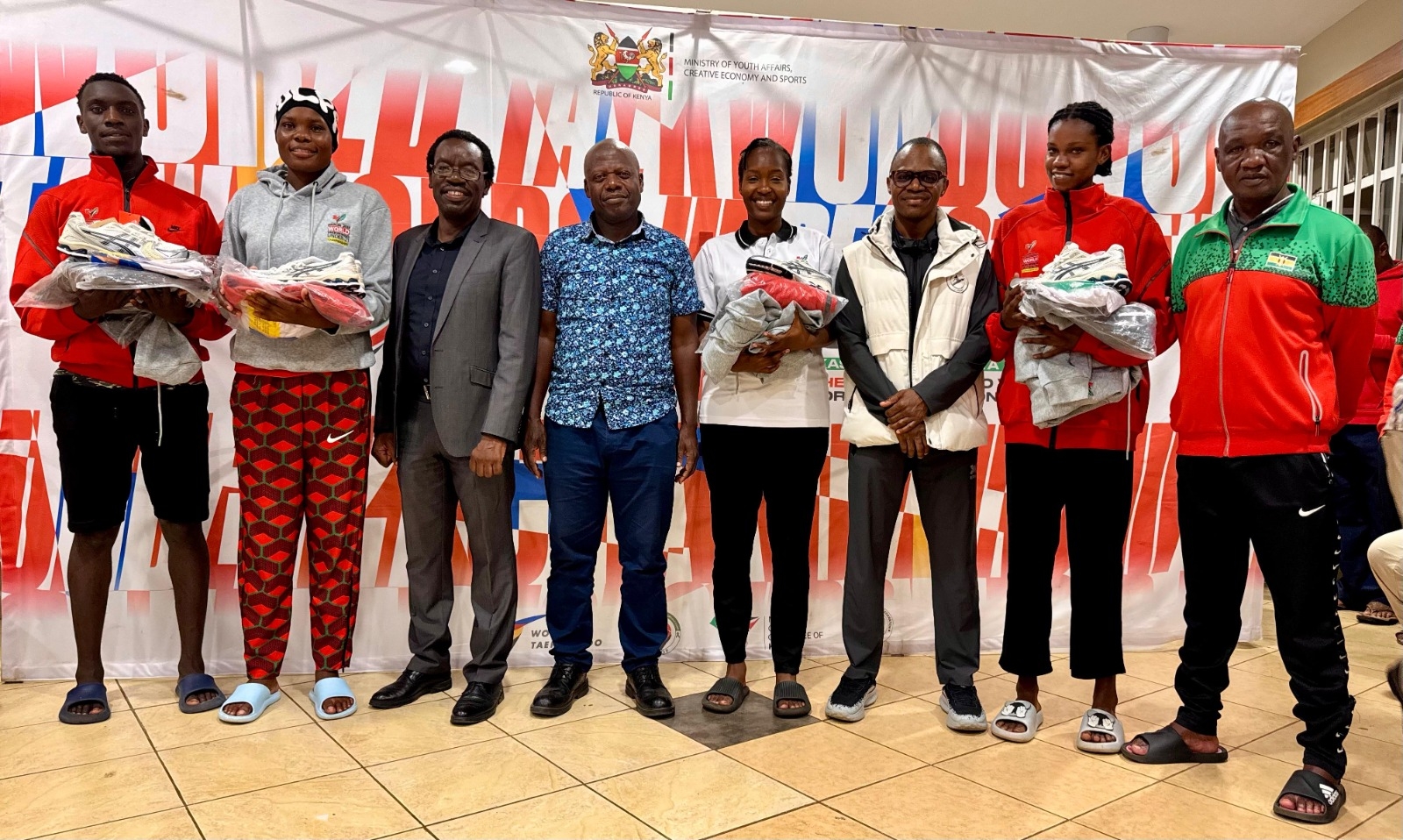
The squad wrapped up a demanding week at the Kasarani Indoor Arena, where the hosts finished the global event without a medal. Head coach Kalele Kahindi maintained that the team “put up a commendable fight,” attributing the medal drought to deeper structural shortcomings rather than a lack of talent or effort.
“We played well. We did not suffer any knockouts—not even one. Most of our losses came through point gaps,” Kahindi said, noting that late preparations and limited international exposure left his players at a disadvantage from the start.
With the championships having ended on December 6, the federation and technical bench will now focus on the upcoming continental and global events that offer valuable ranking points—opportunities they hope will signal the beginning of a more structured and well-prepared Olympic qualification pathway.
Kahindi revealed that the residential training camp began late and lasted less than two weeks, leaving the athletes chasing fitness and tactical cohesion. He added that several team members were still unfamiliar with modern scoring systems and protective gear used at the elite level, unlike their more seasoned opponents, who have logged years on the international circuit.
He further noted that many local coaches are primarily focused on junior development, making it challenging to transition athletes fully into U-21 competitive demands.
He urged for greater support “through enhanced funding, exposure opportunities, and provision of standard training equipment” to lay a strong, long-term athlete pathway.
Athlete Frank Thomas, who competed in the -87kg middleweight category, echoed the coach’s views. Despite his early exit, he said the lessons learned were invaluable.
“Everybody learned something new. It was a good experience even though we lost. A major setback was starting training late, and one of our coaches joined us only two weeks before the tournament,” he said, calling on the federation to “facilitate early training preparations.”
For debutant Bridget Lucy in the 46kg division, the global stage proved more inspiring than intimidating. Though she fell short of the podium, she said the experience had fuelled her determination to intensify training and return stronger.