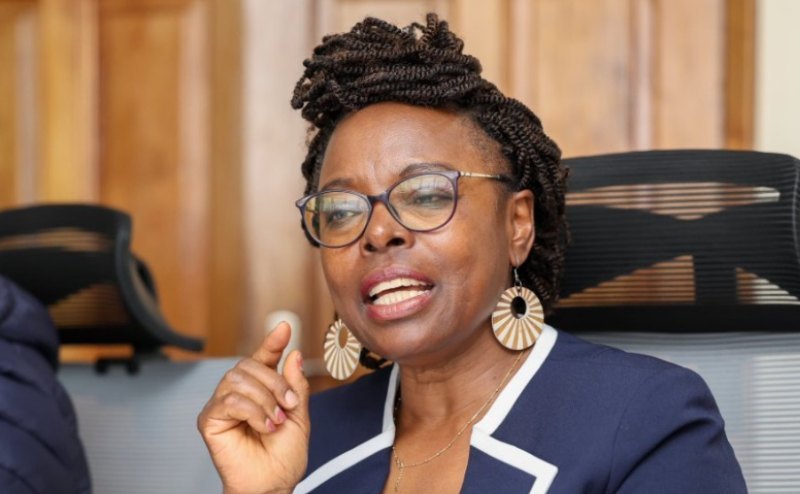
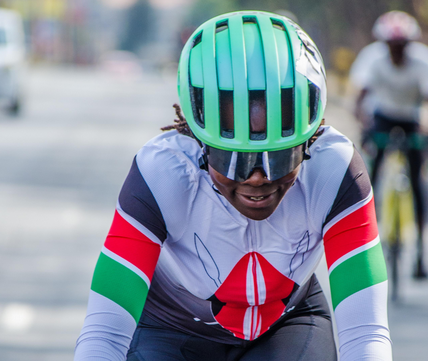
 Monica Jelimo during training/ HANDOUT
Last month, Kwale County transformed into Africa’s cycling capital as Kenya hosted the 19th edition of the CAC Road Cycling African Championships.
It was only the second time the county had staged the prestigious event, after Eldoret welcomed the continent last year. For Kenya, the championships were far more than a continental spectacle.
It was a powerful statement, proof that the nation is capable of hosting world-class cycling events and that the sport continues to grow rapidly on home soil.
Cycling has come a long way since 1868, when Paris staged the first organised bicycle race. Its global profile exploded with the sport’s inclusion at the 1896 Olympic Games and the creation of the Tour de France in 1903, a race that immortalised cycling as a battle of endurance, strategy and grit.
Traditionally associated with European dominance and historic cycling cultures, the sport’s tide has been shifting. In the 21st century, Africa has steadily risen, gaining recognition and building depth. Kenya has been no exception, from local races to continental tours, cycling in the country is taking root and taking off.
For the longest time, the country’s cycling headlines were carried by men. British professional cyclist Chris Froome, who spent his early years in Kenya, is the most globally decorated name connected to the nation. A seven-time Grand Tour champion, Froome has conquered four Tours de France (2013, 2015, 2016 and 2017), the 2018 Giro d’Italia, and the Vuelta a España twice (2011 and 2017).
His accolades also include two Olympic bronze medals in road time trials (2012 and 2016) and a 2017 World Championships bronze. Closer to home, David Kinjah, fondly known as the “Father of Kenyan Cycling”, remains a cornerstone of the sport’s foundation, mentorship and development. His Safari Simbaz Cycling Trust continues to nurture the next generation, including stars such as the late Suleiman Kangangi and Salim Kipkemboi.
But a quiet revolution has been unfolding, a rise of ambitious, fearless women determined to claim their space in the peloton. And among them is Monica Jelimo, one of the strongest voices pushing Kenyan cycling forward. Jelimo has not only become a key figure competitively, but also in advocacy.
Early last month, Jelimo was elected as an African representative to The Cyclists’ Alliance (TCA), a global body run by current and former female cyclists to champion equal opportunities, fair pay, legal protection and welfare for women in the sport.
Jelimo was elected alongside other newcomers to the Alliance, including the UK’s Alice McWilliam and Morven Yeoman, America’s Madigan Munro, and Chile’s Catalina Soto Campos, placing Kenya on the decision-making table of world cycling.
In Kwale, Jelimo lined up for Kenya in the elite women’s 107.6km road race. However, Team Kenya fell short of expectations, with none of the riders finishing inside the top 10.
Kendra Tabu was the best-placed Kenyan in 19th (3:14:24), while Jelimo was the second best-placed Kenyan, crossing the line 29th in 3:18:06.
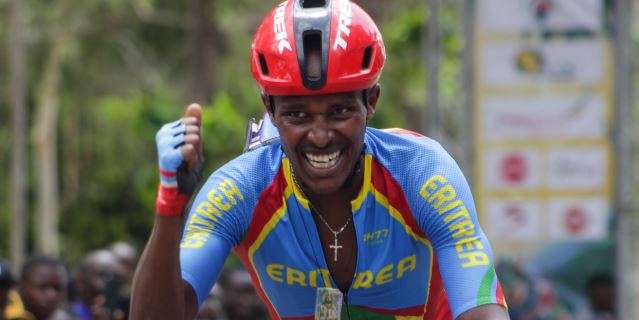
South Africa’s Hayley Preen stormed to the continental crown in 3:10:31, followed closely by Eritrea’s Birikti Fessehaye (3:10:34) and Rwanda’s Claudette Nyirarukundo (3:10:49).
Reflecting on the performance, Jelimo noted that Kwale was not favourable for Team Kenya. “Kwale for Team Kenya was so tough compared to last year in Eldoret. Last year we had good results,” Jelimo revealed.
The scorching coastal heat, especially with an afternoon start, proved overwhelming. “Maybe the heat played a factor; we raced in the afternoon hours when the heat was really intense, and that was something we had not really prepared for,” she added.
“We came a few days or a week before the championship to ensure we acclimatised, but the heat on race day was just tough.”
Her personal target had been to improve on her 2024 Eldoret performance, where she placed 14th overall in 3:22:39, ranking her as the top Kenyan in the championship.
“I came into the race hoping for better results because last year in Eldoret I was seventh and the best-placed Kenyan.”
Heading to Kwale, Jelimo was well aware of the threat posed by South Africa. “Coming into the race, I knew South Africa, Mauritius and Eritrea were really strong.”
Hydration challenges and tactical uncertainty also hindered the team: “During the loop in Diani, I was okay, but I got dropped when we were making the climb to Kwale.”
“There were missing water bottles in some stations, so we did not hydrate enough. Also, we did not have a game plan as Team Kenya; we had not sat down and decided how to attack the race.”
Further, Jelimo noted that a packed 2025 calendar did not give her proper time to prepare for the continental show. “I was coming from high competition, so I did not have that much time to prepare for the African championships.”
Jelimo entered Kwale after a packed competitive calendar. Earlier, she had secured silver at the Tour Cycliste International Féminin du Burundi (October 5–11), helping Kenya claim the overall women’s team title, backed by Grace Kaviro’s bronze. The host's Nsengiyumva Odette claimed gold in that race. Even then, the finish left her wanting more. “I was expecting something more than silver because I had also won a silver medal the previous year.”
The key to Kenya topping the charts in Burundi was the chemistry and teamwork work and proper training time. “We were mentally prepared because we had also been named overall champions the previous year. It was a title we were going to defend. We had prepared adequately for it.”
The 25-year-old who trains in Iten says her own preparation included 18-20 hours of training per week. “I started training early on in the season for the Burundi championship. I was doing 18-20 hours of training or about 500km,” she said.
Before Burundi, she had made her debut at the UCI World Championships in Kigali, Rwanda, in September, an emotional milestone: “It was my first time at the world championships, I was both happy and afraid because this was a big stage for my career. I missed last year’s World Championship due to Visa complications.”
“The competition there was very tough, African cyclists suffered a lot because we were competing against athletes who have proper support and have been racing for years, some even compete in top European tours,” she said.
Born on April 18, 2000, in Elgeyo Marakwet to Divinah Chemweno and Peter Kiplagat, Jelimo’s early sporting success came through athletics. She dominated school cross country and 4x400m relays, inspired by a family where sports run deep.
“In Primary school, I used to run the cross country, and I would always end up as the winner. In High School, I ran the cross country and also the relays, the 4x400m,” Jelimo recalls. “My mother used to be an athlete in high school, and I also have a younger sister who plays football for her College,” she says.
Cycling, however, for her started as a childhood curiosity.
“I used to like cycling, but I never knew it was a sport; it’s something I never knew I would do. As a kid, I used to love bikes so much. I would admire kids in the neighbourhood who had bikes, and I actually learned to ride a bicycle with a friend’s bike,” she says.
Her competitive journey truly began post-COVID in 2022, when she entered local races on borrowed bicycles; she consistently stepped onto the podium.
“In 2022, after COVID, cycling competitions resumed in the country and that drew my attention. A friend of mine introduced me to competitive cycling. I usually entered races with a friend’s bike, and I used to finish on the podium.”
“I started cycling with just an ordinary bike because I did not know there were particular bikes for competitive racing.”
Despite her love for the sport, Jelimo recalls that her family was hesitant to support her venture into the sport. “It was difficult to start, my dad never wanted me to do cycling and also borrow other people’s bikes. But after a few races, they started supporting me and saw that cycling is something that could support me,” she said.
The biggest hurdle for her was acquiring proper equipment to sharpen more on her competitive edge. “Cycling is very expensive; to compete at a top event, you need a good carbon bike that goes from Sh600,000, Sh800,000 or even up to a million.”
“But when you have a love for something, you don’t lose interest. I started getting rewards from the races I was competing in, and also money from savings and family and got a bike and slowly started upgrading.”
“A bike is a personal effort; if I don’t have money, I don’t have a good bike.”
Her breakthrough moment came in Eldama Ravine 2022, when a podium finish earned her selection for the Burundi tour. “In 2022, I did a race in Eldama Ravine, and I finished third. I was then selected for the Burundi Tour. In Burundi, I remember I almost came close to the podium; I finished fourth only because I relaxed towards the finish line. I did not know that it was usually a sprint to the finish, and I got passed.”
That breakout season also introduced her to coach Ciaran Fitzpatrick, who recognised her potential. “We met at a competition. He was coaching Kenyan riders, and he saw my potential and asked for my details,” she said.
She would later join Kenya Riders for the 2023/24 season under Fitzpatrick and also attended a UCI training camp in South Africa (August–December 2023). Her rise in the women's cycling scene would continue, and in 2024, Jelimo claimed bronze at the African Mountain Bike Continental Championships in Morocco, behind South Africa’s Candice Lill and Mauritius’s Aurielie Halbwachs.
This year, she raced under Black Mamba Club but will head into 2026 unattached.
“To be a good cyclist, you need to be in a team and also be young. Like me, I started cycling when I was 22, and by the time you hit top form, you are already older, and most teams are looking for U-23s.”
“I was in Black Mamba this year, but I will be out of a team for next year.”
Her rise to the top of Kenya’s female cycling elites has not been all roses. “The biggest challenge is getting spare parts for the bikes; they are extremely expensive, and you need a lot of money.”
Road safety remains one of the biggest concerns. “As cyclists, we also face a lot of discrimination on the roads, more so from Matatus that disrupt our training.”
Jelimo calls on the government to support the sport’s growing community. “If the government can get a few bikes for the country’s cyclists for racing and training, and also insurance, because most of us get injured on the road by vehicles while training.”
As the 2026 season looms, Jelimo is already setting her sights on more continental honours
“For next year, I will be mainly focusing on Mountain racing. I want to upgrade my African bronze medal from Morocco. The African championships are also on my mind, and I hope for improved results than this year’s championship.”
Looking ahead, Jelimo is also optimistic about joining the Triathlon. The sport is an endurance multisport race consisting of swimming, cycling and running over various distances. "I am good at running; that runs deep in my blood. I have now also grasped cycling, so in the near future I may venture into the triathlon," Jelimo reveals.