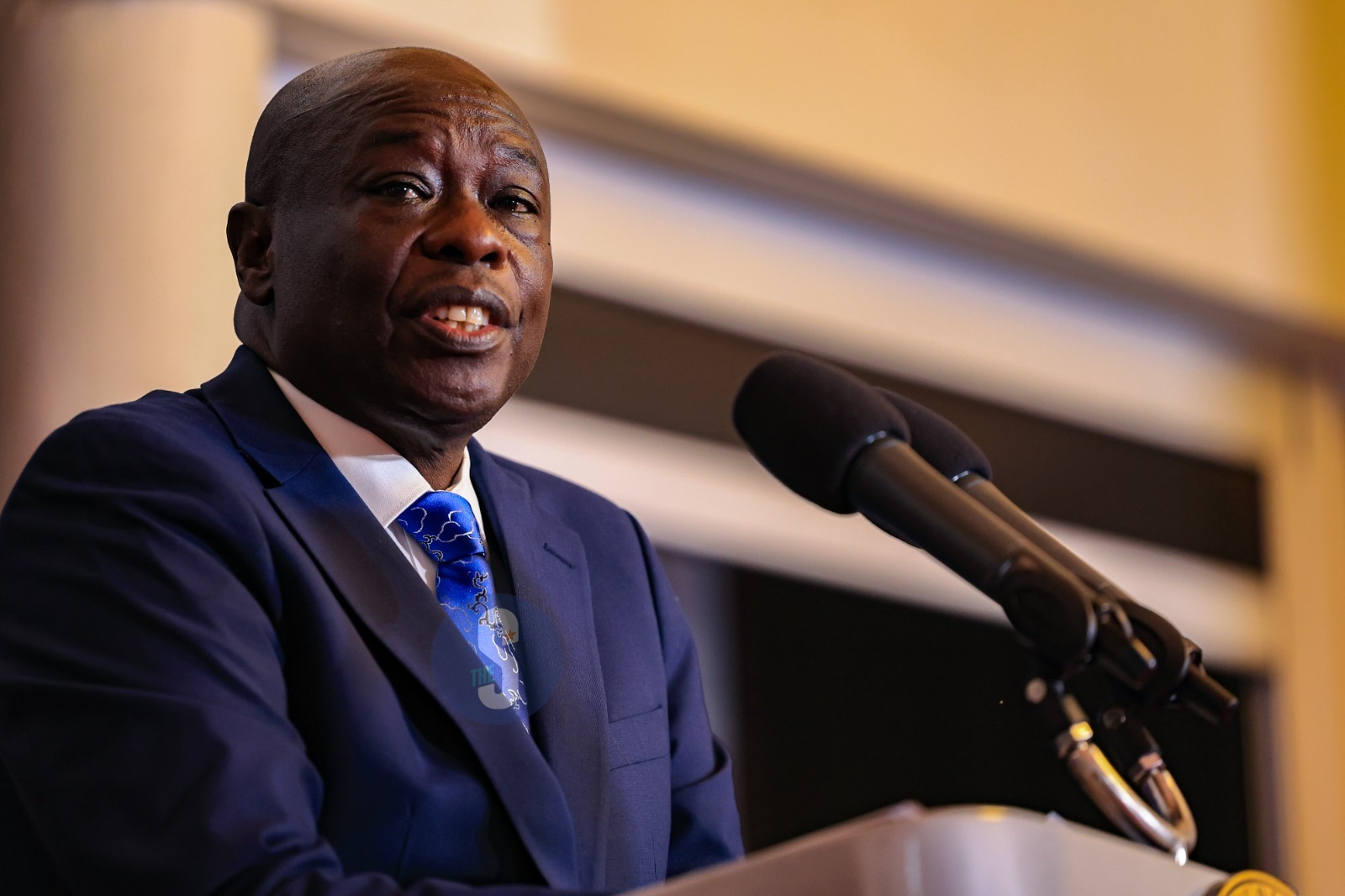
“Anyone talking about Wantam
has not read the constitution. The constitution says two terms. The first term
is for introducing policies and development projects, while the second term is
for completing them.”
The opportunity to respond to this piece of (apparently) Deputy Presidential nonsense was irresistible.
Is there a right to tutam?
Let’s start with what the constitution does say: “A person shall not hold office as President for more than two terms.” And a presidential term ends when the person next elected in a general election is sworn in. That person might indeed be the same – but there is no indication in the constitution that a person has a right to that second term. Or even that two terms is the norm.
Nor is there any indication that term one is designed for preparation and term two for completion of presidential projects. It’s obvious nonsense – some projects could be a matter of months, some of decades.
In fact, when that Parliamentary Select Committee moved Kenya towards a US-style presidential system, they simply kept the provision about term limits in earlier drafts that applied to the ceremonial president in the basically parliamentary system. And that was not for introducing and completing presidential projects!
We all know that there are two
main aspects to this provision: (i) a president should not be in office for too
long and (ii) for accountability to the electorate there should be an election
after a few years. The voters must be able to say, “We don’t want this person
any longer”.
In fact, as I pointed out last week, when the Americans were drafting their constitution they even took care to make it possible to remove a president (by impeachment) before their term was complete – as Kenya has done.
Another weak argument has been made in some quarters that there is a reasonable expectation – almost a right – to a second term because all previous presidents of Kenya have had one.
Kenya’s first President, of course, died in office. The constitution at the time did not have any limit on presidential terms. And the country was effectively a one-party state.
President No. 2, Moi, took office when there was no term limit – and for part of his time the country was legally a one-party state: no alternative could stand. When it became possible for other parties to put up candidates, and a term limit was introduced, in 1992, Moi insisted the latter did not apply to him and stood again.
A major reason he won that election, and the 1997 one, was the inability of the opposition to get their act together and put forward one candidate. In 1992 Moi received only 36.35 per cent of the votes. In 1997 he won 40.4 per cent. Hardly a resounding endorsement. The runners-up were Kenneth Matiba in 1992 (26 per cent) and Kibaki in 1997 (30.89 per cent). If that happened today, there would have to be a runoff between the two frontrunners.
Kibaki campaigned for the 2002 election saying he would serve for only one term. We all know what happened. In 2007 Kenya had its most violent election and aftermath ever, and there is a lingering sense that we do not know who actually won.
Finally, Uhuru Kenyatta was the first person elected President under the new constitution. Yes, he was re-elected in 2017. First, in an election that the Supreme Court invalidated. And then in one that was boycotted by the only person who stood any chance of defeating him.
Surely this history does not indicate that the people of Kenya have decided that Presidents should necessarily get two terms!
And of course we have seen voters in some counties seem not to believe this either. Apparently, in seven counties no governor has got a second term.
Why two terms?
How did the Americans hit on two terms? Their constitution did not originally have any limit on the number of terms. But George Washington, the first president, set a precedent when he retired after his second term. This became a convention – which was eventually adopted into their constitution.
But American voters have never accepted the idea that presidents automatically deserve a second term. Four have been rejected by their parties so could not even stand again. And 10 have been rejected by the voters in their second election – three of them in my lifetime: George H.W. Bush, Jimmy Carter and Gerald Ford. Then, of course, there was Trump I!
It is
now considered wise to limit how long presidents (especially executive
presidents – that is those who are heads of government as well as heads of
state) may hold office, and it is considered a failure of governance if a
country abandons or weakens this idea. Indeed, it is not entirely a modern
constitutionalist idea. Various African societies limited the time a leader
could remain in office. The same was true of the ancient Greek city states.
Although the US constitution is the main inspiration for modern provisions, these are not all the same. Many, like Kenya, have a maximum of two five-year terms. Several have a maximum of two four-year terms – like the USA. Others include a maximum of two six-year terms (eg Egypt, Liberia), or two seven-year terms (eg Uzbekistan), or one six-year term (Philippines), or one seven-year term (Kazakhstan). These country examples are all of executive presidential terms.
The advantage of incumbency
There is considerable literature on how it is easier for someone already in office to win elections. They obviously are more prominent and better known than rivals generally. They have more publicity and access to media. They find it easier to raise funds. They will have been dishing out goodies to the voters – in the form of “development” or favourable decisions. And they will time decisions to have maximum electoral impact. And unless they are appalling at governing, they are likely to be seen as having governmental experience that others lack.
These are all true even if no corruption or law breaking is involved. All too often, in some countries, they may be.
Politics
on the streets
What a disaster is the Wantam v.Tutam “debate”. The one thing the so-called united opposition is united about is wanting to get rid of Ruto. They don’t have common policies – if they have policies. So they have to resort to Wantam or Tutam. And government supporters feel compelled to respond in kind. It’s a simple idea, and one that can be represented in crude, almost obscene, gestures.
Another element is that – of the 10 or so people who like to say they are prospective presidential candidates – only two are actually sitting politicians. Others, of course, have held political posts. But our system – including to some extent the constitution – means that politics, in the sense of serious debate about government policies and performance, does not take place mainly in Parliament, as it surely ought.
The most prominent political activity is taking place in the streets. This is politics in the Kenyan sense: it’s all about elections and who gets into power rather than what they do with power if they get it.
Retired law teacher and member of the Katiba Institute Board