Our country, Kenya,
is politically awake, angry and energised. But the public’s political
consciousness without competent governance is noise masquerading as revolution.
As young Kenyans chant “tutam” and “wantam”, it is legitimate to ask — both at
the national and county levels — whether we are asking the right questions,
fostering the right conversations and pushing for changes that are truly
consequential.
Let us use Nairobi
as a microcosm of the crisis facing Kenya. Though a geopolitically important
capital, the city continues to drown in filth, traffic chaos and criminal
neglect — failures that smaller cities in other parts of the world solved
decades ago.
As a reporter who covered Nairobi,
including its administrative and policy nerve centre — City Hall and the county
assembly — and witnessed the garbage filth, dysfunctional markets, traffic
disorder and poor management, it is evident that radical change is needed if we
are to match the quality of smaller cities elsewhere in the world.
But judging by the
cast auditioning to lead Nairobi, saying there is no hope would be a generous
assessment.
Spend some time in
San Antonio, Texas, then return to Nairobi and you immediately understand that
our crisis is not poverty — it is management. One city works because systems
function. The other survives on improvisation, political theatrics and public
endurance.
Tucked deep in the
south, San Antonio is the second-largest city in Texas and the seventh-largest
in the US. This year, the city’s population is about 1.57 million, while the metropolitan
area supports 2.6 million people and produces a regional GDP of roughly $222
billion (Sh28.67 trillion).
Nairobi, on the
other hand, has about six million people, with a city GDP of about $35 billion
(Sh4.52 trillion) and $106 billion (Sh123.69 trillion) factoring in the
metropolitan area.
What separates the
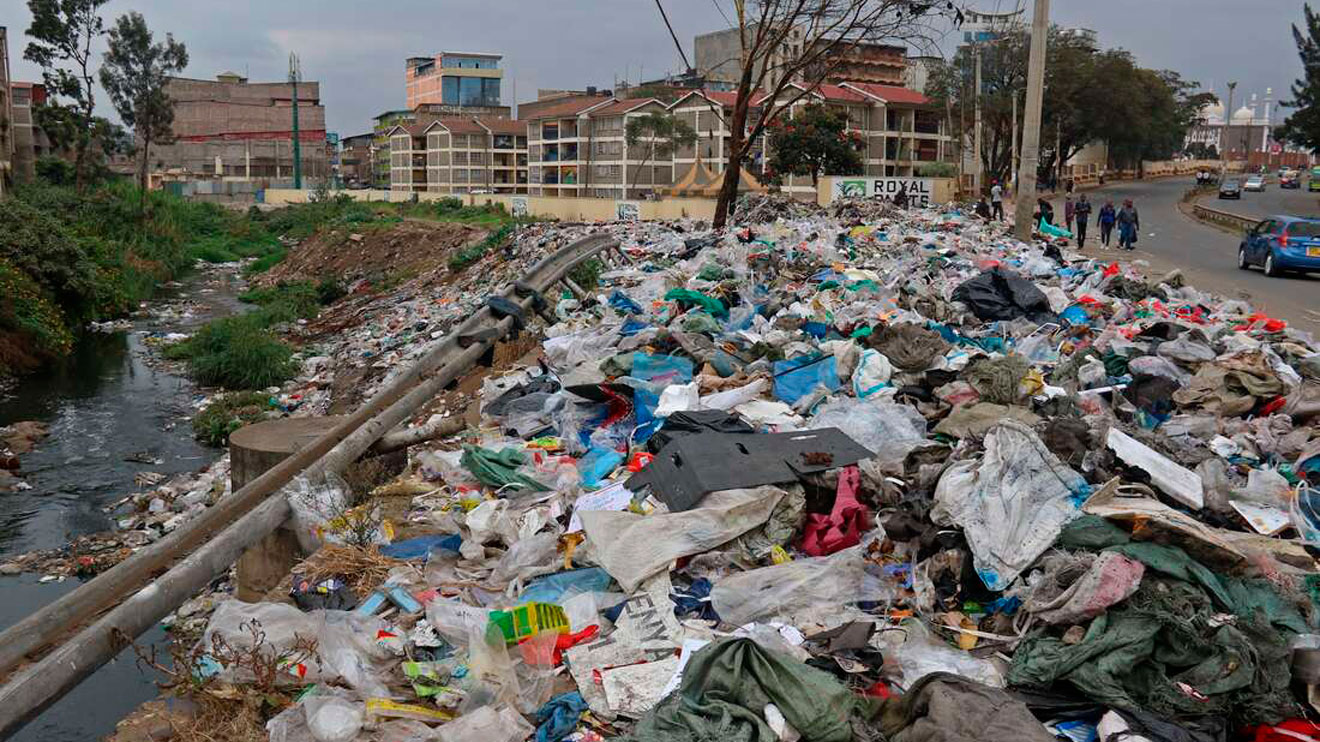
two cities is the management of basic affairs. Nairobi is a sea of filth and
disorder, trapped in a ghetto mindset that impedes meaningful progress toward
the overhyped goal of first-world status. From Kangemi to Gikomba, Korogocho to
Kayole, Kibra to Embakasi, Kawangware to Uthiru, the shame of our people
coexisting with trash is unconscionable.
And considering the
mega scandals and flagrant abuse of public resources witnessed under successive
devolved administrations — from the founding Governor Evans Kidero-led
administration to the current regime — the failure of solid waste management is
not for lack of funds or coherent plans. It is a potent mix of willful neglect,
greed, corruption and failure by
the rule of law to enforce what is right.
There is always the
counterclaim that public indiscipline makes us a trash capital, but I contend
that this is a lazy argument that collapses under the weight of its own shadow.
Kenyans want clean streets, a hygienic and livable environment and the highest
attainable standard of living, as promised by the constitution.
But given the abject
poverty — which I argue is artificial and imposed by the political class — many
Kenyans are merely surviving each day under these conditions.
With strong
political goodwill and innovative thinking, solid waste management can be fixed
in Nairobi. In San Antonio, waste management is handled by the city’s Solid
Waste Management Department.
Residential services include weekly trash
collection and bi-weekly recycling. The city currently has a 40 per cent
recycling rate and offers residents two annual bulk pickups and free landfill
days to manage large-scale waste.
Every morning at around 6.40am, anyone
already outside will see city workers in pickup trucks, sweeping streets and
parking lots, collecting litter to keep public spaces clean.
The city’s hygiene
standards also extend to its water bodies. Authorities dedicate one week each
year to dredging the main river alongside, the San Antonio River Walk — the
equivalent of our Nairobi River — removing solid waste and invasive species
that could make it smelly and an eyesore.
Turning to public
safety, snatch-and-grab incidents and violent crime are rampant in Nairobi
compared to San Antonio, where safety is managed by the local police department.
While the American city has recorded a recent 13 per cent decrease in overall
crime, its crime rate still remains above the national average.
To address
this, the city increased its 2026 budget to fund additional police officers.
Law enforcement is also known for clinical precision in applying rules
uniformly, leaving little room for the personal factors that often breed
corruption, compromise and laxity.
Another critical
area of management is traffic congestion, a major problem in Nairobi that may
require divine intervention to solve. In San Antonio, traffic flow is managed
through a combination of high-tech centralised signal systems, proactive
highway expansion and multimodal planning.
Key strategies include using the
TransGuide centre for real-time monitoring of more than 1,400 traffic signals,
implementing Traffic Signal Synchronisation and Modernisation to reduce delays
and advancing Texas Clear Lanes projects on major highways and traffic
arteries.
Compare that to the former City in the Sun, where we still rely on
traffic marshals, broken traffic lights, chaotic boda boda movement and a
matatu cartel.
I could compare
many other areas, but the point is simple: Kenyans deserve a better quality of
life than what we currently endure. None of this is impossible.
It requires
leadership capable of crushing cartels, ignoring the usual sectarian noise
whose profiteering model depends on chaos and dysfunction, handling public
resources with probity and delivering for the people. We can do it.
The writer is a former reporter with the Star and a crisis
communication expert based in the US




![[PHOTOS] The new Ngong –Naivasha Road viaduct](https://cdn.radioafrica.digital/image/2026/06/64d4f771-4432-4aee-ba3c-2f304c4436ec.jpg)










![[PHOTOS] 'Mr Speaker Sir' Gen Z protester in court](https://cdn.radioafrica.digital/image/2026/06/b3e62d8e-25c3-4780-90f9-4eb48b1ce8a7.jpg)