IMANI: Why Macron’s East African investment reset faces ‘audacity’ backlash
Viral flash of French President’s temper exposes fragility of vaunted ‘Partnership of Equals’ as he scolds room of African leaders for “total lack of respect”.
by CATHY WAMAITHA
Audio By Vocalize
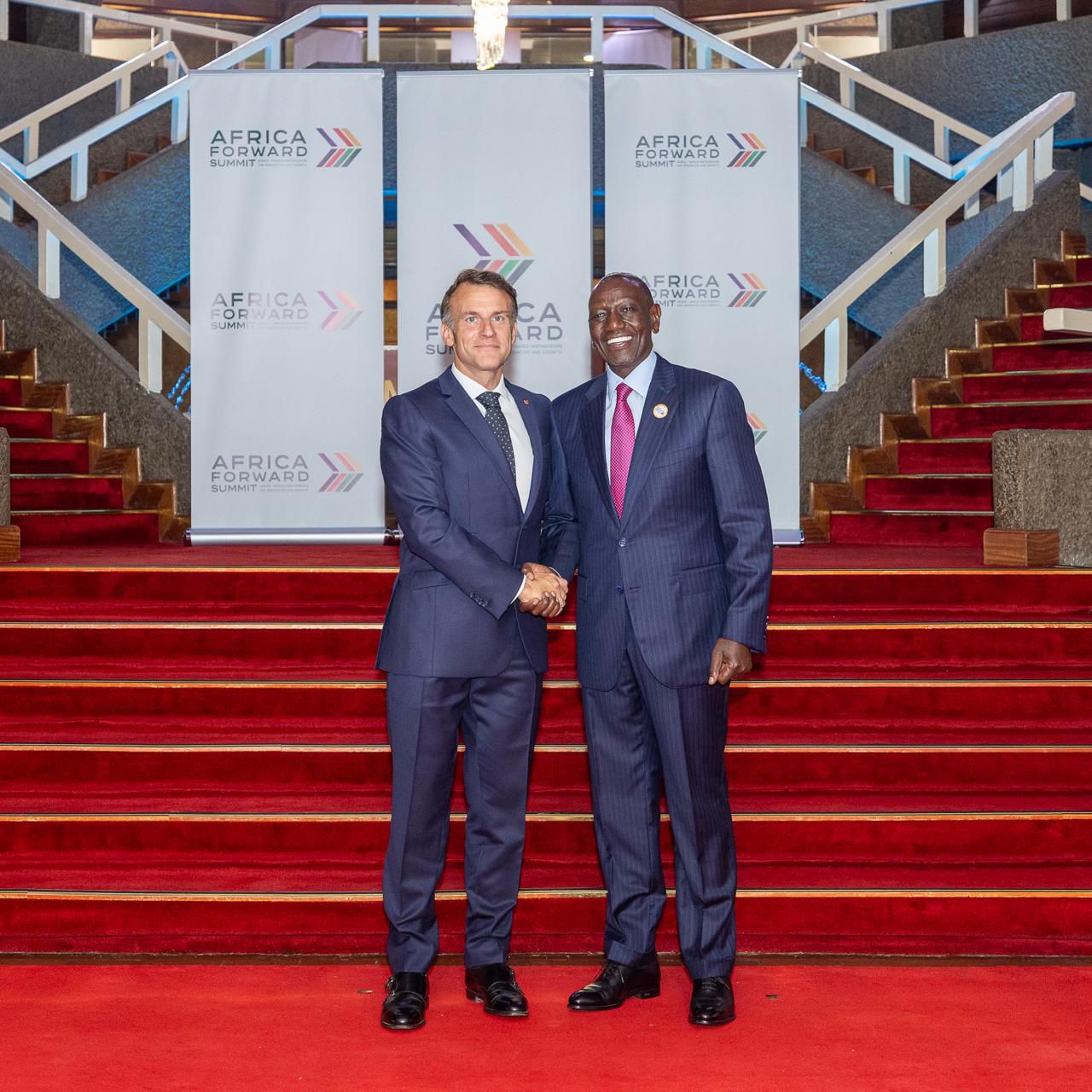
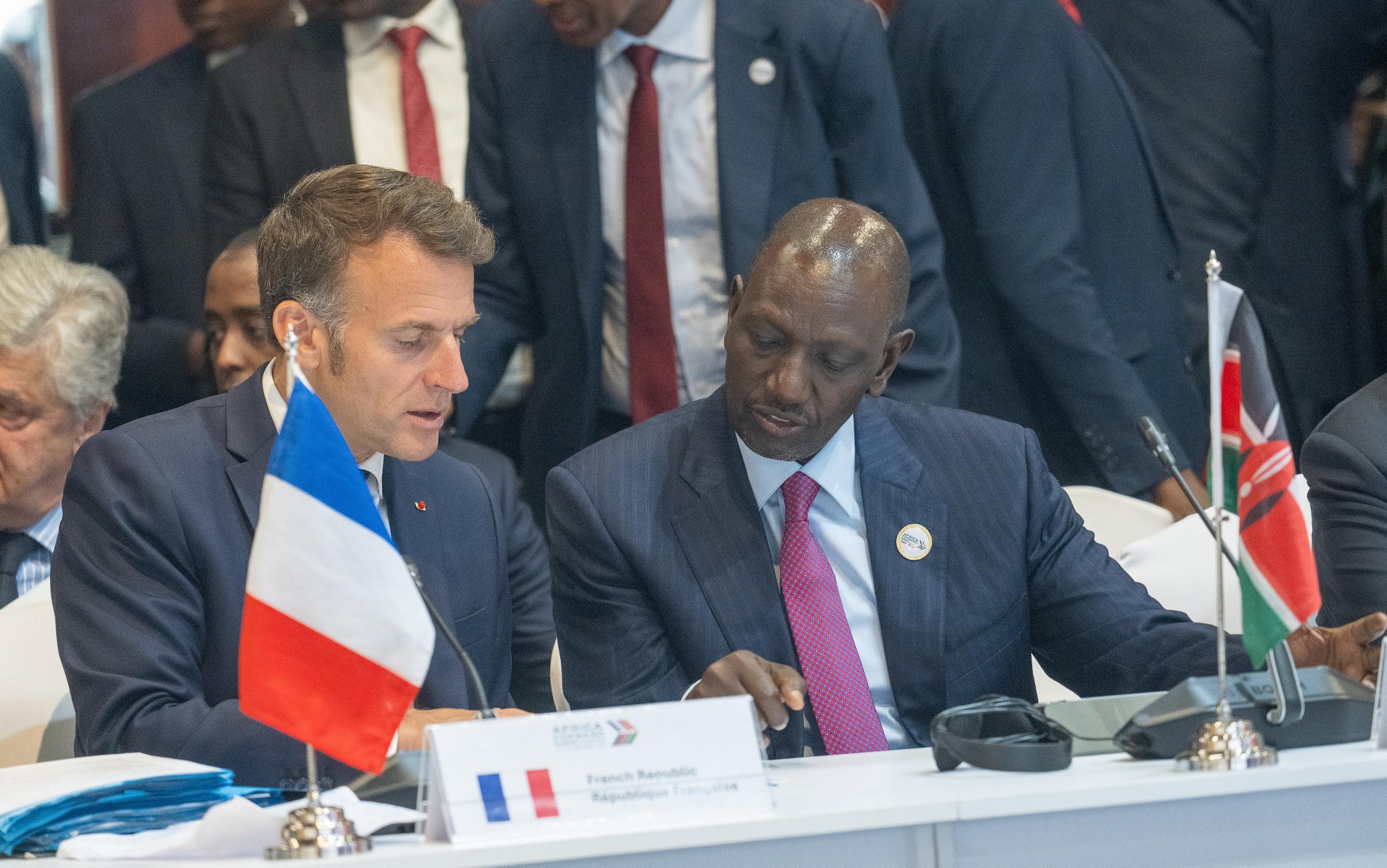
French President Emmanuel Macron and President William Ruto at KICC, Nairobi /PCS/FILE
Since French
President Emmanuel Macron landed in town, Nairobi has barely sat still. From
jogging through the streets shoulder-to-shoulder with marathon legend Eliud
Kipchogeto a traditional
dance with President William Ruto and making ugali with rugby star-turned-chef
Dennis Ombachi, the optics have been one for the books.
But it took a
single flash of temper—an unscripted dressing-down of a noisy audience—to expose the raw nerves.
Irritated by
persistent chatter during a panel of artists and young entrepreneurs at the
University of Nairobi on
Monday, Macron halted proceedings, seized the microphone and scolded the room for a “total lack of respect”.
He then suggested
that those wishing to hold side conversations should either use the “bilateral
rooms” or “go outside.”
While the hall fell
silent and some in the auditorium applauded his call for order, the clip went
viral within hours, cleaving Kenyan public opinion.
The moment was
widely interpreted on social media and by local political figures as a
patronising display of “colonial audacity”.
Critics were not
confined to Kenya but were spread across the continent, all rebuffing the
French leader for the outburst. Many people argued that such a public reprimand
of sovereign citizens within their own borders violates basic diplomatic
decorum.
To these people,
the incident served as a painful reminder of a paternalistic era, with
observers noting that no African head of state would ever be permitted to
similarly “discipline” a European audience on their own soil without causing a
major international incident.
The backlash has
been particularly sharp among the youth and academia, who view the interruption
as a patronising ‘schoolmaster’ tactic that undermines Macron’s rhetoric of a
partnership of equals.
And as criticisms
were landing, riot police cordoned off the Kenyatta International Convention
Centre, arresting at least 11 demonstrators — including a French national — who
had marched under banners denouncing “imperialist domination”.
The episode was a
gift to domestic opposition figures already sceptical of Ruto’s summit-hosting
ambitions.
Led by Wiper’s
Kalonzo Musyoka, the opposition stated that the glamour of international
summits is being used to “mask local human rights violations and the steady
erosion of democratic space” ahead of the next electoral cycle.
But let’s look at
why, perhaps, the visitor had it in him to talk down to his hosts — Macron
arrived bearing investment pledges totalling €23 billion (Sh3.47 trillion), a financial bazooka intended to
cement France as a primary partner in Africa’s green and technological
future.
Of this, €14
billion originates from French private sectors, while €9 billion is earmarked
from African entities to bolster artificial intelligence, agriculture and the
energy transition.
Macron said the
commitments would create more than 250,000 direct jobs across France and the
continent.
“What the African
continent is asking for is not that we come and give aid,” he said. “They want
us to come and invest,” he said at the business forum with nearly 7,000 participants
and 700 business meetings.
On defence, the
summit followed the signing in April 2026 of a five-year renewable cooperation
agreement that brought 800 French troops to Mombasa for joint training
exercises. It also covers maritime security, intelligence sharing, peacekeeping
and disaster response.
The pact grants
French forces diplomatic-style immunity and gives Paris primary jurisdiction
over offences committed by its soldiers on Kenyan soil, a provision that has
also drawn fierce condemnation.
For Ruto, the visit
yielded a windfall in the form of the Macron Accord, a bilateral suite of 11
agreements valued at Sh116 billion.
But for Macron,
choosing Nairobi as the first non-Francophone host for this forum since its
inception in 1973 signalled an intentional departure from the volatile Sahel.
After anti-French sentiment reached a fever pitch, Paris was forced to withdraw
its soldiers from Mali, Burkina Faso and Niger between 2022 and 2025.
France had since
the independence of its former African colonies maintained a policy of
economic, political and military sway dubbed Françafrique, which included
keeping thousands of troops in the region.
Consequently,
Macron has turned toward the stable, English-speaking gateway of East
Africa.
The 2026 gathering
is the first since the collapse of those West African relationships, making the
pivot to Anglophone Africa a matter of strategic survival.
While France may be
offering billions in investment, such financial power does not grant a foreign
leader the right to shush us.
And as
Pan-Africanist voices have opined, the lecture reinforces a hierarchy whereby
African agency is secondary to European expectations — a paradigm that we are
yet to shake off, decades after Africa’s freedom.
As Kenya navigates
this influx of French capital and military cooperation, the underlying tension
remains: is this a genuine partnership of equals, or is there more than meets
the eye?
This is premium content
Subscribe to Continue Reading
Help us continue bringing you unbiased news, in-depth investigations, and diverse perspectives. Your subscription keeps our mission alive and empowers us to provide high-quality, trustworthy journalism. Join us today to make a difference!





![[PHOTOS] The new Ngong –Naivasha Road viaduct](https://cdn.radioafrica.digital/image/2026/06/64d4f771-4432-4aee-ba3c-2f304c4436ec.jpg)







![[PHOTOS] 'Mr Speaker Sir' Gen Z protester in court](https://cdn.radioafrica.digital/image/2026/06/b3e62d8e-25c3-4780-90f9-4eb48b1ce8a7.jpg)