MUNI: Africa-France Summit to lift Kenya and East Africa in global order
Following declining influence in the Sahel and Francophone West Africa, Paris pivots toward engagement with Anglophone Africa.
by DENNIS MUNI
Audio By Vocalize
Kenyan and French teams during a preparatory meeting ahead of Africa-Summit meeting at the Treasury on May 5, 2026 /COURTESY
The inaugural Africa Forward Summit, co-hosted by Kenya and France in
Nairobi next Monday and Tuesday (May 11 and 12), takes place at a defining moment in
global politics. The international system is undergoing a profound
transformation, marked by intensifying geopolitical rivalry, economic
fragmentation, technological competition, supply chain disruptions, climate pressures
and declining confidence in traditional multilateral institutions.
The era of predictable alliances and uncontested Western dominance is
giving way to a fluid multipolar order, in which regional blocs, middle powers
and emerging economies increasingly shape global outcomes.
Within this shifting landscape, the Africa-France Summit is more than a
diplomatic event. It reflects a broader recalibration of Africa-Europe
relations given evolving global realities, while positioning Eastern Africa as
an increasingly strategic hub of economic, political and security engagement.
For Kenya and the wider region, the summit offers an opportunity to leverage
these shifts to accelerate industrialisation, deepen regional integration,
strengthen technological capacity and expand African agency in global
governance.
The summit is structured around seven interconnected agendas: energy
transition and green industrialisation, sustainable agriculture, AI and digital
technologies, resilient health systems, the blue economy, peace and security
and reform of the international financial architecture. Among these, reform of
the international financial architecture is particularly consequential, as it
addresses Africa’s persistent challenges of high borrowing costs and limited
access to affordable development finance. It also seeks to mobilise larger
volumes of both domestic and international capital for development priorities.
The summit also reflects a strategic reorientation in France’s Africa
policy. Following declining influence in parts of the Sahel and Francophone
West Africa, Paris has increasingly pivoted toward pragmatic engagement with
Anglophone Africa, with Eastern Africa emerging as a key priority. This shift
is driven by several interests. These include the region’s location along
critical Western Indian Ocean maritime routes, its expanding consumer markets
and its growing role in global supply chains and Indo-Pacific security
dynamics.
At the same time, Eastern Africa offers French firms new frontiers for
investment in infrastructure, renewable energy, digital technologies and
industrial markets. The region also provides France with an avenue to reassert
geopolitical relevance in a more competitive multipolar environment. The
decision to co-host the summit in Kenya, the first Anglophone African country
to do so at this level, carries both symbolic and strategic weight,
underscoring Eastern Africa’s rising importance as a geopolitical and economic
frontier.
For Kenya, the summit reinforces Nairobi’s growing status as a regional
anchor state. The city hosts major international institutions, including the
United Nations Environment Programme and UN-Habitat, while the planned
relocation of three other UN agencies further consolidates its position as a
principal diplomatic and multilateral hub of the Global South. Beyond its
diplomatic profile, Nairobi has also emerged as a regional centre for finance,
logistics, mediation, innovation and technology. The timing of the summit is
equally significant, as it precedes major global forums, including the G7. It
positions Nairobi as a key platform where African priorities can be articulated
and advanced within global economic governance and climate finance discussions.
Economically, Kenya serves as the gateway to the broader Eastern African
market through the East African Community common market framework. The EAC bloc
represents a market of more than 300 million people with a combined GDP
estimated at more than $300 billion. This integration framework has expanded
regional trade, labour mobility, infrastructure connectivity and investment
opportunities across Eastern Africa. For France and other external actors,
Kenya therefore offers not only access to its domestic economy but also a
strategic entry point into one of the fastest-growing regional markets in the
Global South.
Against this backdrop, France’s engagement with Kenya is increasingly
shifting from a traditional donor-recipient model toward a more strategic,
interest-driven partnership anchored in investment, industrial cooperation,
technological exchange and security collaboration. This evolution is reflected
in the presence of more than 140 French companies operating in Kenya across key
sectors, including infrastructure, renewable energy, pharmaceuticals, agribusiness,
logistics, finance, retail and digital technologies. France has become Kenya’s
fourth-largest foreign investor and bilateral trade surpassed $300 million by
2025, signalling the depth of growing commercial ties. France also remains a
leading bilateral partner in Kenya’s energy sector.
The broader significance of the summit can be understood through the
lens of complex interdependence, advanced by Robert Keohane and Joseph Nye.
Their theory argues that in a highly interconnected global system, states
derive influence not only from military power but also through trade,
investment, technology, institutions and diplomacy. The Africa-France Summit
reflects this reality. France seeks stable economic and geopolitical
partnerships in Africa to secure markets and reinforce its Indo-Pacific
strategy, while Kenya and Eastern Africa seek investment, infrastructure,
climate finance, industrialisation, technology transfer, and stronger
participation in global decision-making.
One of the summit’s key opportunities lies in advancing economic
transformation across Eastern Africa by aligning external investment with
regional industrial priorities. Realising this potential, however, requires
addressing structural constraints that continue to affect competitiveness. The
region still faces uneven ease of doing business due to regulatory
fragmentation, bureaucratic inefficiencies, weak infrastructure and high
cross-border trade costs. Strengthening regulatory harmonisation, improving trade facilitation
systems, and enhancing legal and policy predictability will therefore be
essential to attracting and sustaining large-scale investment.
In this regard, regional integration becomes central to the summit’s
long-term impact. Through the EAC Common Market, Eastern Africa represents a
significant collective market with substantial bargaining power, if leveraged
effectively. Engaging external partners as a unified bloc rather than as
fragmented national economies would enhance negotiating strength, improve
investment terms, and increase access to technology transfer and industrial
partnerships. It would also reduce the risk of unequal bilateral arrangements
that exploit regional fragmentation.
At the same time, Eastern African states have an opportunity to deepen
intra-regional integration so that investment flows are more broadly
distributed while still reinforcing Nairobi’s role as a regional hub.
Strengthening infrastructure connectivity, transport corridors, energy
interlinkages, digital systems and regional industrial value chains can
position the region for more balanced and inclusive growth. A coordinated
regional framework would allow countries to specialise in complementary
sectors, with Nairobi anchoring coordination, finance, and innovation, while
collectively enhancing regional competitiveness, resilience, and shared
prosperity.
The summit also carries significant geopolitical weight as Eastern
Africa becomes a key arena in global strategic competition. Kenya’s location
along major Western Indian Ocean trade routes strengthens both its own and the
region’s strategic importance in maritime security and the blue economy. This
opens an opportunity for Kenya and its regional partners to deepen cooperation
in maritime surveillance, intelligence sharing, and security coordination. This
helps the region better respond to shared challenges such as piracy,
trafficking, illegal fishing, and extremism, while supporting a more secure and
integrated blue economy.
At the same time, these opportunities must be carefully balanced with sovereignty
considerations. Historical experience across Africa shows that external
partnerships can deliver significant benefits but also carry risks, where
technical cooperation gradually expands into broader political influence if not
clearly structured. It is therefore essential that such engagements prioritise
local operational control, skills development, technology transfer,
intelligence localisation, and strong institutional capacity-building. This
will ensure that cooperation strengthens domestic capability rather than
creating long-term dependency on external systems.
Importantly, Kenya’s engagement with France should be viewed within a
broader strategy of expanding global partnerships. In the emerging multipolar
order, African states are increasingly engaging multiple global actors
simultaneously in ways that strengthen bargaining power, enhance resilience,
and increase diplomatic flexibility. In this context, cooperation with France
complements Kenya’s wider relations with Asia, the Gulf states, North America,
and other African economies, contributing to a more pragmatic and balanced
external engagement strategy.
Ultimately, the Africa-France Summit will be judged not by its
diplomatic symbolism but by its ability to deliver tangible developmental
outcomes. Its success will depend on whether it strengthens local industries,
generates employment, expands technology transfer, deepens regional
integration, and reinforces Africa’s strategic autonomy.
The writer is a senior research fellow at Gloceps, a Nairobi-based think tank
This is premium content
Subscribe to Continue Reading
Help us continue bringing you unbiased news, in-depth investigations, and diverse perspectives. Your subscription keeps our mission alive and empowers us to provide high-quality, trustworthy journalism. Join us today to make a difference!


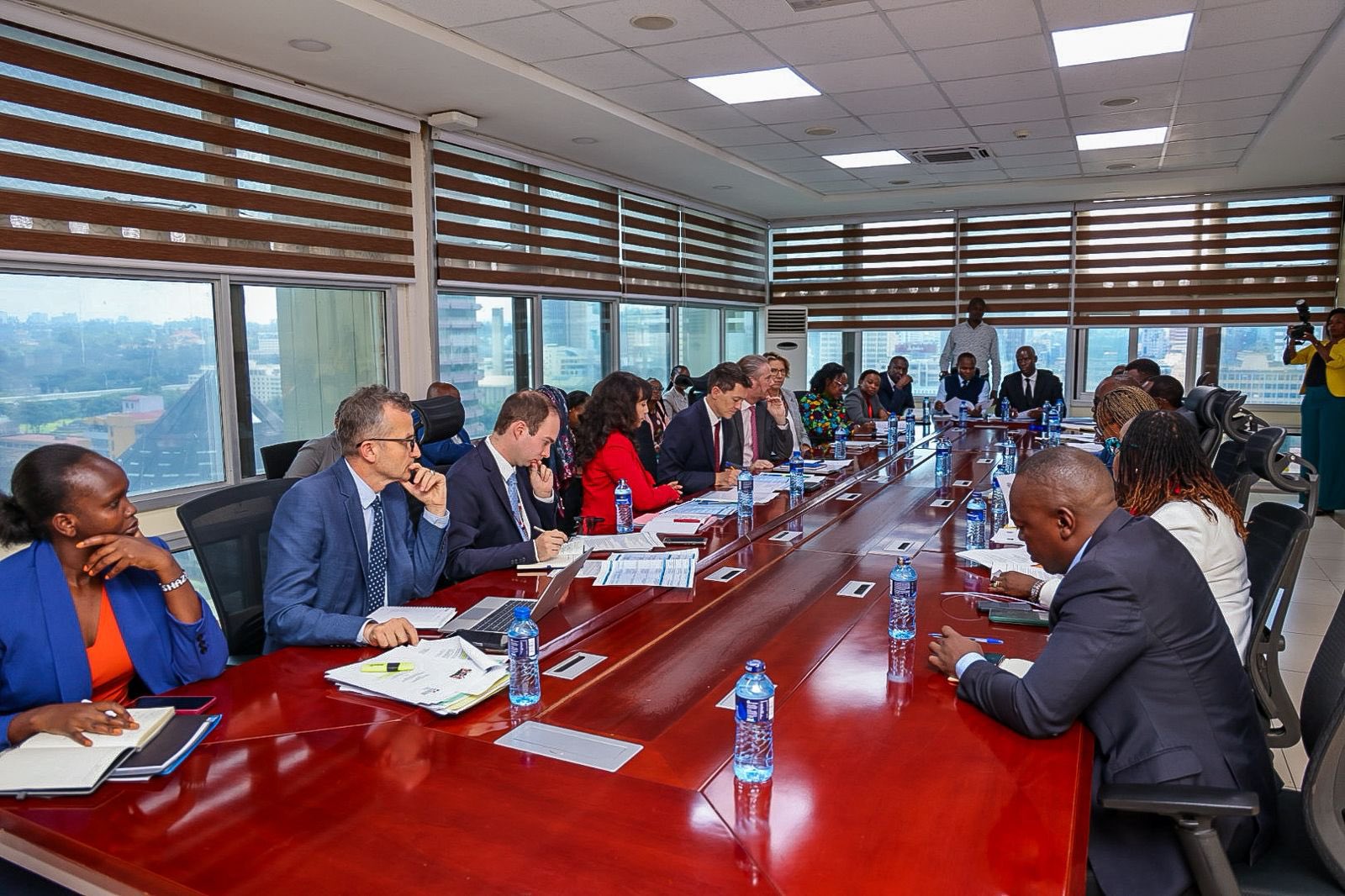 Kenyan and French teams during a preparatory meeting ahead of Africa-Summit meeting at the Treasury on May 5, 2026 /COURTESY
![[PHOTOS] The new Ngong –Naivasha Road viaduct](https://cdn.radioafrica.digital/image/2026/06/64d4f771-4432-4aee-ba3c-2f304c4436ec.jpg)










![[PHOTOS] 'Mr Speaker Sir' Gen Z protester in court](https://cdn.radioafrica.digital/image/2026/06/b3e62d8e-25c3-4780-90f9-4eb48b1ce8a7.jpg)