Kenya is ageing – quietly,
steadily and, for the most part, unprepared.
For decades, public policy
has treated ageing as a marginal welfare concern, addressed primarily through
modest cash transfers and family support systems. But that reality is shifting.
The older persons of today – and even more so of tomorrow – are living longer,
facing more complex health challenges and doing so within rapidly changing
social and economic environments. The question is no longer whether Kenya is
ageing. The question is whether our policies are keeping pace.
They are not.
For years, Kenya’s approach
to ageing has leaned heavily on social assistance, most notably the Older
Persons Cash Transfer. While this intervention has provided critical relief, it
has also, inadvertently, narrowed the policy imagination.
Ageing has come to be
seen primarily through the lens of income support, rather than as a
multidimensional issue that intersects with health systems, care
infrastructure, social inclusion and human dignity.
Yet the needs of older
persons are changing – rapidly.
Non-communicable diseases
such as hypertension, diabetes and dementia are on the rise, requiring
long-term and often costly care. At the same time, traditional family support
systems are weakening under the pressures of urbanisation, migration and
economic strain.
The result is a growing care deficit – one that is currently
filled by informal, unsupported and often invisible caregiving structures.
Add to this the less
visible, but equally significant, challenges: loneliness, neglect, digital
exclusion and increasing vulnerability to abuse. In a society that is
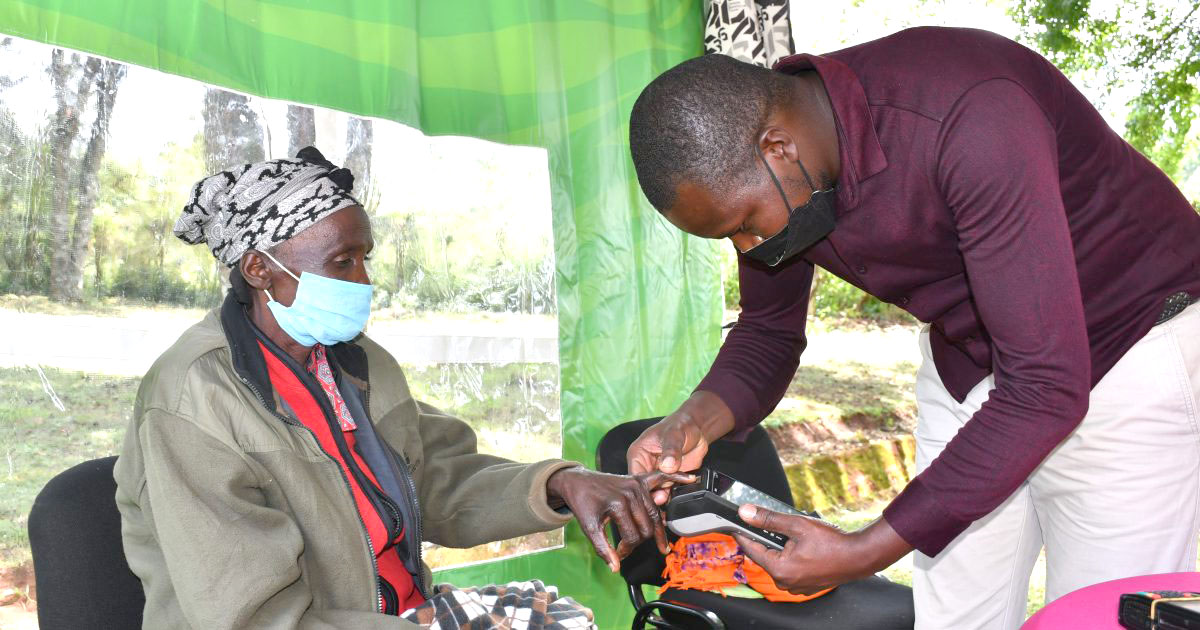
digitising access to services – from banking to healthcare – many older persons
find themselves locked out, not by choice, but by design.
This is where the
leadership of the state department becomes critical – not just as a coordinator
of programmes, but as a driver of a new policy vision.
The ongoing national
assessment presents an opportunity to move beyond fragmented interventions
toward a holistic, rights-based approach to ageing. But for this to happen, the
process itself must embody the principles it seeks to advance.
Inclusivity must be more
than a procedural checkbox. It must be intentional, structured and meaningful.
The assessment must bring together a wide and diverse range of stakeholders.
This includes not only government agencies and development partners, but also
universities, community-based organisations, practitioners and, importantly,
older persons themselves.
Knowledge on ageing does not reside in a single
institution or sector—it is distributed across society. Tapping into this
diversity is not optional; it is essential for accuracy and legitimacy.
Older persons are not
merely beneficiaries of policy; they are citizens with rights, knowledge and
contributions. An inclusive policy process must therefore create space for
their voices – not as symbolic participants, but as central actors in shaping
the decisions that affect their lives.
The state department has
taken an important first step by initiating this assessment. The task now is to
ensure that the process is as comprehensive and inclusive as the issue demands.
Because in the end, the question is not simply how Kenya supports its older
persons today. It is how the country prepares for the society it is becoming.
And in that future, ageing
will not be an exception. It will be the norm. The policies we design now will
determine whether that future is marked by dignity and inclusion—or by neglect
and inequality.
But inclusion alone is not
enough. What is required is a broader paradigm shift in how we think about
ageing.
We must move from a
minimalist welfare approach to a rights-based, life-course framework. This
means investing in long-term care systems – home-based, community-based and
institutional. It means integrating geriatric care into primary healthcare. It
means strengthening social protection systems beyond cash transfers to include
services that address health, nutrition and psychosocial wellbeing.
It also means confronting
uncomfortable realities: elder abuse, social neglect and the silent
marginalisation of olde
r persons in both rural and urban settings.
And importantly, it means
listening.
Older persons must not be
treated as passive recipients of policy. They are citizens with voices,
experiences and contributions. Any meaningful reform must centre their lived
realities—not as an afterthought, but as a starting point.
The measure of a society is
often found in how it treats its most vulnerable. But in the case of ageing,
vulnerability is not a permanent category – it is a stage of life that, with
luck, most of us will reach. In preparing for an ageing society, we are not
planning for “them”. We are planning for ourselves.
The real test, therefore,
is whether Kenya can transition from policies that merely acknowledge older
persons to systems that enable them to live with dignity, security and
inclusion.
Anything less would be a
failure not just of policy, but of imagination. Such a failure would not only
undermine social justice, but also weaken national development outcomes by
ignoring the potential contributions of older citizens to communities and the
economy.
A more inclusive and forward-looking approach is therefore not
optional but necessary for Kenya’s future stability.
The writer teaches globalisation and international development at Pwani University and is a programmes associate at DTM, a Media CSO | [email protected]



![[PHOTOS] The new Ngong –Naivasha Road viaduct](https://cdn.radioafrica.digital/image/2026/06/64d4f771-4432-4aee-ba3c-2f304c4436ec.jpg)





![[PHOTOS] 'Mr Speaker Sir' Gen Z protester in court](https://cdn.radioafrica.digital/image/2026/06/b3e62d8e-25c3-4780-90f9-4eb48b1ce8a7.jpg)