Awards season this year was a celebration of Black creativity and cinema. Sinners made history with 16 Academy Award nominations. This is a film critics said would never land, which narrates an episode of Black History which had previously been diminished and at some points erased.
Watching the celebration of this film, following a legacy of storytelling dominated by the Global North and leading to protests like #OscarsSoWhite, I felt a shift.
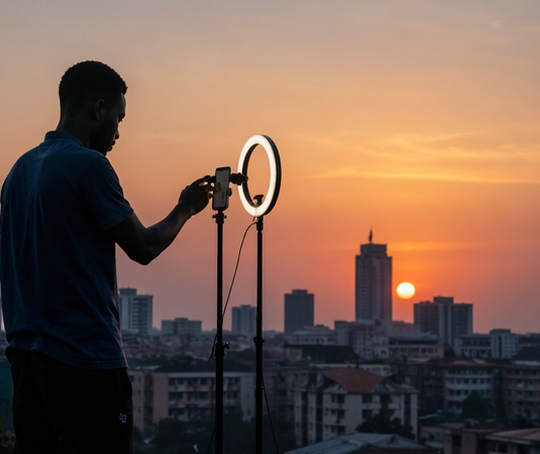
A movement, growing louder each day and nowhere more evident than on the African continent. Here, an energetic youth—representing one-quarter of the world’s population—are using creativity to renegotiate their relationship with the rest of the world and challenge the social norms affecting their communities.
In East Africa, film has a legacy of challenging social norms. From Wanjuri Kinyanjui’s The Battle of the Sacred Tree, which explores what happens when African identities clash with missionary efforts, to Amil Shivji’s Aisha whose story about a survivor’s journey to justice is catalysing change around gender based violence - homegrown stories are challenging the status quo, and audiences want more.
Private sector brands also see the potential of authentic African storytelling to effect social change. In South Africa, AB InBev promotes moderation and addresses alcohol-related GBV by partnering with African filmmakers to create content depicting positive behaviours around alcohol. This strategy is revolutionising the way brands create social value and serve society.
I was at the World Economic Forum in Davos earlier this year and, with AB InBev, convened a group of creative changemakers and unlikely allies from the private sector to explore new ways to collaborate and apply creativity to issues of social justice and the environment. For brands, the African creative economy represents a significant opportunity.
By 2030, 10 per cent of global creative goods are predicted to come from Africa. By 2050, one in four people globally will be African, and one in three of the world's youth will be from the continent.
Already, cultural and creative
industries employ more 19–29-year-olds than any other sector globally. This
collection of allies in Davos
understood that ‘business as usual’ is not enough
to succeed in Africa; it must be on terms set by
young African creatives with societal and
economic benefits.
The key question for brands is: how do we work together to harness and support this potential? The answer is simple. Brands need courage to invest in possibilities where others see risk; wisdom to partner with those others overlook; and finally, tenacity - to match an African youth that is not waiting, but forging its own path.
As the energy of the creative sector continues to gain momentum, I am left wondering: which brands will be smart enough to get involved in our movement, and who has what it takes to thrive in this new world?
The writer is the founder and chief mission officer of Brands on Mission
![[PHOTOS] The new Ngong –Naivasha Road viaduct](https://cdn.radioafrica.digital/image/2026/06/64d4f771-4432-4aee-ba3c-2f304c4436ec.jpg)








![[PHOTOS] 'Mr Speaker Sir' Gen Z protester in court](https://cdn.radioafrica.digital/image/2026/06/b3e62d8e-25c3-4780-90f9-4eb48b1ce8a7.jpg)