It is in this context that the four propositions on
safeguarding peace and stability, put forward by Xi Jinping during his meeting
with the Crown Prince of Abu Dhabi, take on particular significance.
These proposals
do not merely respond to an immediate crisis; they seek to address
long-standing gaps in trust, governance and development that have repeatedly
driven the region into cycles of conflict.
The first proposition, commitment to peaceful
coexistence, reflects a simple but powerful truth: the Gulf states are bound by
geography and shared interests.
They cannot relocate, nor can they escape the
consequences of instability in their neighbourhood. For decades, regional
tensions have been aggravated by reliance on external powers to guarantee
security, often deepening divisions rather than resolving them.
A shift toward
a cooperative security framework, one built on dialogue, mutual respect and
shared responsibility offers a more sustainable path forward.
Recent diplomatic
openings among Gulf countries demonstrate that reconciliation is possible when
leaders recognise that coexistence is not optional but necessary.
The second proposition, commitment to national
sovereignty, addresses one of the most sensitive issues in the region. The
modern history of the Middle East has been shaped by repeated violations of
sovereignty, including military interventions and external interference in
domestic affairs. For many states, especially developing ones, sovereignty is essential
for survival and progress.
Respecting territorial integrity and political
independence is critical to building stable institutions and public confidence.
In the case of Iran, prolonged pressure and confrontation have only deepened
mistrust. A genuine respect for sovereignty would require all parties to move
away from coercive approaches and toward engagement based on equality and
mutual recognition.
Equally important is the third proposition: commitment
to the international rule of law. In recent years, the selective application of
international law has weakened global norms and undermined trust in the system.
When rules are enforced unevenly, they lose legitimacy, and the risk of
conflict increases. For the Middle East, this has meant that disputes often
persist without consistent legal accountability.
Upholding the authority of the
United Nations and the principles of its charter is therefore essential. A
rules-based order provides smaller and developing states with protection
against domination and ensures that disputes are resolved through established
mechanisms rather than force. Without this foundation, the region risks sliding
into a system where power alone determines outcomes.
The fourth proposition highlights the need for a
balanced approach to development and security.
Too often, security has been
treated in isolation from economic and social conditions. Yet instability in
the Middle East is closely linked to challenges such as unemployment,
inequality and limited economic opportunities. Security without development is
fragile, while development without security is difficult to sustain.
A balanced
strategy recognises that both must advance together. Economic growth,
infrastructure development and technological cooperation can create the conditions
for lasting peace by reducing tensions and fostering interdependence among
states.
In this regard, the emphasis on shared opportunities
through cooperation with China introduces a constructive dimension. By linking
regional development with broader economic initiatives, the Gulf states can
diversify their economies and build resilience against external shocks.
More
importantly, economic cooperation creates incentives for peace. When countries
are connected through trade and investment, the cost of conflict increases,
making stability a shared interest rather than an abstract goal.
The situation in Iran highlights the urgency of
adopting such a comprehensive framework. The temporary ceasefire with the
United States remains highly unstable, largely because it is built on limited
trust and lacks a broader political settlement.
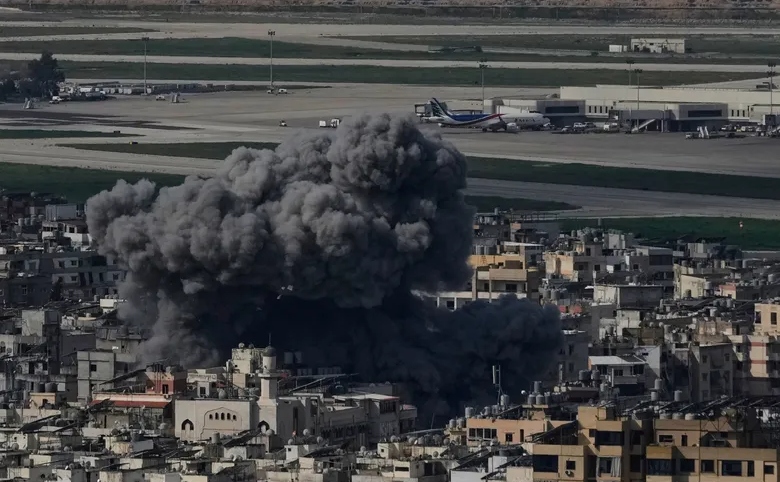
The conflict has already
disrupted global systems and weakened adherence to the principles of the UN
Charter, with serious consequences for the Gulf and the wider Middle East.
Without addressing the deeper causes of tension—mutual suspicion, external
interference and the absence of a regional security structure—any pause in
hostilities is unlikely to last.
The four propositions put forward by President Xi
Jinping are anchored in Chinese visions such as the Global Development
Initiative and the Global Security Initiative. These frameworks aim to uphold
international fairness and justice, reflect the broadest common interests of
the international community and offer practical guidance for resolving crises.
Rather than imposing solutions, they emphasise dialogue, inclusiveness and
cooperation, presenting a distinct approach that prioritises long-term
stability over short-term advantage.
Ultimately, achieving peace in the Middle East will require
patience, commitment and a willingness to rethink traditional approaches. The
challenges are significant, but so are the opportunities.
The four propositions
provide a clear and balanced roadmap, one that addresses both immediate
security concerns and the deeper structural issues that sustain conflict. If
embraced sincerely by regional and global actors, they could help move the
Middle East away from recurring crises and toward a more stable, cooperative
and prosperous future.
The writer is a journalist
and communication consultant







![[PHOTOS] The new Ngong –Naivasha Road viaduct](https://cdn.radioafrica.digital/image/2026/06/64d4f771-4432-4aee-ba3c-2f304c4436ec.jpg)