Political fissures
in the Mt Kenya region are widening and leaders are divided between calls for
unity and hardline factionalism and rhetoric.
The region, long
considered a united and decisive voting bloc in national politics, is
increasingly witnessing both calls for reconciliation and aggressive grassroots
mobilisation.
Former Deputy
President Rigathi Gachagua is central to the politics of succession after his
bitter falling out with President William Ruto who won the Mt Kenya vote.
Gachagua is seeking to consolidate his stronghold in the region.
Political players
say the emerging dynamic has exposed jagged fault lines among key leaders,
raising concerns over whether the region will ever again speak in one voice in
the future or remain politically fragmented.
Gachagua, in new
tack, recently urged the Mt Kenya community not to heckle President Ruto during
his tour in the region. Those remarks have drawn both support and criticism
across the political divide.
The former DP, who
in the past has poured vitriol on the presidency, harshly criticised Mt Kenya
leaders who, he said, have betrayed the region.
“Don’t heckle Ruto
again when he comes to Mt Kenya,” the Democracy for Citizens
Party leader said. “Lazima
tumnyonye [We must milk him]. We need to benefit from development, but we should
not allow community betrayers to address us, we will shout at them.”
Analysts said
Gachagua’s remarks signalled a complex political posture, one that
simultaneously calls for calm while sustaining pressure against perceived
political adversaries within the region.
Even as he urges
respect for the presidency during official visits, the former DP has maintained a combative stance toward leaders he accuses of
betraying the Mt Kenya community, particularly those who supported his
impeachment in October 2024.
He recently called DP Kithure Kindiki to
rally behind Kenyan leaders to unite the region, claiming that already President Ruto has
the given DP slot to the Nyanza region.
Former Ruiru MP and
2027 DCP aspirant Esther Gathogo dismissed claims that Gachagua has softened
his position toward President Ruto.
Gathogo told the
Star the opposition remains firmly committed to unseating the current
administration, saying that impeaching the DCP leader was a blunder by Ruto.
“Nothing has
changed with Gachagua,” she said. “We are telling our people to accept
development, but come 2027 we will send Ruto home.” She said the united
opposition was ready to make Ruto a one-term president.
By contrast, Kindiki
has positioned himself as a unifying figure within the region. On numerous
occasions he has called for reconciliation among Mt Kenya leaders. He is from
Tharaka Nithi.
Recently, he
emphasised forgiveness and cooperation among the leaders across the political
divide. He said he has forgiven the opposition, including Gachagua.
“I do not have any
problem with my brothers…I have forgiven unconditionally,” Kindiki said,
signalling a departure from the confrontational politics characteristic of
recent engagements in the region.
Analysts say he is
trying to consolidate his leadership credentials and appeal to a broader
constituency within Mt Kenya.
Industrialisation
Cabinet Secretary Lee Kinyanji on Wednesday, during a burial service in Nakuru,
said the time is coming for all Mt Kenya leaders to speak with one voice for
their own betterment.
He said the
community will look to former President Uhuru for proper plans and the best way
forward for the region.
“Let us elect
leaders based on merit,” he said. “We will talk when the right time comes.
Currently, we do not have a leader at the top and we will reach out even to
former President Uhuru for guidance, as well as other leaders. Do not focus too
much on political parties.”
Ruto recently
weighed in on the region’s unfolding dynamics, dismissing claims that his
support base in Mt Kenya is under threat. During his recent Nyeri tour, he expressed
confidence in his positive relationship with residents.
“Some people think
they can bring petty politics and noise to destroy our relationship with the
people from this region and that is not possible,” the President said.
His allies have echoed
his sentiments and a number have called for reconciliation and reduced
tensions.
Gatundu South MP
Gabriel Kagombe in a recent media interview urged leaders to lower the
political temperature and create space for dialogue.
Kagombe said
Gachagua has recently reduced his vocal bitterness and is not abusing his
critics. He claimed the former DP could eventually be reintegrated into
government structures.
“Gachagua should be
forgiven. We can find a way for him to work with the government again.
Recently, he has reduced his attacks,” Kagombe said.
In recent interview
with the Star, Njuri Ncheke Council organising secretary for operations Josphat
Murangiri called for leaders to unite and promote development.
Murangiri urged
leaders to rally behind DP Kindiki, describing unity as essential for both political and economic
progress in the region.
“We are calling on
leaders to unite behind Kindiki as the senior most leader in the region. Unity
is critical for our development,” Murangiri said.
Laikipia East MP
Mwangi Kiunjuri called on the region’s people to shun divisive politics.
Kiunjuri said that other regions
have made progress because of their willingness to work with national
leadership during presidential visits.
“I urge our people
not to concentrate on the politics of hatred. They should support their leaders
for the sake of growth, especially those serious about development,” he said.
Kirinyaga Governor
Anne Waiguru has also called on residents to support President Ruto's
administration.
She said Gachagua
and the opposition team will have changed their stance on Ruto by April next
year, noting that they have already apologised to the former DP for his impeachment.
“By April
next year, hii opposition itakuwa mara nne, kuna kitu najua hamjui, ndo maana
alisema rais asitukanwe, mimi kuna kitu najua nyinyi hamjui na msiweke siasa
kwa roho,” Waiguru said, while dismission opposition unity.
Murang’a Woman
Representative Betty Maina was recently shouted down during President Ruto's
tour in Thika town after she assailed Gachagua.
National Assembly
Majority leader Kimani Ichung’wah also faced a hostile reception in Thika and Juja
constituencies.
“Politics is about
competition, and we will engage each other just as we do with the opposition,”
Ichung’wah said before abruptly ending his speech.
John Wahinya, a
political analyst and columnist, said the region is witnessing what he called
“parallel messaging strategies”.
He said that
leaders’ contrasting messaging is not accidental but a calculated strategy
aimed at different audiences.
“Politician are
exercising caution, they are measuring their words as they try to entice the
crowd,” he told the Star. “Their
political message is aimed at maintaining national stability, while another is
designed to consolidate their grassroots support.”
Wahinya warned that
if not managed carefully, the ongoing divisions could weaken Mt Kenya’s
bargaining power in national politics, diminishing its influence in future
political negotiations.
Political analyst
Albert Kasembeli said recent statements from key figures reflect a broader
struggle for control and influence within the region.
“The Mt Kenya
region is becoming increasingly fragmented, with different camps interpreting
political messages in ways that suit their interests ahead of 2027,” he said.
Kiamwangi MCA
Kung’u Smart agreed, saying the current political environment is a blend of
reassurance and mobilisation.
“What we are
witnessing isn't new, it's a political calibration,” he said.
“This year and next
year, you will hear politicians contrasting with each other while speaking
different audiences. At the national level, there is an effort to maintain
stability, while at the grassroots, there is active mobilisation,” he said.
Kung’u said
Gachagua’s approach appears designed to maintain relevance in the region
despite his impeachment, balancing a softer tone toward the presidency with
continued criticism of government allies.
“He is trying to
maintain legitimacy,” he said. “The softened tone reduces immediate political
risk, while the hardline rhetoric keeps his support base energised,” Kungu
said.
Former President
Uhuru Kenyatta during the burial of former Kirinyaga Senator Daniel
Karaba on Thursday called on the community to
elect leaders based on merits. He recalled that in 2022, he had warned against
electing a certain crop of leaders.
He rallied
residents to be vigilant against political manipulation and maintain national
unity ahead of 2027.
“Pick leaders who
will advise you and tell you the truth,” Uhuru said. “There are those with
sweet words who can mislead you to the point of giving away even your last-born
daughter for free. Don’t be cheated. We need leaders who will move this country
forward. There is no other way Kenya will develop if we continue hating each
other,” he said.
Despite Uhuru’s
request for moderation, Gachagua who attended the same burial, accused Ruto
allies of sabotaging development by enhancing corruption. He told Uhuru that
since he left office the country is not moving in the right direction.
He also said some
leaders think that he cannot work with Uhuru, owing to how he insulted the
President and his family during the2022 campaign.
“I’ve heard
Ruto’s people claim Uhuru cannot work with me,” Gachagua said. “They don’t know
us. Voting for you doesn’t mean you understand us.”
Former Nyeri MP
Ngunjiri Wambugu said on social media that President Kenyatta was referring to
Gachagua when he warned voters about leaders with “sweet tongues”.
Rurimi rwa uki?
(Tongue full of honey?),” Ngunjiri posted. “We must avoid doing politics of
insults, tribal mobilisation, anger and hatred? Uhuru was not holding anything
back today. No wonder ‘Jofri’ (Gachagua) was so nervous.”
Ngunjiri said
Gachagua, whom he calls ‘Jofri,’ during the event was trying to show that
he is working with Uhuru and that past issues are behind them.
“Uhuru reminded us
how ‘Jofri’ Gachagua misled the community and spoke against people with sweet
tongues and tribal mobilisation,” he said.
Party of Democratic
Unity national chairman Isaiah Gichu said the region is likely to remain
fragmented ahead of the 2027 election.
Gichu maintained
that most of the leaders in the region are competing to control the political
narrative ahead of the general election.
“No single
narrative dominates the region. Every major leader is trying to shape
perception ahead of 2027, which is why we are seeing conflicting statements
almost every week,” he said.

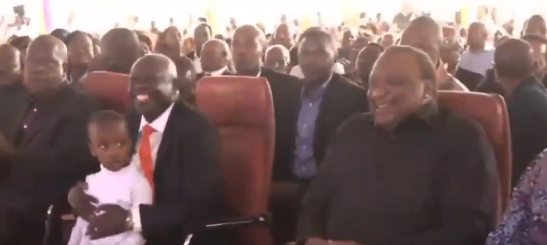
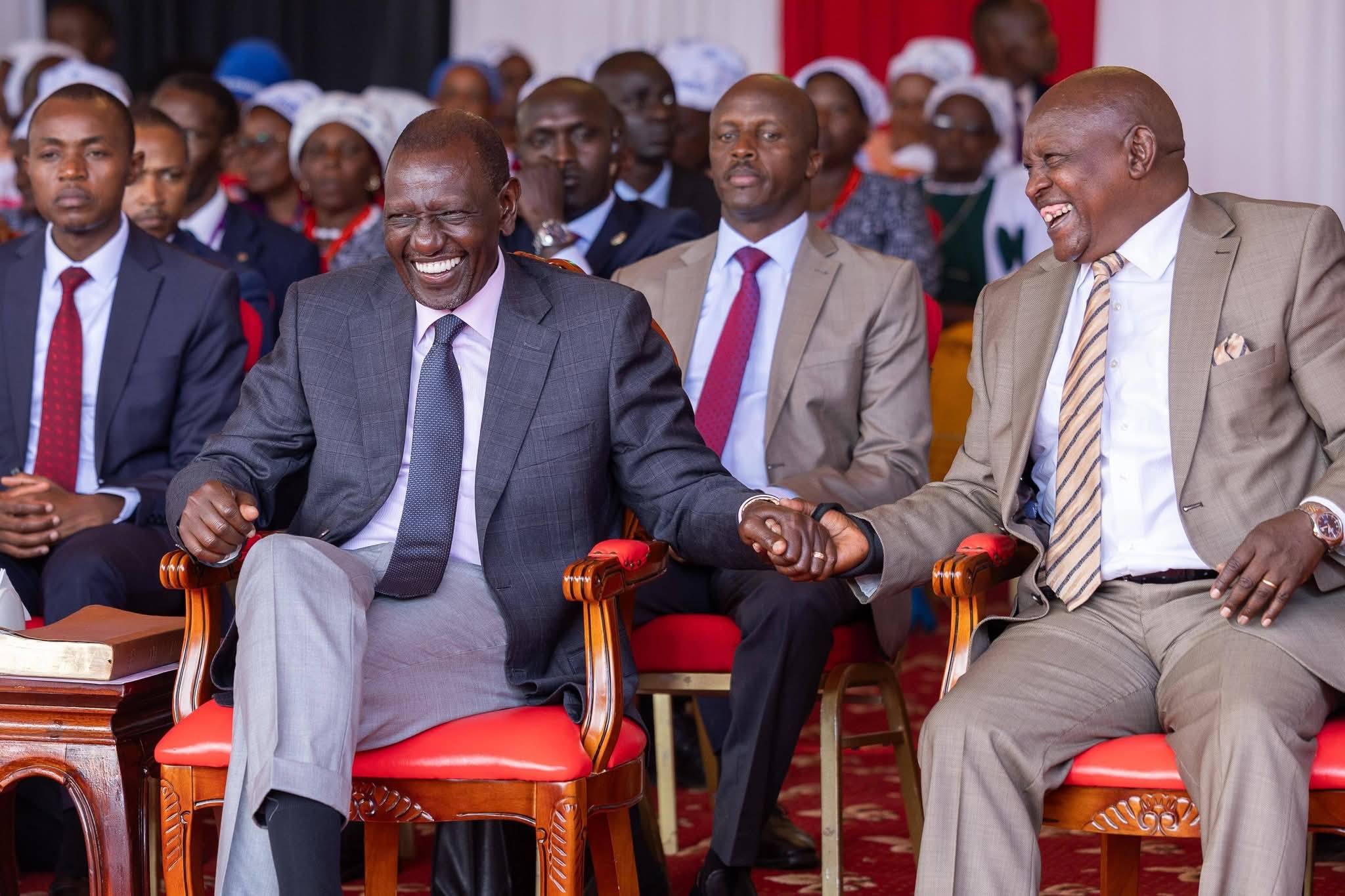
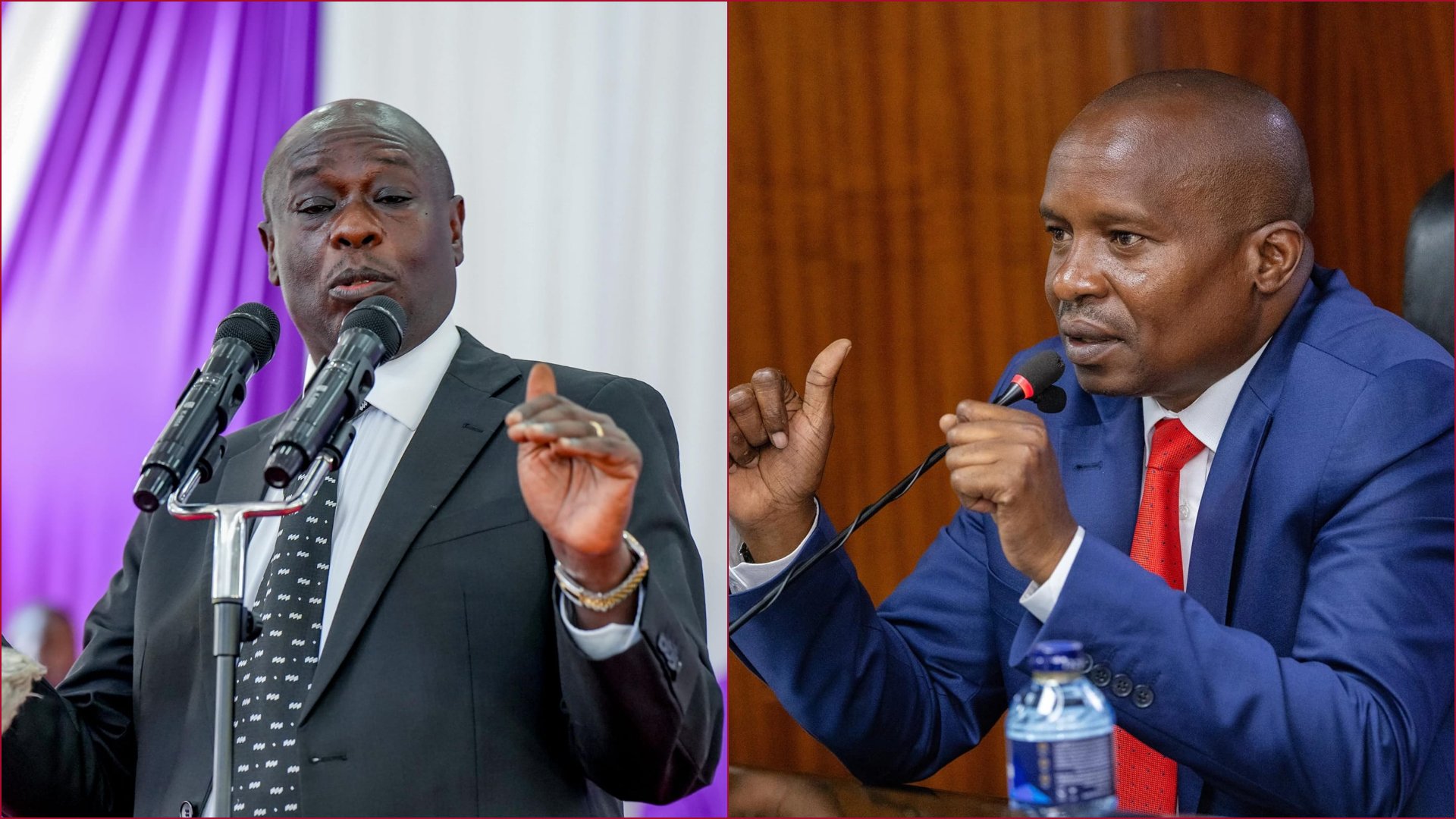 The region, long considered adecisive voting bloc in national politics, is witnessing both calls for reconciliation and aggressive grassroots mobilisation /FILE


![[PHOTOS] The new Ngong –Naivasha Road viaduct](https://cdn.radioafrica.digital/image/2026/06/64d4f771-4432-4aee-ba3c-2f304c4436ec.jpg)








![[PHOTOS] 'Mr Speaker Sir' Gen Z protester in court](https://cdn.radioafrica.digital/image/2026/06/b3e62d8e-25c3-4780-90f9-4eb48b1ce8a7.jpg)