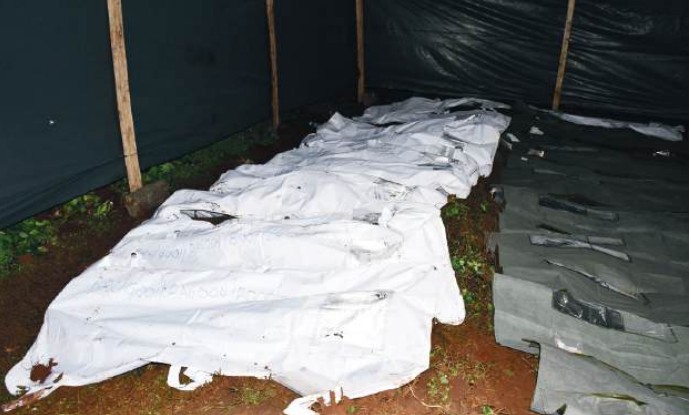
This reckoning
particularly concerns the atrocities committed during the Gen Z protests across
the country since 2024.
The reparations
process carries the weight of justice, healing and national accountability. For
it to achieve these goals, however, it must be anchored firmly on transparency,
independence and a truly victim-centred approach.
There is no doubt
the commission is operating under immense pressure. The scale of the task is
enormous, the expectations are high and time is limited. We acknowledge these
constraints.
However, even within these challenges, KNCHR is expected to and
must do better. Justice processes, particularly those dealing with human rights
violations and loss of life, cannot afford to be rushed, opaque, or detached
from the very people they are meant to serve -pub the victims and their families.
KNCHR is an independent national human rights institution
established under Article 59 and the KNCHR Act, 2011. It acts as a watchdog,
monitoring government institutions, promoting human rights and advising on
compliance with national and international standards.
So far, there is a
growing sense of frustration among victims and affected families. Many remain
unclear about the procedures, timelines and criteria guiding the process.
This
lack of clarity risks eroding public confidence and undermining the legitimacy
of what should be a historic and restorative undertaking. A process that leaves
victims confused is one that is already faltering.
To restore trust and ensure
the process meets its intended purpose, several urgent measures must be taken,
mainly by the commission.
First, KNCHR must operate
independently and without undue influence from State House or any other
political actors. Human rights accountability cannot be subjected to political
convenience.
The integrity of this process depends entirely on the commission’s ability
to act impartially and courageously, free from interference of any kind. Any
perception of external control will immediately delegitimise the outcomes.
Second, the agency must resist the pressure to rush the process. There are clear
indications that political actors are keen to see this exercise concluded
hastily, particularly in light of the anticipated Gen Z commemorations on June
25, marking two years since the tragic and senseless killings during the Occupy
Parliament protests of 2024.
While there may be a desire to “cool temperatures”
ahead of this date, justice cannot be sacrificed at the altar of political
expediency. KNCHR should, if necessary, formally request more time to carry out
its mandate thoroughly and properly. The focus must not be on meeting political
timelines but on delivering justice that is credible, comprehensive and
enduring.
Third, there is
need for a clear prioritisation framework. The commission should begin with the most
recent cases, particularly those arising from the Gen Z protests, and then
progressively work backwards.
These cases remain fresh, the victims are still
grappling with immediate loss and trauma and public attention remains high.
Addressing them promptly and transparently would send a strong signal of
commitment and seriousness to the victims and the greater public.
Fourth, KNCHR must
clearly outline and publicise all points of data submission across the country.
Victims should not have to struggle to know where, how and through whom they
can submit their claims.
Accessibility is a cornerstone of a victim-centred
process. This includes decentralising submission points and ensuring that
information is widely disseminated through multiple channels and across the
country.
Fifth, the commission must
actively collaborate with community partners, including civil society
organisations, community-based organisations, grassroots networks, activists
and human rights defenders. These actors are often closest to the victims and
have already built trust within communities.
Leveraging these networks will not
only enhance data collection but also ensure that no victim is left behind due
to logistical or informational barriers.
Finally, KNCHR must
commit to regular, transparent public updates. Kenyans deserve to know the
progress being made, the challenges encountered and the steps being taken to
address them.
Regular communication will foster public confidence and
demonstrate that the process is not only ongoing but also accountable to the
people.
At its core, this
process is not about institutions, timelines or political optics. It is about
people - victims who
lost their loved ones, individuals who suffered harm and families still
searching for closure.
Every decision, every step and every outcome must be
guided by their needs and their dignity. KNCHR must avoid the temptation to
serve the executive and political leaders.
The repatriation
and compensation process must remain firmly victim-centred. It must not be
reduced to a public relations exercise or a hurried attempt to pacify public anger.
Those entrusted with this responsibility must remember that they are serving
the victims, not their own interests, not political masters and certainly not
the convenience of the moment.
If done right, this
process can mark a turning point in Kenya’s human rights journey. If done
poorly, it risks becoming yet another chapter of injustice. The choice lies
with KNCHR and the time to act is now.







![[PHOTOS] The new Ngong –Naivasha Road viaduct](https://cdn.radioafrica.digital/image/2026/06/64d4f771-4432-4aee-ba3c-2f304c4436ec.jpg)









![[PHOTOS] 'Mr Speaker Sir' Gen Z protester in court](https://cdn.radioafrica.digital/image/2026/06/b3e62d8e-25c3-4780-90f9-4eb48b1ce8a7.jpg)