I was reading this brilliant book by retired KDF Lieutenant
General Humphrey Njoroge, called Promises to Keep and Miles to Go. One
of the many juicy anecdotes he unleashes in the book revolves around the
establishment of the National Defence College (NDC) in Nairobi in 1992, intended to be a strategic leadership
college for senior military officers and civilians from government, on the
functional facets of democracy and the role of senior security officials and
civil authorities in it.
According to the general, the marvellous plan ran into headwinds immediately,
because the ruling class, on seeing the team of curriculum developers, which
included University of Nairobi dons like Prof Anyang’ Nyong’o, nipped the idea
in the bud, believing that the university professors would inculcate Marxist
philosophies into the minds of senior military officials at the college.
It would take the appointment of Gen Daudi Tonje as Chief of
the General Staff in 1996, to properly get the NDC back on track, and to cement
its place as a premier institution for conducting courses in strategy and
national security for senior defence officers and civil servants.
The training
of military and civilian officials helped enhance their understanding of the
tenets of sovereignty, democracy and their place in the stability and
sustenance of these.
If you ask me, this training would and should entail the key
role of civilian authorities as the overall commanders of the disciplined
forces. Obviously, this role entails the deployment of security forces in a
manner that safeguards national security, and the use of the state instruments
of violence only to advance stability, democracy and freedom, as espoused in
the constitution.
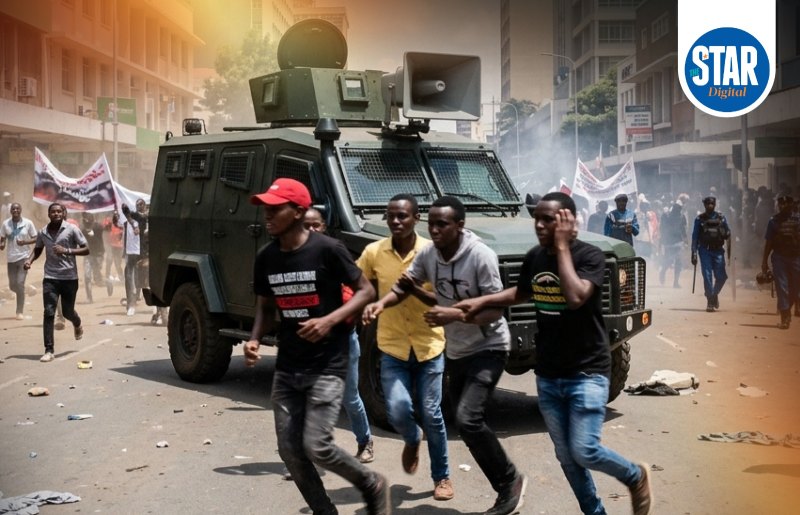
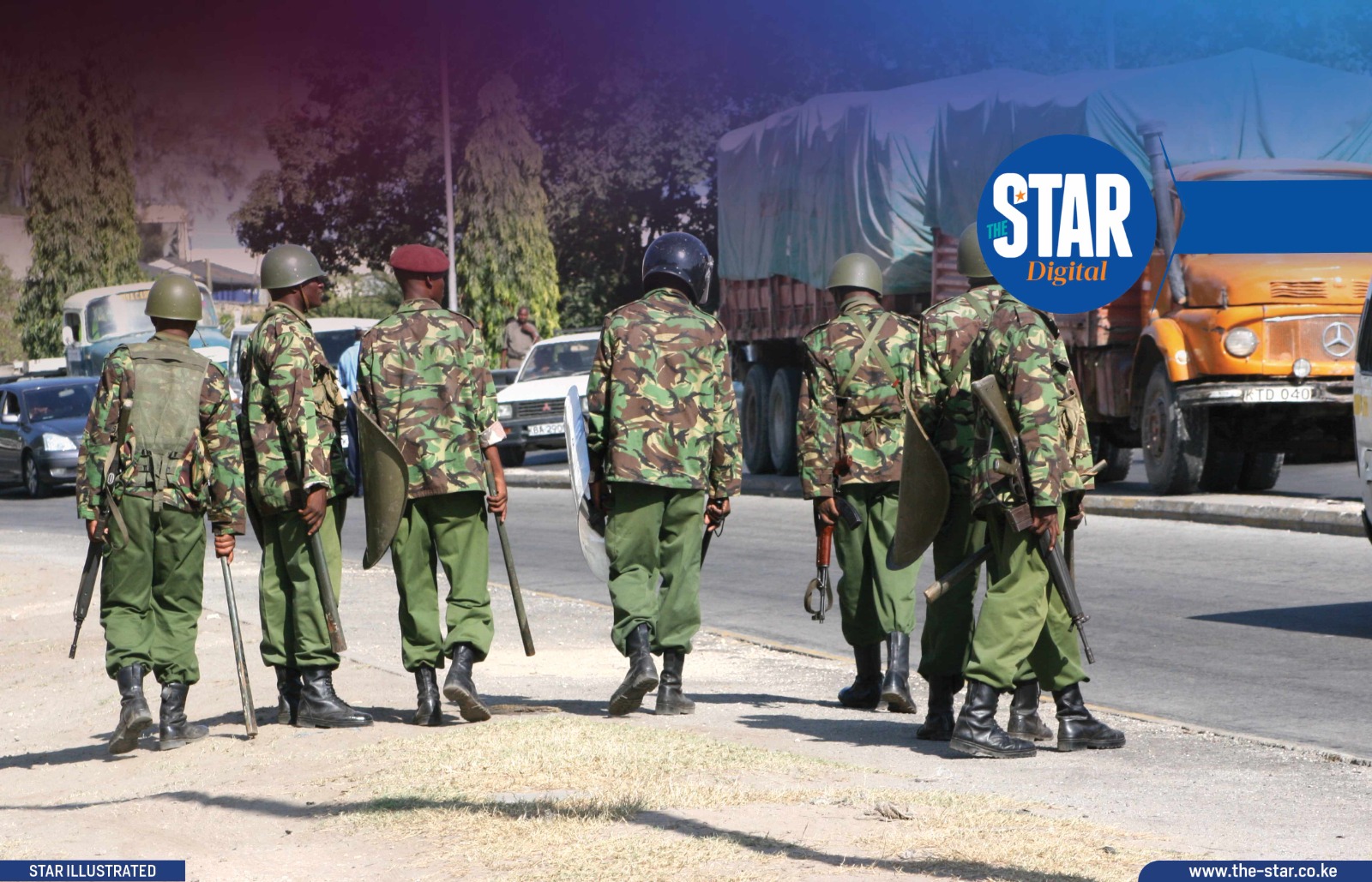
I have been watching police deployment in recent times with
utmost trepidation. The thing about a professional security organisation is
that a quick glance can show the keen eye the levels of discipline, the superiority of training or the morale of the
forces.
Well-trained and highly disciplined security units tend to move with a
choreographed flow, are generally friendly towards unarmed civilians and
undertake their duties with a heavy professional touch.
Police have recently been in all the wrong places at the
wrong times. But a particular one caught my eye last week.
When a contingent of
Nairobi police tried to stop the parallel ODM National Delegates Convention called by
the party’s Linda Mwananchi faction at Ufungamano House, Nairobi, on March 27,
something quite telling seemed to be happening at the venue.
A tall, dark senior police officer in sunglasses seemed to
take a personal interest in trying to disrupt the meeting. Even though his
officers appeared unwilling to be used to break up a peaceful gathering,
especially inside a congested hall, which would have posed grave danger to
civilians in a stampede, the senior officer paced up and down in frustration,
apparently seeking other methods to end the convention.
It is worrying when
officers in uniform take leave of their training and the doctrines governing
their work, to serve the interests of individuals within the political and
executive branches of the country.
A few weeks prior to the Ufungamano encounter, police had
raided the property of former CS Raphael Tuju, in Karen, and sealed it off,
apparently enforcing an order arising out of a commercial dispute.
Interestingly, the senior officer leading the contingent, when asked if there
was a court order allowing them to raid and seal off the premises, or at least
a complainant needing police escort into the property, casually replied that
“our only instruction is to stop anyone entering this place”.
Tuju himself must have figured at some point that the police
were not really the problem but were being used as tools of enforcement of
illegal orders by powerful people in government.
Broad-based bloggers wanted us
to believe that the powerful personality behind Tuju’s problems was retired
President Uhuru Kenyatta, but the latter had and has no capacity to dispatch
over five truckloads of police into private property, leave alone using state
institutions to frustrate his former CS.
I have never quite been able to recover from the image of
police lobbing teargas right onto Raila Odinga’s birthday cake, while trying to
unnecessarily break a party called to celebrate the icon’s birthday on the
streets of Nairobi in January 2024.
Neither is it easy to forget the sheer
violence visited on the former
ODM leader’s team during the “sufuria” protests in 2023.
One can add the
mishandling of Tuju during his arrest last month at Karen police station, after he had resurfaced
following an anxious three days in which his family claimed he had been
abducted.
Police obviously receive their orders via the chain of
command, from high above. But the manner of implementing the order is a good
reflection of what kind of team they have on the ground.
I do not believe that
someone within the chain of command will order that a teargas canister be
lobbed onto a birthday cake, for instance. Which convinces me that any police
contingent carrying out unconstitutional orders has specifically been selected
to match the wishes of the overall boss ordering it or is a microcosm of the
overall force and therefore reflects just how bad the particular security
service has become.
Context is not something that the Kenyan government has ever
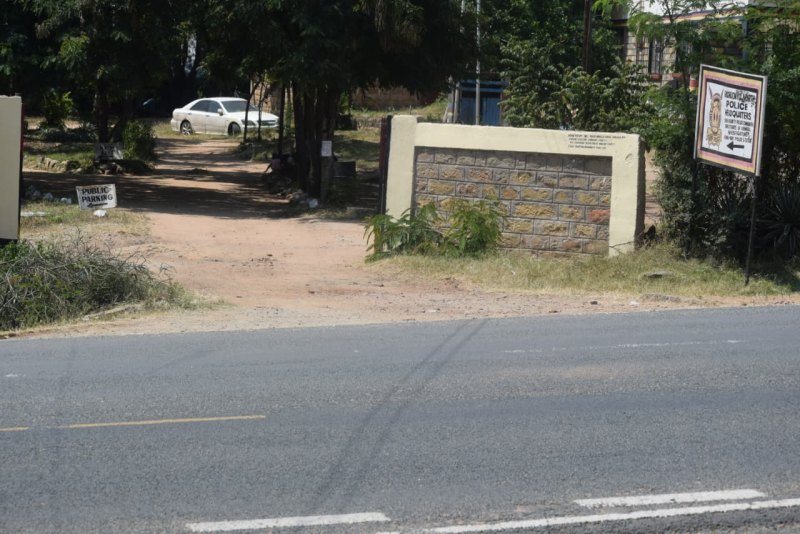
been famous for. But in recent days, the insecurity in Meru county, where marauding bandits have
attacked residents,
stolen their livestock and left behind death and destruction, has happened in
the backdrop of heavy police deployment to track unarmed civilians in peaceful
Linda Mwananchi rallies, as well as the raid on Tuju’s business premises.
There
were at least five truckloads of police at the Dari Business Park for that
operation and a similar number tracking the Sifuna faction of ODM at their NDC
at Ufungamano House.
It beats me that the security services can still believe
that it is possible, in this time and age, to simply brutalise people into
submission.
The events in Parliament at the peak of the Gen Z protests in 2024
should have taught the entire nation that when the spirit of freedom and
justice conquers a large part of any population, fear becomes its first victim.
Which is to say that sending police, or even goons, to troll
the Linda Mwananchi brigade across the country, will only help embolden and
harden them.
The common sense method of resolving disputes across the political
divide would in fact be for the regime to prove wrong every allegation by the
opposition, by providing evidence that on every item, work has been done or is
on course.
Unleashing savagery alone
can’t work in a population that is today more enlightened and has easy access
to information, than its predecessors.
While at it, I am persuaded that the Kenya Police Service
requires urgent retraining on the constitutional rights of the people, so that
it is not just known as a forceful service resorting to savagery even where
there is nil threat to contend with.
At any rate, recent events have confirmed
that when they use their weapons illegally, every uniformed officer will
account in a court of law as an individual.
Especially in this era where, no matter what is going on out
in public or on the streets, someone is always recording. The advent of smartphones
has made it very difficult to hide crime anymore.
That message should be pinned
on notice boards in all police stations, before the 2027 heated election
campaign season arrives. The police have a core mandate, and it does not
include being used as tools for settling political and commercial disputes!



![[PHOTOS] The new Ngong –Naivasha Road viaduct](https://cdn.radioafrica.digital/image/2026/06/64d4f771-4432-4aee-ba3c-2f304c4436ec.jpg)







![[PHOTOS] 'Mr Speaker Sir' Gen Z protester in court](https://cdn.radioafrica.digital/image/2026/06/b3e62d8e-25c3-4780-90f9-4eb48b1ce8a7.jpg)