For decades,
the politics of Ukambani has been shaped less by a contest of development ideas
and more by a persistent fixation with national
positioning.
The region
has produced some of
the most recognisable political figures in Kenya, yet the paradox remains
striking: despite this visibility in national
politics, large parts of
Ukambani still struggle
with the most basic
elements of development—reliable water supply, passable road networks
and modern infrastructure capable of unlocking economic opportunity.
Travelling across
Machakos, Kitui and Makueni, the pattern is difficult to ignore. Long stretches
of dilapidated roads continue to define mobility in many rural areas. Water
scarcity remains a daily reality for thousands of households, particularly in
Kitui and the deeper parts of Makueni.
In many villages, women and children
still trek several kilometres to fetch water, a task that has stubbornly survived successive
administrations.
This enduring deficit
raises uncomfortable questions about leadership and political priorities in the
region.
For nearly
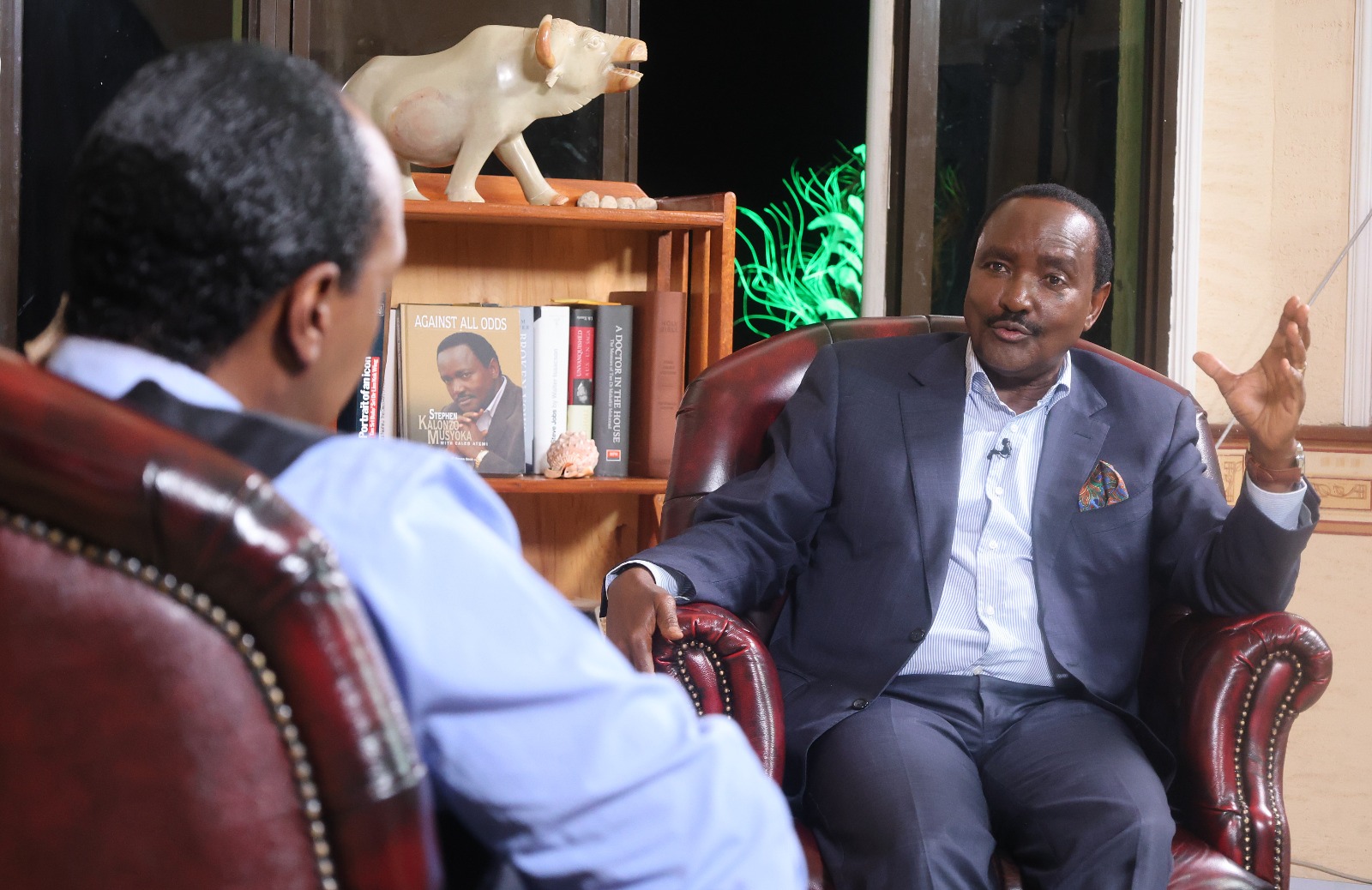
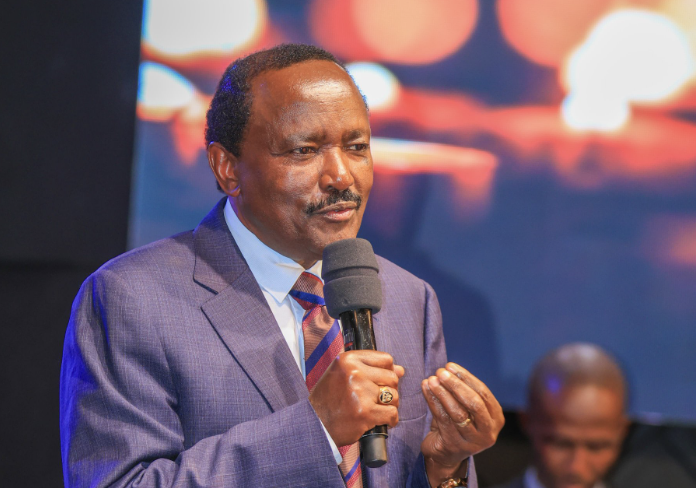
three decades, Kalonzo
Musyoka occupied some of the highest offices
in Kenya’s political
establishment.
From his early days in government in the mid-1980s, through
senior Cabinet appointments and eventually serving as vice president between
2008 and 2013, he stood firmly within the inner
corridors of power.
Few leaders from Ukambani have enjoyed such proximity to national
authority for such an extended period.
Yet the visible
imprint of that influence within the region
remains limited.
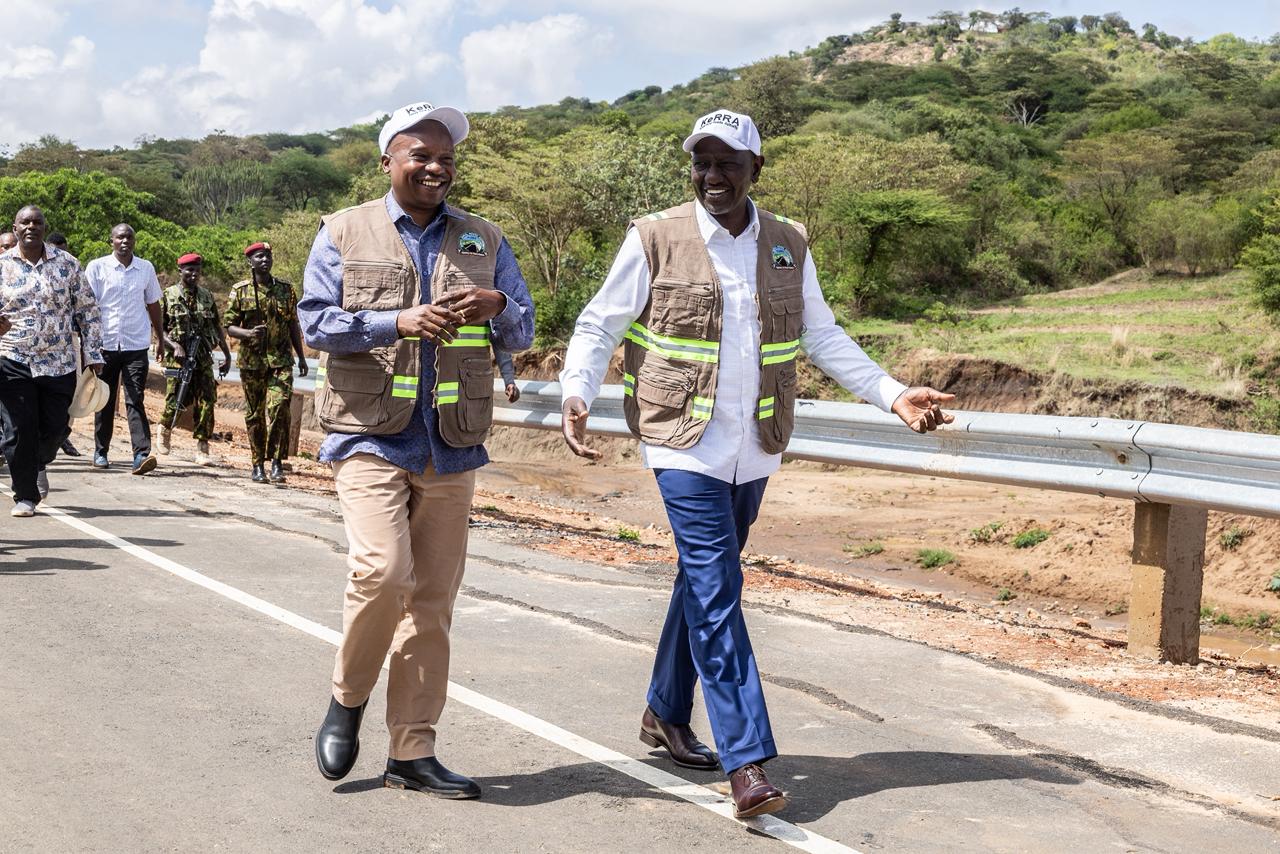
President William Ruto captured this
contradiction in characteristic fashion during a recent political rally when he
joked that Kalonzo had not even developed the road leading to his own home in Tseikuru.
While the remark was delivered with humour, it spoke to a deeper sentiment
increasingly shared across Ukambani: that proximity to power does not
automatically translate into development for one’s people.
Indeed, politics
in the region has long been defined
by loyalty to personalities rather
than scrutiny of delivery.
That pattern is now encountering a challenge.
Since assuming
office, President Ruto has embarked on a series of development interventions
across Ukambani that have begun to reshape
the conversation.
Infrastructure upgrades, renewed
attention to water projects and the acceleration of long-delayed strategic initiatives have started to signal a shift from rhetorical
politics to implementation.
Perhaps the most symbolic
of these efforts
is the renewed momentum behind
Konza Technopolis.
For years,
Konza City existed largely as an ambitious concept on paper. The technology
hub, envisioned as a catalyst for innovation and digital enterprise, faced
numerous delays and uncertainties.
At one point,
there were even suggestions within
the previous administration that the project could be relocated to another region. The
Kibwezi-Kitui road is a project whose implementation Kalonzo should have overseen many years back when he had access to power. That failure
is indefensible, and shows a leader who is
not development-oriented and questions the value he accords his backyard.
Under the
current administration, however, the project has regained traction.
Construction activity has intensified, infrastructure networks are expanding, and investor interest
has steadily grown.
If
realised fully, Konza will not only anchor Kenya’s digital economy but could
fundamentally transform the economic fortunes of Machakos and the wider
Ukambani region.
Such developments highlight a broader
truth: regions thrive when they align themselves with a
development agenda rather than a politics of perpetual opposition.
Machakos
county offers an instructive
case study of this dynamic.
In 2017, Alfred Mutua secured his second
term as governor despite fierce opposition from political forces aligned with Kalonzo.
His victory demonstrated an important political reality within the county:
Machakos voters tend to reward leaders perceived to be delivering tangible
results rather than those merely carrying the banner of established political
parties.
The electorate’s judgement appeared guided less by party loyalty
and more by
visible performance.
This tendency may again shape the
county’s political future
as the 2027 gubernatorial race gradually begins to take form.
Increasingly, attention is turning
towards the possible
return of Nzioka Waita to the Machakos
political arena. Waita, a seasoned
administrator and former chief
of staff and deputy Head of
Public Service under then President Uhuru Kenyatta, brings with him a depth of
government experience rarely matched in county politics.
Having served
at the apex of Kenya’s
public administration, Waita
understands the mechanics of national government, the intricacies of
policy implementation, and the pathways through which large-scale development
programmes are executed.
These are not trivial assets.
Counties today require leaders
who can navigate both local governance and national bureaucratic structures with equal
competence. Development often hinges not merely on good intentions but on the
ability to mobilise resources, align national and county priorities and sustain
complex projects through to completion.
In that regard, Waita represents a technocratic profile
that could appeal to
an electorate increasingly conscious
of development outcomes.
His potential challenge
to Governor Wavinya Ndeti in 2027 would therefore
not simply be a
political contest. It would represent
a deeper debate about the direction of Machakos and, by
extension, Ukambani’s broader development philosophy.
Underlying this debate is a growing
frustration with the regional political
establishment dominated by the Wiper Democratic Movement.
For many critics, Wiper has evolved into
a tightly controlled political cartel whose central objective is the preservation of political dominance
rather than the transformation of livelihoods.
Loyalty to the party hierarchy often appears to outweigh the urgency of
addressing structural challenges facing the region.
Such politics
stands in stark contrast to the legacy of leaders
like Mulu Mutisya, who is now deceased.
Mutisya’s political
career was defined by a profound
commitment to the welfare of his people. His leadership combined humility
with an unwavering focus on development. He believed that political authority carried with it
a moral obligation to improve the everyday lives of citizens.
That philosophy increasingly feels distant
from the contemporary politics of perpetual campaigning and presidential
ambitions.
Indeed,
Kalonzo’s recurring quest for the presidency continues
to dominate the
region’s political discourse. Yet many observers
now question whether this fixation serves the
practical interests of Ukambani
residents.
With Ruto
actively implementing development programmes across the country and positioning himself
strongly for reelection, the likelihood of a dramatic
political upset appears slim. Betting the region’s future
solely on presidential ambitions that may never materialise could therefore
prove strategically costly.
What Ukambani arguably
requires today is a recalibration of priorities.
The region possesses immense potential:
fertile agricultural zones, proximity to Nairobi and strategic projects such as
Konza Technopolis that could anchor a modern innovation economy. However, unlocking this potential demands
leadership that prioritises development over political
symbolism.
Encouragingly, a number of leaders within
the region have already begun to demonstrate that alternative model.
Figures such as
Caleb Mule, the MP for Machakos Town, and Vincent Musyoka of Mwala have built strong grassroots support
despite their affiliation with the United
Democratic Alliance.
Their popularity illustrates an important political
shift: voters increasingly
value leaders who deliver development regardless of party labels.
This evolution suggests
that Ukambani’s political landscape may be entering
a period of transformation.
As the 2027 electoral cycle
approaches, the region
faces a fundamental choice. It can continue
along the familiar path of personality-driven politics anchored in historic
loyalties. Or it can embrace a new generation of leaders focused on infrastructure,
water security, agricultural productivity and economic modernisation.
The stakes are significant.
For too long,
Ukambani has remained a region rich in political prominence but modest in
developmental gains. The coming years will reveal
whether its electorate chooses to maintain
the status quo or chart a different course—one defined not by rhetoric,
but by roads built, water flowing and opportunities created.
History
suggests that when voters begin to measure
leadership by results
rather than slogans, politics itself begins to change.
Ukambani may now be approaching that moment.




![[PHOTOS] The new Ngong –Naivasha Road viaduct](https://cdn.radioafrica.digital/image/2026/06/64d4f771-4432-4aee-ba3c-2f304c4436ec.jpg)










![[PHOTOS] 'Mr Speaker Sir' Gen Z protester in court](https://cdn.radioafrica.digital/image/2026/06/b3e62d8e-25c3-4780-90f9-4eb48b1ce8a7.jpg)