Back in the 1960s through to the late 1980s, The Jetsons captivated audiences around the world with its playful vision of life in the future.
The animated series imagined a world in the year 2062 where families lived in floating homes, relied on robot assistants and commanded their surroundings through voice alone.
In Kenya, reruns aired well into the 1990s and early 2000s, introducing a generation of viewers to a world where machines quietly handled the routines of daily life.
At the time, those
conveniences felt improbable, but, today, more than three decades before
the Jetsons’ fictional timeline, many
of the show’s once-impossible ideas are edging into reality.
Companies
like LG have already introduced into the market refrigerators that can monitor their own inventory
and send restocking recommendations to the owner’s phone.
And air conditioners that study
their owner’s preferences over time and automatically adjust their output for
great comfort. We also have televisions that respond to voice commands and
ovens that can tell when a meal is properly cooked, as well as tiny speakers
that produce surround-quality sound even in outdoor environments.
But if we imagine the home of
2035 simply as a place filled with smarter gadgets, we may be thinking too
small. The real transformation going into the future may not lie in individual devices at all.
It will most likely manifest in
homes behaving as
adaptive, learning environments that quietly shape the everyday life.
In the coming decade, the
house may begin to function less like a collection of rooms and more like a
living system. Walls
could become responsive surfaces, adjusting insulation and ventilation
depending on the weather outside.
A home in Mombasa’s hot afternoons might
automatically shift airflow and shading across different rooms, cooling only
the spaces that are occupied. At night, those same walls might store heat
gathered during the day, gradually releasing it as temperatures fall.
Future
homes could harness subtle
vibrations generated by footsteps and household activity to
create electricity.
Floors embedded with micro-generators might capture kinetic energy as residents
move through the house, feeding it back into the home’s internal energy system.
Water, too, may circulate
differently. Rather than flowing through a one-way pipe system, homes of the
future could operate on closed-loop water cycles, where greywater from showers and
sinks might be purified
within the building itself and reused for consumption.
Small-scale atmospheric water
harvesters could extract moisture directly from the air, supplementing supply
during dry seasons.
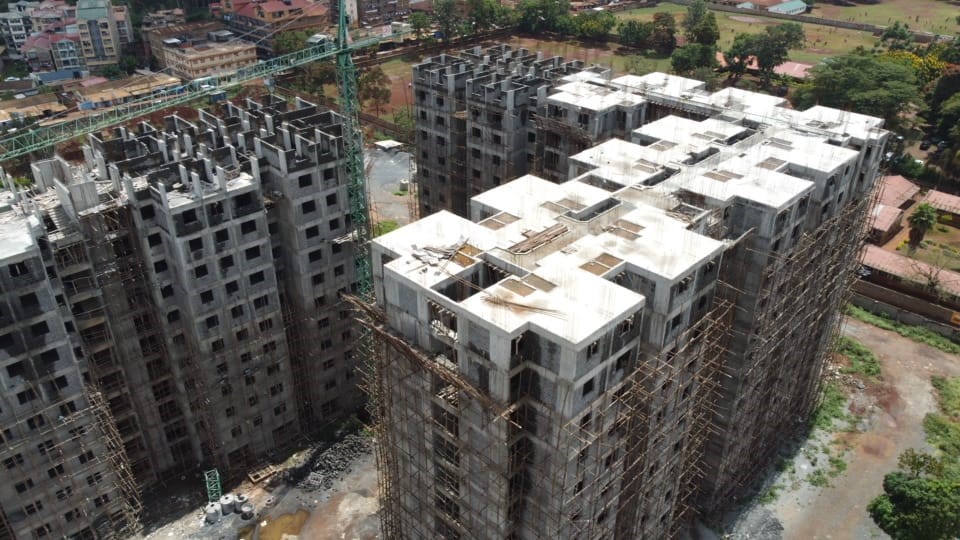
In dense cities like Nairobi, where housing demand continues
to outpace supply, homes
may also become far more spatially flexible. Instead of fixed rooms dedicated
to a single function, living spaces might physically adapt throughout the day.
A wall could retract to
transform a living room into a workspace during the morning.
Furniture might
emerge from floors or ceilings only when needed, allowing the same area to
function as a dining room, study or bedroom. In compact urban apartments, space
may become programmable rather than permanent.
Even building materials
themselves may evolve with advancements in bio-materials allowing walls to repair small cracks
automatically, much like living tissue healing after injury.
Some surfaces may
contain micro-organisms that absorb pollutants from indoor air, effectively
turning walls into natural filtration systems.
Technology will still play a
central role, but it may fade deeper into the background. Rather than
commanding individual appliances, residents may interact with their homes more
like they interact with weather, through
subtle adjustments rather than direct control.
Many
homes will learn their occupants’ habits over time,
gradually optimising everything from lighting patterns to grocery consumption.
Instead of simply alerting residents when food runs low, kitchens could
anticipate weekly cooking patterns and coordinate deliveries with neighbourhood
supply networks.
Neighbourhoods themselves may
also become interconnected systems, with apartment complexes beginning
by 2035 to
operate like miniature infrastructure networks, sharing surplus solar power
between units, pooling water reserves and coordinating waste recycling through
automated sorting systems embedded within the building.
Residents may not think about
these systems often, but when
one household generates excess electricity during the day, another might draw
on it in the evening. As a result, what was once managed by national grids
could increasingly be balanced at the level of a single building.
For Kenya’s rapidly expanding
middle class, these kinds of innovations may prove especially valuable. With
urban populations rising and housing units shrinking, the challenge will be
to make existing units
more efficient and adaptable
rather than increasing their number.
At the same time, the
country’s experience with mobile technology offers a powerful lesson about how
quickly innovation can spread once it becomes accessible.
Two decades ago, mobile
money was an experiment. Today it is embedded in everyday life across both
cities and rural areas.
Housing
technology could follow a similar path with systems that begin in premium
developments gradually filter into mid-range housing, eventually becoming
standard features across the urban landscape.
It
is unlikely that by
2035, Kenyan homes will
resemble the floating apartments of The Jetsons, but it is given
that they will share
the show’s deeper idea of spaces that anticipate our needs rather than
simply contain them.
The
writer is the marketing team leader at LG Electronics East Africa









![[PHOTOS] The new Ngong –Naivasha Road viaduct](https://cdn.radioafrica.digital/image/2026/06/64d4f771-4432-4aee-ba3c-2f304c4436ec.jpg)











![[PHOTOS] 'Mr Speaker Sir' Gen Z protester in court](https://cdn.radioafrica.digital/image/2026/06/b3e62d8e-25c3-4780-90f9-4eb48b1ce8a7.jpg)