IMANI: Will Sh2 billion reparations promise heal the wounds of protest?
State accountability faces test as 60-day countdown begins for protest victims seeking justice
by CATHY WAMAITHA
Audio By Vocalize
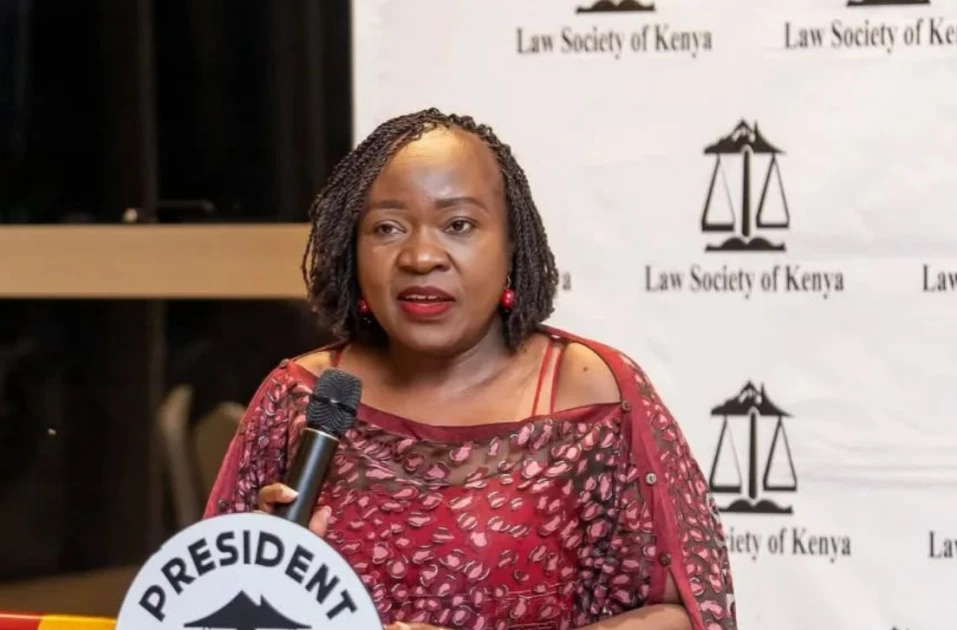
KNCHR chairperson Claris Ogangah /FILE
The
Kenya National Commission on Human Rights is racing against a 60-day deadline
to build a framework that could finally acknowledge, in both word and deed, the
suffering of hundreds of Kenyans injured or bereaved during the protest waves
of 2017, 2024 and 2025.
For
the families of those killed and for the survivors still carrying bullets in
their bodies, the process that began on March 6, when President William Ruto
issued a Gazette Notice directing the KNCHR to develop a compensation
framework, offers something more than money.
It
offers—likely for the first time—a formal state acknowledgment that wrong was
done.
KNCHR
chairperson Claris Ogangah put it plainly when announcing the commission's work
last week. "It is not paying people for dying," she said. "It is
acknowledging that there was a wrong that happened and it is a way of saying
sorry to the people who suffered losses."
That
apology, she confirmed, will form an explicit part of the reparations package,
alongside medical and psychological support for the wounded and, critically,
guarantees that such violence will not happen again.
The
window for victims to come forward is painfully short. By April 3, those with
claims must submit their evidence—P3 forms, medical reports, police occurrence
book records, post-mortem reports—to the commission's offices in Nairobi,
Kisumu, Mombasa, Kitale, Nyahururu or Wajir.
The urgency reflects both the
political momentum behind the process and the scale of the task. To its credit,
the government has set aside Sh2 billion in a supplementary budget, though the
KNCHR has already warned this may prove insufficient once all verified cases
are counted.
Any
shortfall would require a recommendation for additional funding in the 2026/27
financial budget year.
The
commission is drawing on multiple sources—its own records, police files,
Independent Policing Oversight Authority reports, hospital data and submissions
from civil society—to build a national database of victims.
The
government's initial response to the 2024 protests was defined by a
‘shoot-to-kill’ rhetoric that cost dozens of lives. The shift toward a formal acknowledgment of
state accountability, embodied in the current reparations process, represents
more than political expediency.
It
reflects a recognition, hard-won by the protesters themselves, that the right
to peaceful dissent cannot be conditional on the government's approval.
The
road to this point has been anything but straightforward. It was shaped,
decisively, by a December 4, 2025, High Court judgment in Kerugoya that struck
down an earlier presidential attempt to handle compensation through an
executive-appointed panel.
That
panel, created in August 2025 amid public outrage over police violence during
the Gen Z protests against the Finance Bill, had been tasked with verifying
victims and designing payouts. But civil society organisations and legal
professionals challenged it, arguing it duplicated the KNCHR's constitutional
mandate and risked becoming a politicised tool for dispensing patronage rather
than justice.
The
court agreed. It affirmed that the constitution and the KNCHR Act state the
independent commission holds exclusive authority to secure redress for rights
violations.
The
executive panel was stripped of its powers and converted into a purely advisory
body, required now to base its recommendations solely on KNCHR findings. The
ruling was a quiet but profound victory for the principle of institutional
independence—a reminder that even benevolent state power must operate within
constitutional bounds.
Between
2023 and 2025, Ipoa handled 820 cases of alleged police misconduct during
public order management. Only 35 resulted in convictions involving 49
officers—a conviction rate of just 4.3 per cent .
The
culture of impunity within the National Police Service has long been the target
of activists' anger, and it is that culture, as much as any individual act of
brutality, that the reparations framework now seeks to address.
The
KNCHR's mandate will go over and above writing cheques. Under international
human rights principles, a comprehensive reparations programme includes
restitution, rehabilitation, satisfaction and guarantees of non-repetition.
The
last of these is the most forward-looking and perhaps the most difficult. It
requires institutional reforms that transform the police from a ‘force’ oriented
toward regime protection into a ‘service’ genuinely protective of citizens'
rights—which the 2010 constitution and National Police Service Act (2011)
sought to do.
Ogangah
has signalled that the commission is already working on proposals to improve
the legal framework governing demonstrations, drawing on Article 37 of the
constitution, which guarantees the right to assemble, demonstrate and picket
peaceably.
Yet
the path forward remains uncertain. The 21-day window for victims to file
claims, which closes on April 3, is followed by a 60-day deadline for the KNCHR
to submit its framework to the President.
As
this unfolds, Civil society organisations, human rights defenders and the very institutions
tasked with delivering reparations are united in a single, urgent plea: keep
the politicians out.
Perhaps
it is this concern that has contributed somewhat to the shower window for
submission of claims.
Ogangah
was firm: the commission “wants to finish before this matter is
politicised", underscoring that the exercise should “ensure victims are
compensated and nothing political".
For
the families still waiting, closure cannot come soon enough, as Kenyans watch
not just for the money, but for the apology—and for the proof, in reformed
institutions and protected rights, that the state means what it says.
This is premium content
Subscribe to Continue Reading
Help us continue bringing you unbiased news, in-depth investigations, and diverse perspectives. Your subscription keeps our mission alive and empowers us to provide high-quality, trustworthy journalism. Join us today to make a difference!



![[PHOTOS] The new Ngong –Naivasha Road viaduct](https://cdn.radioafrica.digital/image/2026/06/64d4f771-4432-4aee-ba3c-2f304c4436ec.jpg)










![[PHOTOS] 'Mr Speaker Sir' Gen Z protester in court](https://cdn.radioafrica.digital/image/2026/06/b3e62d8e-25c3-4780-90f9-4eb48b1ce8a7.jpg)