Siaya
Governor James Orengo’s surname in Dholuo translates to ‘flywhisk’, the
preeminent symbol of community leadership, while his nickname, ‘Nyatieng’,
means ‘grinding stone’.
Like the grinding stone, the governor is a
tough-as-nails long-time liberation warrior, who bears the scars of battle, yet
keeps grinding away at the fraudulent foundations of illegitimate regimes.
He
has never been a favourite of governments, but almost always remains true to
the ideals of democracy and justice.
People
of my generation will never forget that iconic picture of Orengo, in a pick-up
with the firebrand politicians Masinde Muliro and Martin Shikuku, attempting to
break the dictatorial stranglehold of the Moi regime, while trying to make it
to the famed Kamukunji grounds, for the inaugural Saba Saba rally on July 7,
1990.
Braving bullets and teargas, that small band of daredevil heroes played a
major role in both the ultimate fall of single-party rule and the expansion of
the democratic space that most people, including regime bloggers, enjoy today.
I
refer specifically to regime bloggers because, in their enthusiasm to paint the
Siaya governor black, for refusing to dance to the grotesque tunes of the
broad-based praise choir, they have missed by miles, the history of the country
and the contributions of people like Orengo in it. Freedom, as it turns out,
tends to give birth to well-fed people whose burps confirm that comfort is a
risky coin in the national journey.
One
of the bizarre statements thrown at the governor is that he is “too old to be
running around with young politicians in the Linda Mwananchi battalion.”
This
statement also emanates from a lack of historical perspective, because Orengo
and group of powerful Young Turks aligned to Jaramogi Oginga Odinga, including
the old man’s own son, Raila Odinga, blossomed at the feet of Jaramogi, and
emerged as his mentees. Nearly all of them went on to play an influential role
in the country’s constitutional and democratic journey.
This
is to say that an elderly politician playing the role of mentor and chaperon to
younger ones already has a brilliant precedent to benchmark with.
If you ask
me, I admire the fact that having rejected overtures to align with the
broad-based government, Governor Orengo has taken up the role of moulding the
next generation of firebrand democracy icons. And this is important, as we
shall see soon.
The
Linda Mwananchi movement, where the governor is now a senior luminary, shares similar
origins with Raila’s ODM. It is a product of protest, a movement borne out of
the discontent of Kenyans with the political and governance systems.
In every
sense, it is the exact sort of political movement that attracts Orengo’s
passion and talents. More importantly, in all his political life, the one thing
on which you can fault the governor is consistently standing on the side of the
people.
There
is a common narrative spun by broad-base people. It goes that after having been
on the streets agitating for good governance and expanded democratic space in
the country for decades, the Luo community especially, is “not ready” for the
streets.
This narrative goes on to state that the desire of the community today
is development rather than political agitation. There is a regular chant in political
rallies in Luoland that replays this belief, explaining to the people that
being in government is the way to have roads built in the land and sons and
daughters of the community employed in government.
It
is a lazy and intellectually shallow narrative. If anything, it goes against
every principle that second liberation heroes like Orengo fought for, one of
them being that national development should accrue to all citizens, being
taxpayers, without partisan political conditions.
Effectively, ODM’s and Luo
community leadership asking the people to support development actually assist
in perpetuating the regression that the community took a frontline for decades
to fight.
Nairobi
Senator Edwin Sifuna, likes to observe that “even dictators can build roads and
stadia”. Essentially, and as the preamble to the Kenyan constitution, the
biggest desire of a people are freedom and sovereignty built on national
values.
Again, as the senator loves to quip, “it is possible to run a country
strictly by the rule of law”. Therefore, it may not matter how many roads and
airports are built in any region of the nation, if the net effect is the evil
combination of corruption, rising national debt, obscene taxation and poor
governance. This is the “Orengo philosophy” that broad-based folks will never
grasp.
I
have stated here before that the true leaders left standing in the Luo
community are Kisumu Governor Anyang’ Nyong’o and Orengo. Their longevity on
the scene gives them an “institutional memory” that is second to none.
But what
makes them stand apart from the rest is that both of them were Jaramogi
proteges as well as ideological soulmates of Raila. What they see and feel, is
something the modern-day political praise singers will never grasp.
It
is important after stating this fact to note that these two leaders remain wary
of the Orange broad-based caravan that currently travels the land in opulence
and glamour.
Well, Nyong’o pops up in some broad-based functions once in a
while, but the demeanour and body language point to someone who would rather be
elsewhere.
You don’t need to be a behavioural scientist to see that there is a
huge ideological gap for the professor in these events. I am often tempted to
ask; why do the two most consequential leaders of the community after Raila and
Jaramogi now find the party’s current direction unpalatable?
I
am convinced that both Nyong’o and Orengo can’t be wrong. Indeed, earlier in
the week, the Kisumu governor unleashed a long missive on his social media
pages, urging the party to “go back to the basics” and return to its ideological
grounding as a social justice movement that stood with the people.
The
broad-based people who run ODM are of course deaf to such advice, but with the
dearth of courage in the party and in the land, it is to people like Orengo and
Nyong’o that many will turn to as the last hope in the fight for a just
society.
Someone
asked me earlier in the week to explain how, among elected leaders of the Luo
community, only Orengo (and perhaps a spluttering of one or two silent others)
can be on the “opposite side” of the people.
My answer was that in the current
trend of mass manipulation, especially in the rather crazy period following
Raila’s death, it is possible for the majority to be misled into standing on
the wrong side of history.
But my own belief is that when it comes to the Siaya
governor, he stands, as he has done countless times before, on the right side
and history will judge him kindly.
Perhaps
the question one needs to ask before judging Orengo’s choices is whether the
things they fought for in the Second Liberation have ever been achieved. Does
the country now stand tall as a beacon of democracy? Is free speech universally
practiced without fear today?
Have corruption and poor governance been
arrested? If the answer to these questions is no, then no wonder the governor
is still not convinced that Canaan is yonder. Which is why I am happy that he
has stayed true to his Second Liberation ideals and is on course to nurturing a
new generation of third liberation warriors.




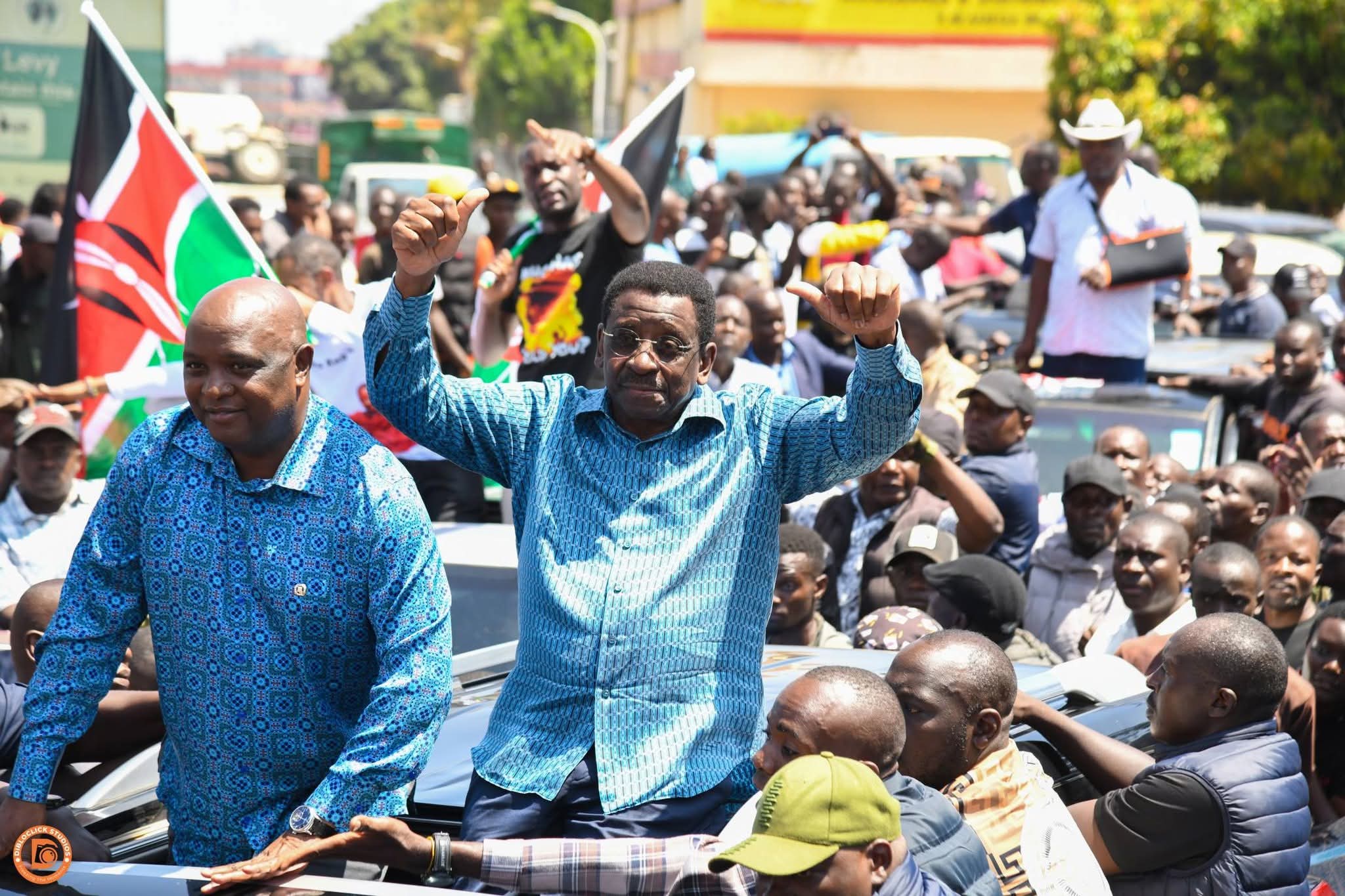
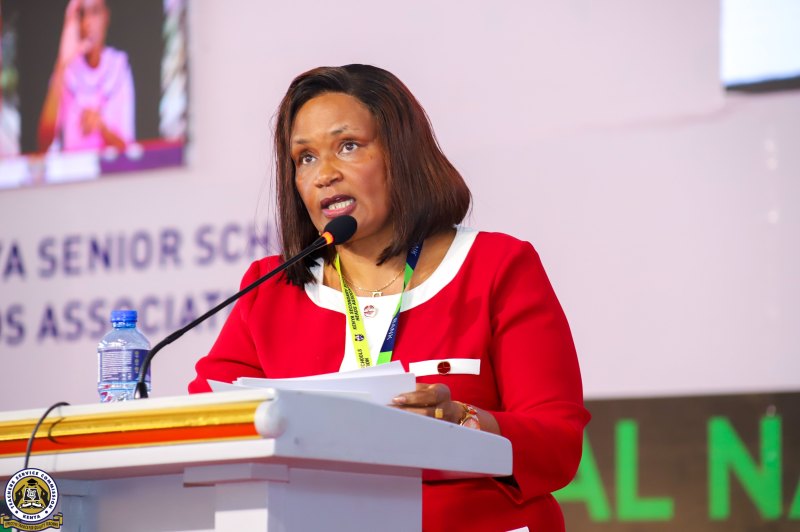
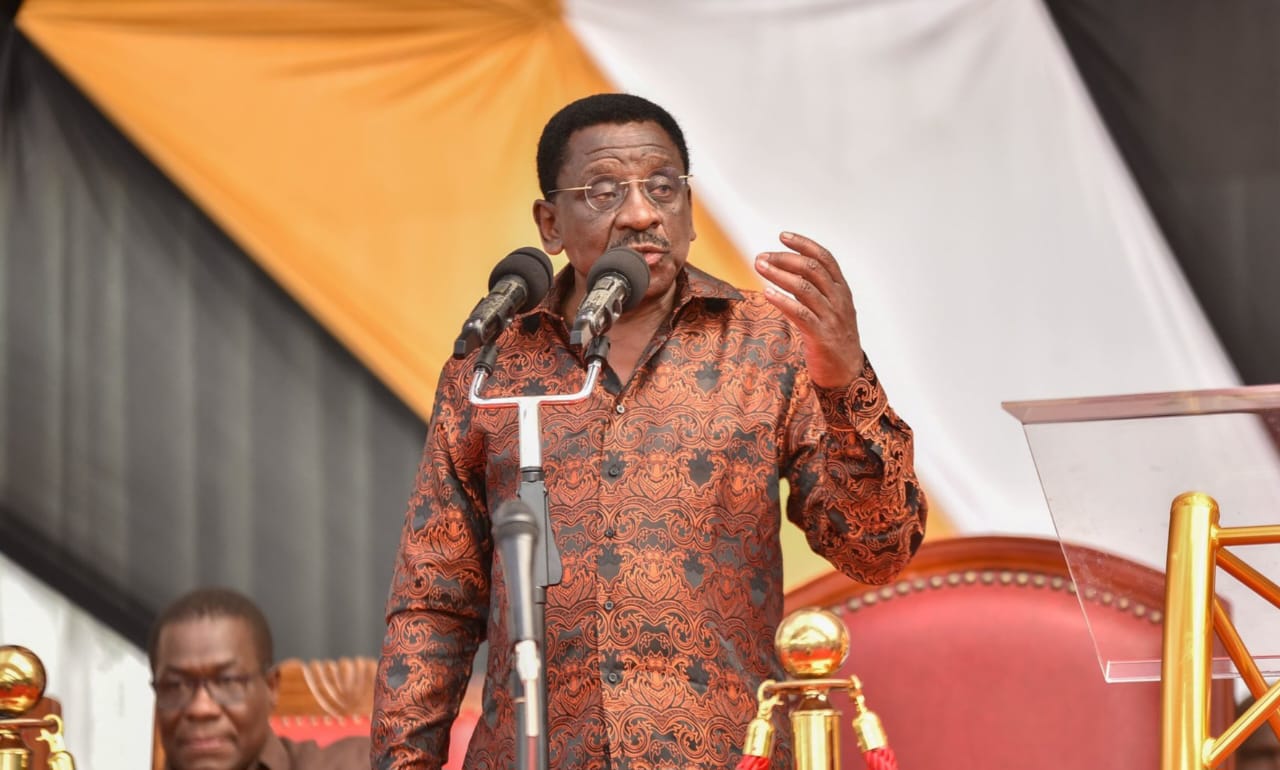 Siaya Governor James Orengo speaks at a past function /FILE
![[PHOTOS] The new Ngong –Naivasha Road viaduct](https://cdn.radioafrica.digital/image/2026/06/64d4f771-4432-4aee-ba3c-2f304c4436ec.jpg)



![[PHOTOS] 'Mr Speaker Sir' Gen Z protester in court](https://cdn.radioafrica.digital/image/2026/06/b3e62d8e-25c3-4780-90f9-4eb48b1ce8a7.jpg)