AJUOK: How Sifuna and generation of Young Turks will shape 2027
Generation of President Ruto, Wiper’s Musyoka and former DP Gachagua will soon be replaced by the new order of Sifunas, Babus and Ndindis.
by COLLINS AJUOK
Audio By Vocalize
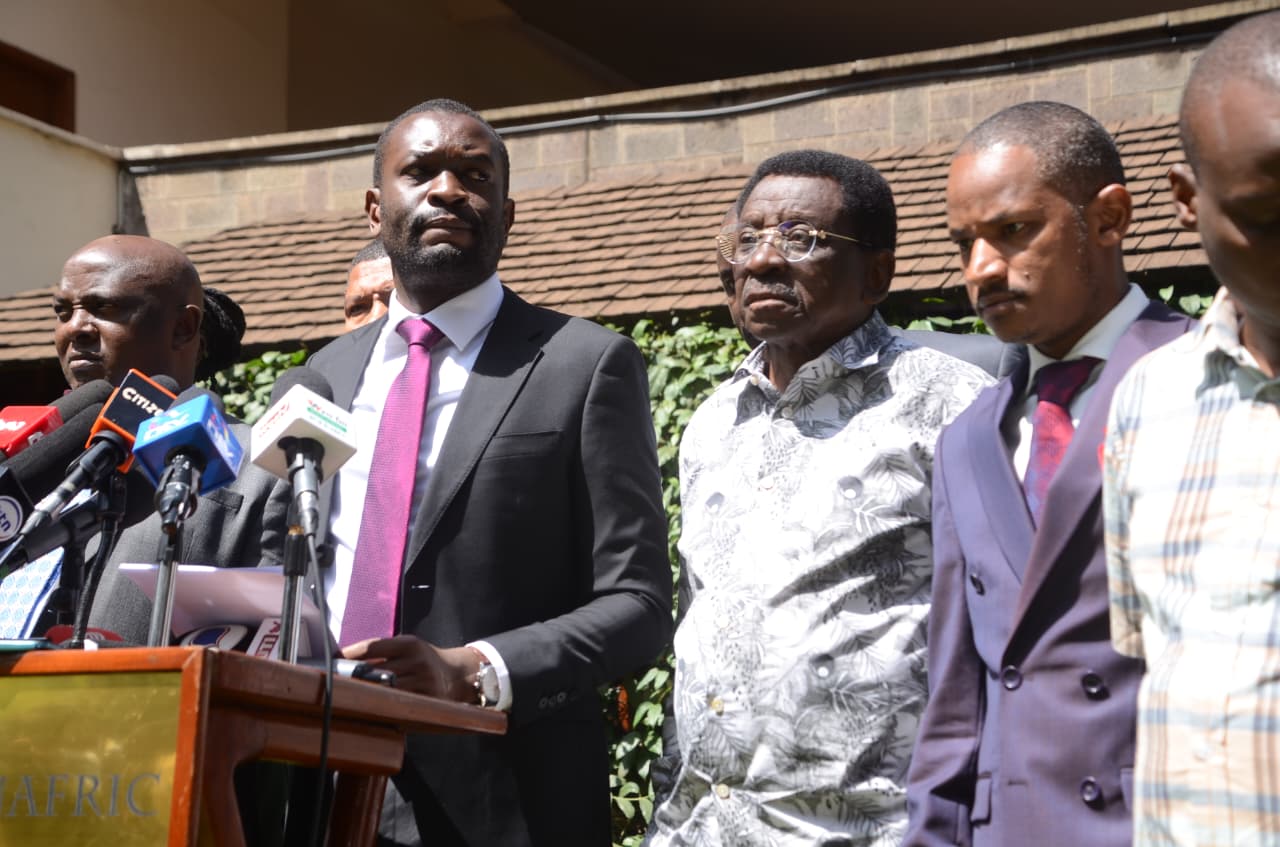
Nairobi Senator Edwin Sifuna. He was kicked out as ODM secretary-general on Wednesday /FILE
At the time of
filing this piece, the ODM National Executive Committee has just released a
blockbuster statement announcing the removal of Nairobi Senator Edwin Sifuna as
the party’s secretary general.
It was a seven-point statement, but I guarantee you no one
remembers the other six! Indeed, every ODM meeting in recent months has been so
much about Sifuna, that everyone had simply been waiting for the verdict.
The position of SG is a very
consequential but thankless job in any serious political party. On one hand,
the holder is the attack dog of the party leader and the party, while on the
other, blame lands on his office for any mishaps in the movement.
As if that is not
enough, the Kenyan political system makes it nearly impossible for the SG to
hold opinions at variance with the party leader. In the case of Sifuna, while
Raila lived, he could get away with holding divergent opinions, as on the
broad-based government deal, because the ODM boss had been a long-time
firebrand and liberation icon who understood what it took to run a truly
democratic institution.
After Raila’s death, the cast that took over the party,
with the tacit support of the state apparatus, lacked the political wisdom and
emotional strength to understand these dynamics.
If you ask me, even
without his removal, and after working for the larger-than-life Raila for eight
long years as SG, Sifuna was always going to find it difficult to work for
lesser politicians. And this could be a salient issue
for many other party officials; it’s an entire lifetime from being subordinate
to Raila, then finding yourself having to answer to his brother, Oburu Oginga, or one of the
State House-friendly senior officials now running riot in the party.
Be that as it may,
Kenyan politics is undergoing a generational transition. The dominance of
veteran politicians who have defined the country’s political discourse since
the 1990s is steadily giving way to a younger, more media-savvy and
ideologically assertive class of leaders.
Among the most prominent of this
emerging cohort is the Nairobi senator, who has made himself a central figure in this
national conversation since being picked by Raila in February 2018 as the
party’s SG.
This elevation followed a turbulent two-year period in which Sifuna
had tried to wrest the seat from its holder, Ababu Namwamba, in 2016, via an
internal party coup.
In the interim
period, no one really knows Sifuna’s immediate plans. However, his influence going
forward will likely extend beyond party politics into broader national
conversations about youth
participation, governance reform, accountability, coalition politics and the
direction of opposition politics in Kenya.
As the country moves toward the 2027
general election and beyond,
his role could
significantly shape the character of Kenya’s democracy. And this is important,
if you consider who else will be key players in this transition in the
country’s politics.
At the peak of
the Second Liberation struggle in the 1990s, the doyen of opposition politics, Jaramogi
Oginga Odinga, surrounded himself with a firebrand cast of young politicians,
from diverse professional and ethnic backgrounds.
There were top lawyers such
as Paul Muite and James Orengo, celebrated members of academia such as Prof
Anyang’ Nyong’o and indomitable political lions like Jaramogi’s own son, Raila.
The media got accustomed to referring to them collectively as Jaramogi’s Young
Turks.
There is no denying
that these young firebrands bore the weight of the Second Liberation on their shoulders. As the
Jaramogi generation faded away, a new one emerged that would carry the struggle
forth.
The regime feared them. They and the government played cat-and-mouse
games, involving arrests, hiding and stints into exile. But ultimately, it can
be acknowledged that they delivered multiparty democracy and were largely the
powers behind the newfound freedom that gave birth to the 2010 Constitution.
But every struggle
comes in cycles. Today, there are new threats to multiparty democracy that
require a new generation of Young Turks. The events within ODM in the past few
months represent part of the threats. Being a party in the minority Azimio coalition, the new
power wielders in ODM have readily positioned it as a partner of the ruling
UDA, blurring the lines between government and opposition.
To make it worse,
the manner in which decisions are today
made within ODM confirm that its association with the regime will
come with a tendency to ignore set standards, the law and any other rules, as
long as they get their way. The removal of Sifuna, as well as the appointment
of Oburu as party leader, never met the thresholds set by the party’s
constitution, yet both were hurried as if to forestall any legal challenges.
Which is why the
emerging breed of new leaders who are no longer at ease in their sponsoring
parties must rise up to take the mantle of a second cohort of Young Turks.
I am
referring specifically to leaders like Sifuna, Embakasi East MP Babu Owino,
Raila’s last-born daughter Winnie Odinga, Kiharu MP Ndindi Nyoro and
Nyandarua Senator John Methu. They have fallen out with the parties that acted
as their political vehicles in the 2022 election, but hold
great promise for a new renaissance in Kenya’s politics.
Youth alone may not
necessarily be a compelling factor. In fact, some of the people I might mention
in this list appear young but are still beholden to the country’s deeply
divisive ethnic brand of politics, but someone like Sifuna has effortlessly
transcended ethnicity and established himself as a leader driven by higher
ideals and passed with flying colours from Raila’s school of politics. A larger
number of reformers with this profile is all it needs to create a critical mass
of vibrant young leaders to carry the Third
Liberation torch.
As the country
approaches future electoral cycles, the question is not whether generational
change will occur, but how effectively it will be managed. The rise of Young Turks offers
an opportunity to redefine politics, not as a battleground of entrenched
rivalries, but as a platform for inclusive, forward-looking governance.
Just
like the generation of Jaramogi and Masinde Muliro faded away after playing
their part in the Second Liberation, the political generation of
President Ruto, Wiper boss Kalonzo Musyoka and former DP Rigathi Gachagua will
soon fade, to be replaced by the new order of the Sifunas, the Babus and the
Ndindis.
Incidentally, the
first generation of Young Turks was fired by the denial of free speech and the
shrinking democratic space. The emerging one today will no doubt be emboldened
by the growing culture of unresponsive political parties, beholden to the Big Man
syndrome and deaf to the issues of the masses.
At the very least, ODM’s removal
of Sifuna is testament to how political parties have grown weary of bold and
outspoken leaders. Perhaps this is a good enough reason to spur the new Young
Turks into setting the 2027 agenda, basing their desires and ambitions on
pro-people issues.
The death of Raila
has blurred certain political and ethnic lines. A long-term hate figure in
Kenya’s politics, his absence now presents the perfect platform for a younger
breed to occupy the space he had dominated for ages.
But there has to be a
uniting principle around it. The first generation of Young Turks was inspired
by the need to remove Moi’s dictatorship.
Perhaps the Third Liberation cohort will be inspired by the
need to bury the country’s ethnic divisions and to equitably empower the
masses, a far cry from regimes gone by.
After his sacking,
the Sifuna group has announced that it will hit the ground in meet-the-people
tours, starting with Kitengela this Sunday. It’s quite a bold way to react to
adversity.
The image of continuity will assure their supporters that everything
is in control, and there is no room to mourn perceived losses. At any rate,
this was always coming, and a large part of the base had primed itself for
impact. Whatever adjustments are needed, they must find the caravan already on
the move.
A lot more
movements are yet to happen within the political parties. For instance, ODM
without Raila will gradually weaken and end up as a tool for negotiating only
Luo political interests. Even so, the party, without Baba’s domineering figure, will not enjoy
its super-grip even among the Luo.
The actions of its current leaders have
already indicated a lack of foresight and absence of strategy. I think it will
haemorrhage support and will end up competing with small parties, independents
and the ruling UDA in its own bases.
While this is going
on, the young crop of politicians currently defying their parties is poised to
play a decisive role in shaping in the 2027 polls. As representatives of a demographic
that constitutes the majority of the electorate, they are uniquely positioned
to mobilise youth voters, redefine campaign messaging and reshape coalition
politics. As an alternative to the old order, this breed has its work cut out.
I submit that the
young leaders will significantly influence voter turnout. By speaking directly
to issues such as unemployment, cost of living, digital innovation and
governance accountability, they are likely to energise first-time voters and
politically disillusioned youth. Increased youth participation could alter
traditional voting patterns and reduce the dominance of purely ethnic
mobilisation strategies that have defined our politics for generations.
Secondly, young
politicians are expected to shift the tone of campaigns toward issue-based
politics. Their emphasis on transparency, economic reform and institutional
accountability may compel major parties to articulate clearer policy platforms
rather than relying solely on historical loyalties and personality-driven
politics.
Third, they will
play a strategic role in coalition-building. In a political environment in
which alliances determine electoral outcomes, young reform-oriented leaders
could act as negotiators, bridge-builders and agenda-setters within emerging
political formations. Their bargaining power will likely increase as parties
compete to attract the youth vote.
In a nutshell, the
2027 election is likely to reflect a growing generational shift. While established
political figures will remain influential, young politicians will shape voter
enthusiasm, campaign narratives and coalition strategies, making them central
actors in determining Kenya’s political direction beyond 2027.
I am not sure if
any of the Young Turks is ready to run for president yet, especially in the new
system where the presidential candidate and the running mate do not have the
fallback position of also running for MP, which the previous constitution
allowed.
Not many within the
Young Turk space may be willing to gamble with a presidential election that may
lead to sitting out for five years before attempting a return, but if they are
bold enough, this is their time!
The ruthlessness with which people like Sifuna
and Babu have been treated by the old guard in their political parties must be
enough encouragement to not only find new political vehicles for their ambitions, but also to recalibrate politics in a manner
that brings the youthful touch to it.
This is premium content
Subscribe to Continue Reading
Help us continue bringing you unbiased news, in-depth investigations, and diverse perspectives. Your subscription keeps our mission alive and empowers us to provide high-quality, trustworthy journalism. Join us today to make a difference!

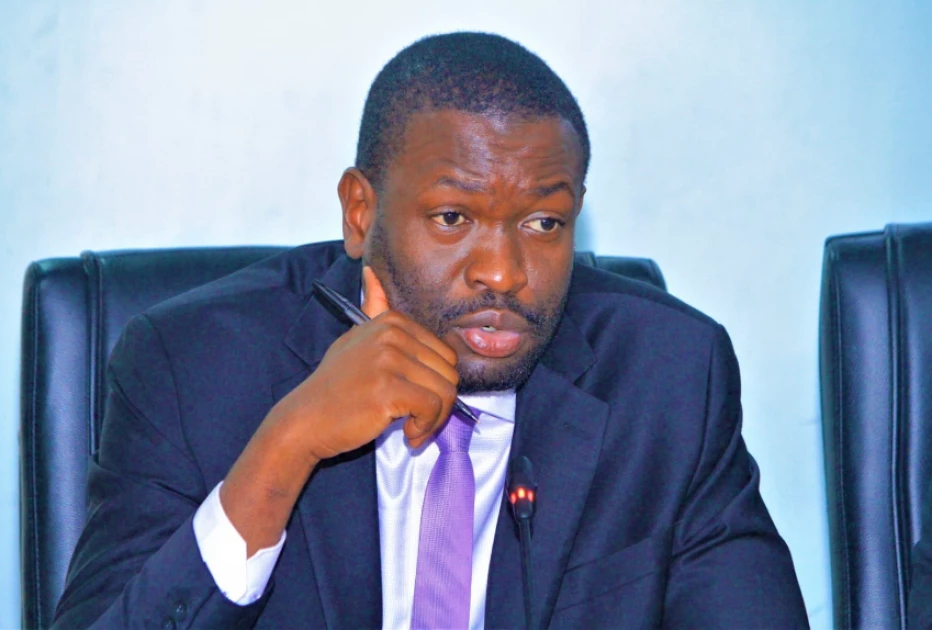 Nairobi Senator Edwin Sifuna. He was kicked out as ODM secretary-general on Wednesday /FILE




![[PHOTOS] Families, leaders attend funeral service of 16 Utumishi Girls fire victims](https://cdn.radioafrica.digital/image/2026/06/a363a6df-b59e-42c2-8d68-5c938d8500f0.jfif)