When Robert Mrima, 36,
was in high school at Dr Aggrey High in Taita Taveta county, he had no idea
he had leadership skills in him.
Then, out of the blues,
he was appointed the school's assistant captain, when he was in Form 3. That was in
2006.
Mrima then knew he
had to do something unique in order for him to be remembered
for a long time, if not forever, in the school.
He decided on
taking on the bullying menace in the school.
“I thought maybe
there was a reason I had it in me and I did not know. I had gone through the Ananda
Marga Academy in Kiembeni, where we were the pioneers, without
any iota of indication that I could lead,” Mrima says.
Partly managing all
affairs of the students in the school had a new taste to it.
“I told my head,
the school captain, that we had to significantly reduce bullying in the school if
we cannot completely root it out,” Mrima says.
The two began the
mission to end bullying.
They would literally
cane those who were reported to have bullied anyone in the school, endearing
them to Form 1s but creating enemies in Form 2 and some Form 3.
He had no problem
with Form 4s because most had stopped bullying the younger students.
“One day we rounded
up about 50 Form 2s in our cubicle and caned them. We were only the two of
us, the school captain and myself,” he says.
“We just put on a
brave face but that was the day I was most afraid of being a school assistant
captain, and caning almost 50 students at a go. At the back of our
heads, we knew if these students decided to react to us caning them, we would
be finished. They could beat us to death,” Mrima says.
He says from that
day, bullying started significantly reducing in the school.
“I am proud I made
a significant contribution in the school in my small capacity and I learnt
something valuable during that time - if you want to pursue something do it to
the fullest no matter the odds,” he says.
When he joined Egerton University in 2009 to pursue a
Bachelor’s Degree in Economics and Finance, he knew he had to cultivate the
leadership skill in him.
In campus, he was in various leadership positions in different departments and clubs including
the Christian Union.
He credits his late
father Richard “Ricky” Mrima for the religious path he took, saying it is him
who instilled that discipline and direction in him.
“He was very strict
when it came to church. There was no compromise. When we were young, we thought
he was oppressing us, but as we grew up, we realised it was for our own benefit
and he was only looking after our best interest,” Mrima says.
It is that
discipline that helped him go through a very difficult year in his first job as
an accountant at a transport and logistics company in Mombasa.
“We were working our
socks off without appreciation form our boss. We did 12-hour shifts, from 7am
to 7pm daily, sometimes being called to work on Sundays.
“Yet our salaries
were delayed every month for no apparent reason. It was just to frustrate us
and make us believe there was no money in the company. But as an accountant, I
knew there were no financial problems in the company because it was making a lot of
profit,” Mrima says.
He says instead of
getting fat, he grew thin because of the stress of work.
“I quit after
exactly a year. I started in January and quit in December. I could not take it
anymore and decided I should start something of my own,” he says.
He was also passionate
about research, having also taken a CPA course.
He survived doing
data collection for private research firms, until he got a job
with the Kenya National Bureau of Statistics.
“It was miraculous
because I was informed of the job opportunity only about three hours to the
deadline for submission of applications.
“I think I was the
last person to submit my application because I took it physically and when I
got to the office there were piles of application letters being sorted then,”
he says.
Out of a pool of
10,000 people who applied for the advertised jobs, Mrima was among the only
nine selected.
“I think I got the
job because there were genuine interviews. There was no knowing who to get the
job,” he says.
The job gave him
impetus to want to know more about research.
While on the job, a
friend in 2019 introduced him to SwahiliPot Hub, an innovation hub for young
people in Mombasa.
This is where the
idea to start a business of his own, as had been his desire all along, was
actualised.
He combined his
digital and research skills to come up with the idea of making bags out of waste
materials.
“In 2020, there
were a lot of activities at SwahiliPot Hub. A lot of banners were being used
and discarded after events. It became a menace for me the way the banners were
being disposed of. I then approached a friend with whom I started asking around
for peoples' views on the amount of waste banners that were at
SwahiliPot,” he says.
Most said they
would make bags with them. It was a research question but at the back of Mrima’s
head, he knew he wanted ideas so he could start a business using the waste
materials.
He approached a
lady friend who was doing tailoring at an adjacent building and asked if she
could make a bag for us from the waste banners.
“She was surprised
but she took it as a challenge. The next day she made a tote bag out of the
waste banners. It looked nice and we gave her Sh100 for her labour,” Mrima says.
“We approached a
lady a SwahiliPot and asked how much she could part with for the tote bag. She
said she could give us Sh400. So we sold it to her at Sh400,” Mrima says.
That is how the
business started.
With time, there
was more interest in the bags and Mrima and his friend started making more of the
bags, trying out new designs in the process.
As more people showed
interest in the bags, they produced more.
In 2024, Mrima
officially called the bags ‘Ricky Bags’ following an official launch of the business.
“Ricky is my father’s
nickname. I decided to name the business after him to honour him because he
died in 2022. It was very difficult for me because he was one of the my greatest
pillars in my business journey,” he says.
Mrima says one time he fell into depression after his dad died, because it was a
period during which there were difficulties with the business and the business partner
he had at that time.
“It was a
challenge. I had to make difficult decisions, with my greatest supporter no
longer available to give me advice. He had been pushing me and following up on every move i make,” Mrima says.
He however says he
keeps learning every day, taking one day at a time and being open minded as he
believes every day is a learning day.
Today, Ricky Bags is
slowly penetrating the market.
He is selling between
100 and 150 bags a month and has diversified designs.
He makes
about 20 different types of bags and is attracting corporates now.
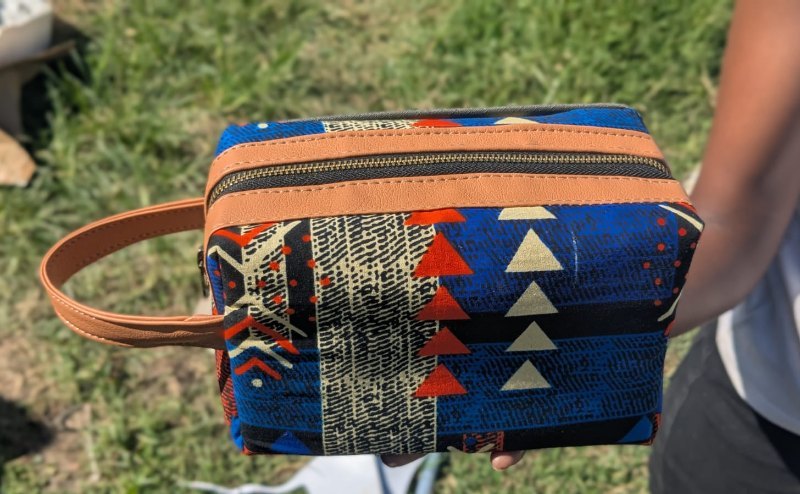
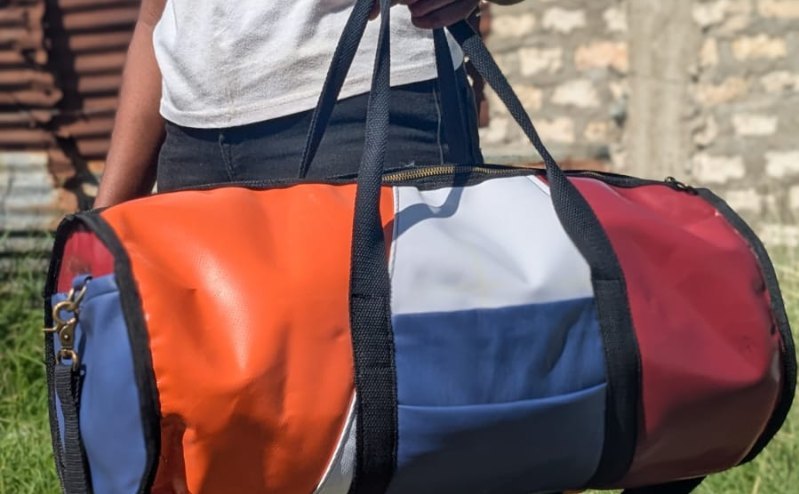
The bags, which are
still made from purely waste materials like banners and clothes, fetch between
Sh500 and Sh2,500 each.
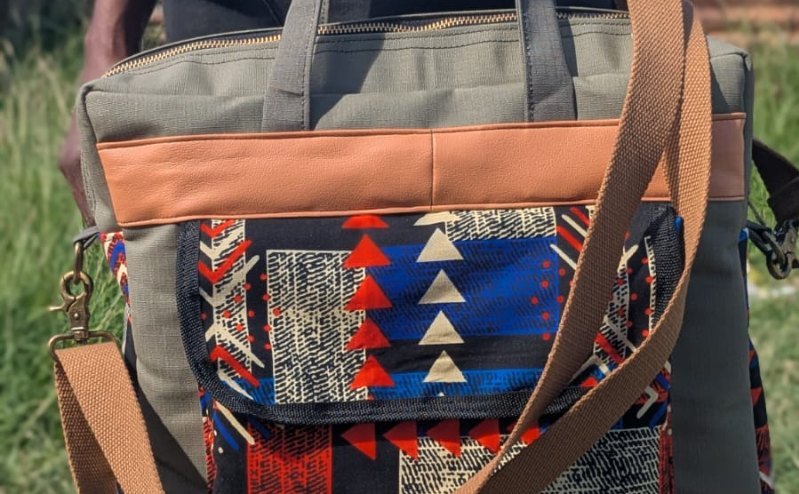
He does tote bags,
backpacks, travelling bags, among others.
Mrima says he has employed eight people permanently while when need be, he takes up about six
more casuals.
“I have learnt a
lot during this journey. But I am happy because I keep on learning new things
every day.
“My bags have
penetrated to countries in Europe like Germany and others in the US. This is
because I aggressively market them even at events where tourists come,” he
says.
Apart from conserving the environment by recycling waste materials, he is
promoting Kenya’s tourist attractions by naming the bags after places
and animals.
“We have Chui bags,
Tausi Bags, Watamu Bags, Masai Mara Bags, among other names for our bags. We have given them these names to promote the places and animals,” he
says.

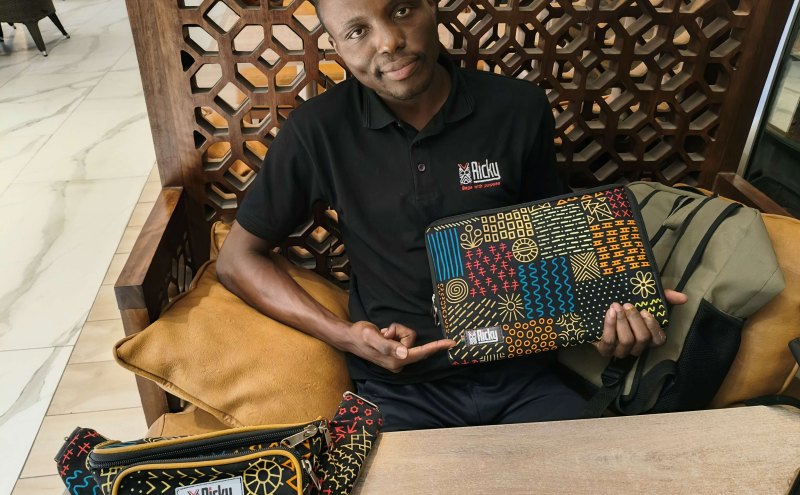
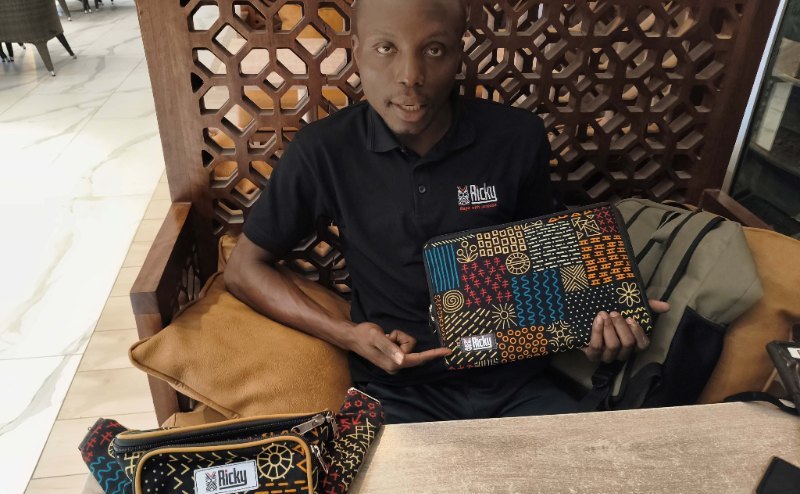 Robert Mrima with some of his bags / BRIAN OTIENO
 A sample of Ricky bags / BRIAN OTIENO
 A sample of Ricky bags / BRIAN OTIENO
 A sample of Ricky bags / BRIAN OTIENO





![[PHOTOS] The Star, Chinese Embassy host Kenya-China media dialogue](https://cdn.radioafrica.digital/image/2026/06/215e29cd-5ca2-4faf-bb4e-d1686b2c3dad.jfif)