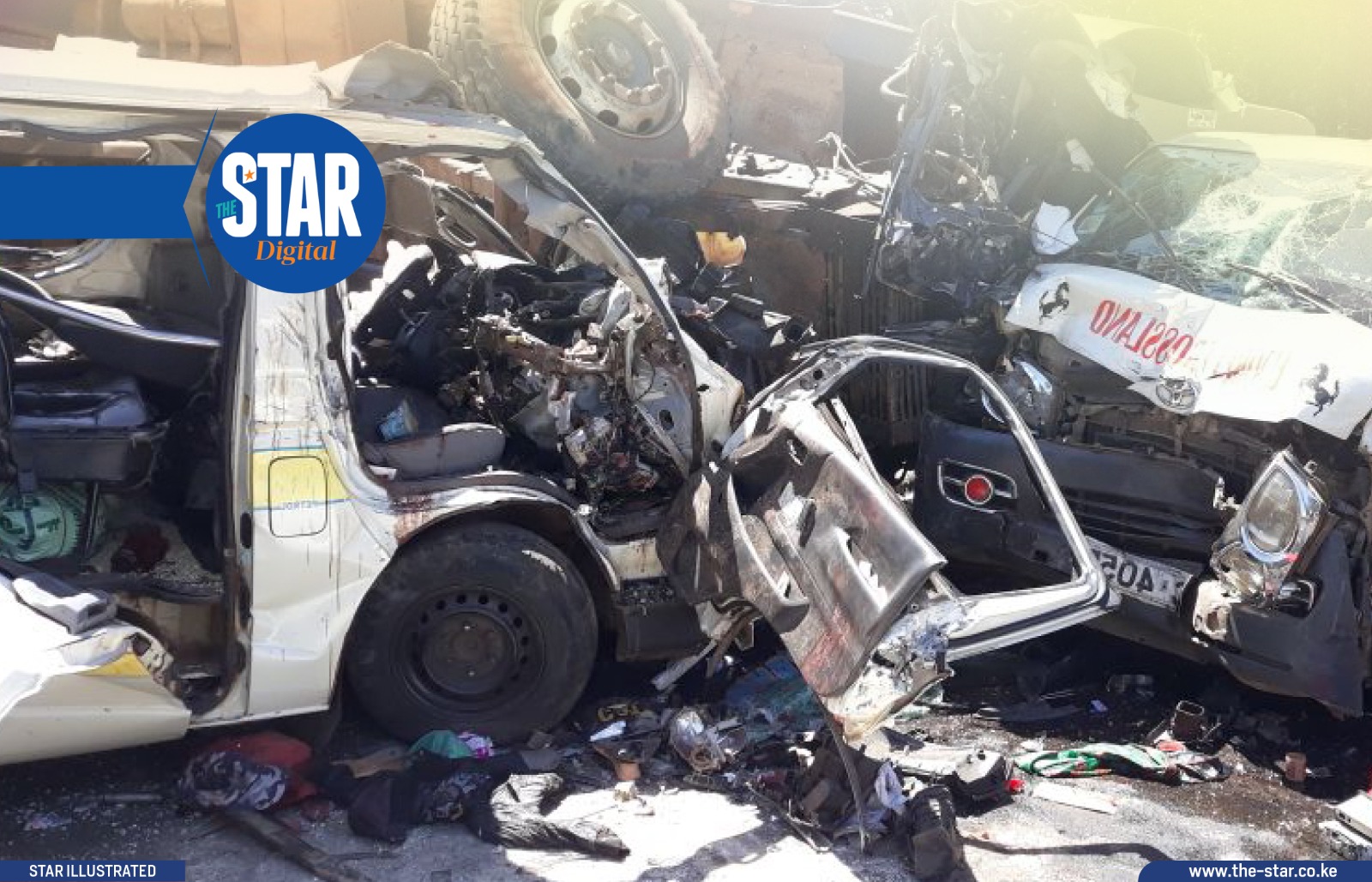
In just four days, as of August 11, 80
lives have been wiped out on Kenya’s roads. Eighty mothers, fathers, children and
breadwinners gone before the week could even end.
According to Roads and Transport
Cabinet Secretary Davis Chirchir, the country has recorded 2,933 road
fatalities so far this year, a figure that should jolt every Kenyan out of
complacency.
Yet, these numbers have become part of the
background noise of our daily news. We hear them, shake our heads, maybe share
a post online and move on. Meanwhile, families are left in pieces, dreams are
buried with their owners and communities are robbed of their future.
Road carnage in Kenya is not a mystery. We
know the killers: speeding, drunk driving, reckless overtaking, poorly
maintained vehicles, untrained boda boda riders, dangerous road conditions, and
notorious blackspots where tragedy strikes again and again.
Too often, drivers
quite literally lose control, not just of their vehicles, but of their judgment,
turning our highways into death traps. These are not accidents; they are
preventable disasters.
Every number in these statistics
represents a story cut short. It is the matatu driver who never made it home to
his children in Gikomba. The university student whose dreams ended on Thika
Road. The market woman from Kisii who never arrived in Nairobi with her
bananas.
These deaths don’t just empty chairs at dinner tables; they unravel
lives. A breadwinner’s absence can mean children dropping out of school,
families selling land to pay hospital bills and households falling into poverty
overnight.
Part of the problem lies in how we drive
and how we allow others to drive. Our expanding road network has made travel
faster but has also encouraged more risk-taking. Overtaking on blind corners,
tailgating at high speed and ignoring zebra crossings have become normalised.
Passengers who dare to speak up are met with hostility or told, “Hii gari unaona ikona speed, ndio iko, ukitaka
shuka.” Too many remain silent, choosing discomfort over confrontation,
until it’s too late.
Infrastructure plays its role as well.
Many roads are poorly lit, with fading markings and missing signs. Pedestrian
crossings are often ignored or placed where no driver expects them.
Potholes
force sudden swerves into oncoming traffic. Rural roads pit speeding buses
against overloaded lorries, while urban traffic is a chaotic dance of matatus,
private cars, boda bodas and pedestrians all competing for space. Blackspots
like the notorious Sachangwan stretch, the Nithi bridge and the Coptic
Roundabout on the Kisumu-Kakamega Road are still claiming lives year
after year.
Enforcement is inconsistent and often
undermined by corruption. We see bursts of traffic crackdowns after major
accidents, then a return to business as usual. Mandatory vehicle inspections
sometimes become box-ticking exercises, bypassed with a bribe. The boda boda
sector, responsible for a significant share of road injuries and fatalities,
still operates with minimal oversight.
The cost is enormous. The World Bank
estimates that road crashes cost countries like Kenya between two per cent and
six per cent of GDP annually.
That’s billions lost in hospital bills, property
damage and lost productivity; money that could have built schools, hospitals,
or better roads. But the true cost is human, measured in grief, lost potential
and the quiet suffering of survivors left with lifelong injuries.
We cannot keep treating road deaths as
inevitable. We need unrelenting enforcement of traffic laws; speed checks,
breathalyser tests and thorough vehicle inspections must happen every day, not
just during publicity drives.
The boda boda sector must be properly regulated,
with mandatory licensing, rider training and real penalties for lawbreakers.
Our roads need better lighting, clearer signage, speed bumps in high-risk areas
and well-maintained pedestrian crossings.
Just as important, Kenyans must change how
we think about road safety. It’s not “my problem” only if I am behind the
wheel. Passengers must speak up against reckless driving, parents must insist
their children wear helmets and drivers must see speed limits as lifesavers,
not obstacles. Corruption in traffic enforcement must end; because as long as
rules can be bought, lives will be lost.
Other countries have proven this can be
done. Sweden’s “Vision Zero” treats every road death as unacceptable and design
roads, vehicles and laws to anticipate human error while minimising harm. Kenya
can take the same approach, if we decide that every life matters enough to
protect.
The 2,933 Kenyans lost this year cannot be
brought back. But the next 80 deaths in the next four days can be prevented, if
we act now. Every day we delay, we give our silent consent to more deaths. The
question is not whether our roads are killing us. The question is whether we’re
willing to let them keep doing it.
The writer is an official at the Media Council of Kenya