He graduated from pickpocket to bank robber before seeing the light
by The Star
Audio By Vocalize
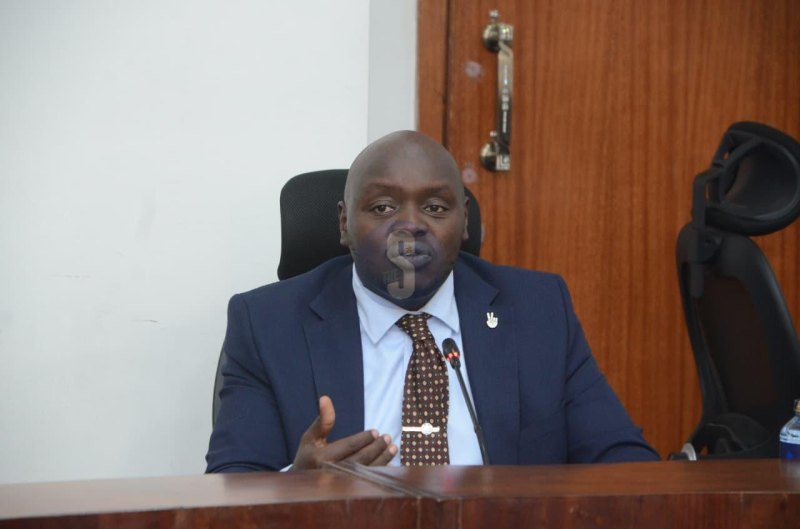
Andrew Odhiambo preaches the word of God at his cousin's church in Kitengela town on September 27
Born in Nakuru county in 1971, Andrew Odhiambo grew up to be one of the most feared criminals in the late 1980s.
At a tender age, his father, who worked in Nakuru town, took him along with his two sisters to Mau Narok, where their grandmother took care of them as they joined a local primary school.
Odhiambo walked out of the school one morning when he had just joined Class 2 after he was flogged by a teacher for reporting late.
“I felt a pain that flashed through my brain, and that was the last time I was seen in school,” Odhiambo told the Star in Kitengela, Kajiado county.
He left his grandmother in Mau Narok in 1985 at the age of 14 years and moved to Nairobi to start life as a street urchin.
“I went to Nakuru town briefly and later left the town for fear of my father.”
While in Nairobi, Odhiambo joined several criminal gangs that were involved in pickpocketing and stealing for Asian gurus operating in the CBD.
“After several months in pickpocketing activities, I was recruited by an Asian who sold sofa sets in the city to steal from those who bought the property from him,” Odhiambo said.
He says his duty was to assist customers to get the bought goods into the vehicles, accompany the customers to their homes and help in carrying them to their houses.
Odhiambo would later come back with other gangsters and steal the property with the help of their Asian boss, who provided transport.
When not tracking customers who bought goods from the Asian shop, he was busy tracing people who withdrew money from banks and stole from them.
“We moved in groups of threes into the banks, and when a customer withdrew money, one of us was tasked with drawing a mark on their back,” he said.
When the customer left the bank, he would be followed from behind until he entered a crowd, and one of them would approach him or her from in front.
One of them coming from in front would be shown through sign language where the money is hidden by the customer. The man approaching the customer would bump into him or her and in the process, the one behind would snatch all the money.
“One day, while we were on Luthuli Avenue in 1988, we spotted a white man walking and his wallet was visible from his hind pocket,” Odhiambo said.
“I went and bumped into him from in front and as my colleague attempted to snatch it, the world came down crumbling for him.”
He said the white man grabbed the hand of his colleague and broke it like a piece of dry stick.
“The white man, after breaking the hand, pulled out the wallet and pulled out US$80 and threw it at the victim. That is the last time I was seen in the streets,” Odhiambo says.
We believed all the cars in Kenya belonged to us. With a gun in the country at the time, you could steal any make of a modern car
BANK ROBBERIES
By the time he was quitting the pickpocketing business in Nairobi’s CBD, Odhiambo had already been discovered by senior criminals in Nairobi. He boasts of speaking seven Kenyan languages and five foreign dialects.
One morning as he walked out of his rented house in the Kibra slums, he was approached by a man he only identified as Kimani.
“Kimani approached me and told me he was going to introduce me to his boss. He did not name the boss. We ended up in Karura Forest,” he says.
At the end of the trip to the jungle, he found three other people he only identifies as Kamotho, Wanjohi and Wacucu.
“Inside the forest, Kimani took me to a man I later knew as Benard Thuo, alias Rasta, in early 1989. He looked scary and talked less,” Odhiambo says.
Rasta started giving orders. He said the five men would be trained for one week on how to use guns.
Odhiambo earned a promotion in Rasta’s gang for his speed and ability to use several types of guns. As a sharpshooter, he was assigned the duties of taming security officers manning banks.
At Karura Forest, they started the training immediately, using rubber bullets. And after seven days, they were assigned a tour of duty to Nakuru.
In Nakuru, they were to raid a Kenya Commercial Bank outlet in the CBD. So they planned and left Nairobi in a stolen Peugeot 504 Station Wagon.
“Peugeots were cars of the moment used by credible gangsters. We believed all the cars in Kenya belonged to us. With a gun in the country at the time, you could steal any make of a modern car,” Odhiambo said.
They arrived in Nakuru town at 10.30am and immediately drove to KCB bank in the centre of the town. They counted three police officers guarding the financial institution.
“Kamotho and Wacucu went into the bank and I remained outside with Kimani and Wanjohi. The operation took us 20 minutes and we later walked away with Sh1.8 million and three police guns,” Odhiambo said.
He says that as the two of their colleagues ordered everyone to lie down in the bank, the three of them had placed their pistols on the heads of the police officers.
“We took them by surprise. They found us aiming at their heads and had nothing to do. If they attempted any trick, they would be dead by now,” Odhiambo said.
Odhiambo says his calling to serve God came after three of his gangster colleagues were killed on Jogoo Road, Nairobi. "I gave my life to Jesus, I had never seen anything like that."
TURNING POINT
After the operation, they hijacked a motorist who was driving a Mercedes in town and sped in the direction of Nairobi.
“When we reached Nakuru State House, we hijacked a Peugeot 504 car and proceeded to Nairobi. On reaching Mai Mahiu, we blocked a BMW car and commandeered it to Nairobi,” Odhiambo says.
They dropped the BMW in the Ngara area of the city and took one of their cars that took them to Karura Forest, where they met Rasta.
“He gave us our share of the loot and shared some with some senior police officers who gave him protection,” Odhiambo says.
Almost immediately afterwards, they went to Machakos in the same year, 1989, and invaded National Bank.
They walked away with Sh800,000 in an operation that lasted 15 minutes.
“We were very disappointed to get very little money from the bank. We also carried away police guns,” Odhiambo says.
On December 13, 1989, Odhiambo and his four colleagues organised an operation at Jogoo’s Cooperative Bank, which was busted by the Flying Squad officers.
Little did they know that they were being tracked by the dreaded squad.
“We were sold out by the brother of a police sergeant from Jogoo Road police station. In a shootout that ensued, Kamotho, Wanjohi and Wacucu lost their lives. One police officer was also killed,” Odhiambo says.
He says he came out with Kamau unscathed from a vehicle the police officers had sprayed with more than 200 bullets.
“I handed over my gun and 14 rounds of ammunition to the police as I surrendered,” Odhiambo says.
“It was on a Friday and we were locked up at the Central police station until Monday, when we were taken to the Nairobi law courts.”
After appearing in court, they were remanded at Kamiti Maximum Prison for one year. Thereafter, they were arraigned in the High Court and charged with five cases of robbery with violence and one for murder.
They were jailed for three years each, which Odhiambo served at Kamiti, Shimo la Tewa and Sukusa prison in Western Kenya.
Within six months at Kamiti, Odhiambo had already received a trustee status. As soon as he was jailed, he says, he gave his life to Jesus.
“In all the operations I used my gun, I never killed anyone,” Odhiambo says, adding that he only injured about 10 people who obstructed him in the line of duty.
END OF AN ERA
Although Odhiambo quit school in Class 2, today he is a proud church minister after graduating with two theology degrees and a diploma from Ayamu Theological College in Narok and the Winner’s Chapel College.
During this interview, Odhiambo was waiting for a visa to travel to Turkey on a church ministry trip. He has been to Brazil, Congo DRC, Malawi, Botswana, South Africa, Dubai, Uganda, Tanzania and Juba in Southern Suda, preaching the word of God.
He is currently pursuing a master’s degree course in theology. Odhiambo is the founder of the Signs and Wonders Chapel Ministry in Nairobi.
Rasta, the last of a deadly trio of gangsters, was shot dead by police later in Kiambu county.
(Wacucu), Gerald Wambugu Munyeria (Wanugu) and Bernard Matheri Thuo (Rasta).
From 1993, Bernard Thuo, alias Rasta, Anthony Kanagi, alias Wacucu, and Gerald Munyera, alias Wanugu, were Kenya’s most dreaded criminals.
Their rich profile of criminal activities, ranging from carjackings to kidnappings, robbery with violence, torture and killing, was only rivalled by another underworld kingpin, Nicholas Mwea, alias Wakinyonga, whose reign had been abruptly ended in 1978 by crime buster Patrick Shaw.
The trio’s clocks started ticking when on August 21, 1995, police commissioner Shadrack Kiruki declared them Kenya’s most wanted gangsters. He offered a Sh100,000 reward for information leading to their capture.
On January 1, 1996, an elite shoot-to-kill squad from the Criminal Investigations Department (now Directorate of Criminal Investigations) started hunting down Rasta, Wacucu and Wanugu.
Three days later, the Alfa Romeo squad, led by Daniel Seronei, received a tip-off that Wacucu and Wanugu were travelling in a car heading to the latter’s rented house in Rongai.
They were intercepted and Wacucu, the ringleader of the gang, was killed in the ensuing shootout. Though wounded, Wanugu escaped because he was protected by his bulletproof vest.
The police put out an alert in hospitals just in case he sought treatment, but Wanugu came back on the police radar much later.
The police had hunted Wacucu for various crimes since 1993. For instance, he is alleged to have killed two GSU officers on the Outering Road in Nairobi that year. In 1995, he killed a CID officer and two women in Ruiru.
He was also said to have been the mastermind of various violent robberies and bank heists. Success came for the Alpha Romeo squad six months later.
In April 1996, Wanugu had escaped a weeklong ambush set by the Alpha Romeo squad in Mombasa.
On June 27, 1996, however, he was not so lucky. The squad successfully ambushed him at his rented house in Kabata-ini shopping centre in Nakuru town. When Wanugu tried to use his girlfriend as a human shield against the squad’s gunfire, they shot the two.
Help us continue bringing you unbiased news, in-depth investigations, and diverse perspectives. Your subscription keeps our mission alive and empowers us to provide high-quality, trustworthy journalism. Join us today to make a difference!