During treatment in Paris, he turned to cannabidiol (CBD) oils—a cannabis derivative—which brought him significant relief.
Before his death in July 2019, Okoth had repeatedly appealed to the government to legalise bhang for medical purposes, arguing that no patient should suffer needlessly while a natural remedy remained out of reach.
His plea, however, fell on deaf ears. Six years later, his voice echoed through Parliament on Wednesday as lawmakers reignited the debate over whether Kenya should finally legalise the cultivation, processing and use of cannabis for medicinal purposes.The heated debate, triggered by a response to a statement sought by West Mugirango MP Stephen Mogaka, exposed deep divisions within the House. Some legislators cited personal experiences and international best practice to support legalisation, while others warned of devastating social and health consequences.Leading the push for change, Ugenya MP David Ochieng' shared a deeply personal account of how bhang helped him manage severe back pain after doctors advised against surgery.
"Five years ago, I suffered from serious back pain. I was recommended for surgery in India, but a certain doctor told me I was too young for back surgery," Ochieng' revealed.
"For a whole year, I procured bhang every evening at 10pm. I would boil it and drink it before going to sleep," he statedAccording to Ochieng', the treatment eased his condition and prompted him to question Kenya's decades-long war on cannabis.
"People who are inclined to consume bhang will consume it whether it is legalised or not," he argued.
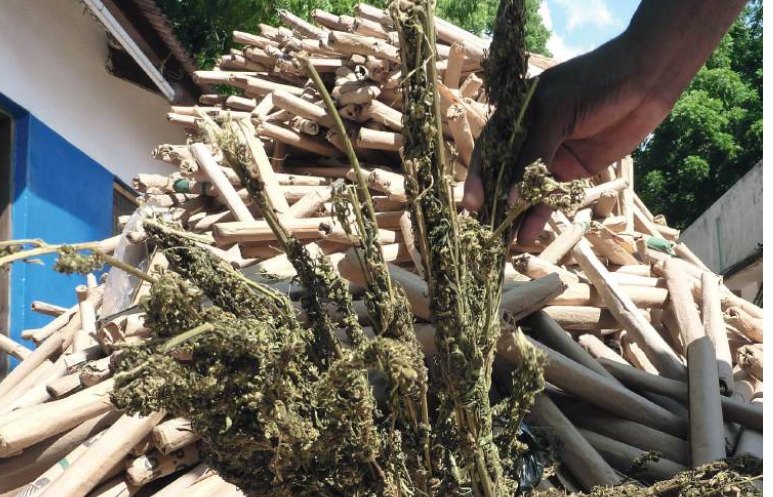
"They have been impounding bhang since the 1950s and 1960s from Uganda, and it has not stopped. Therefore, impounding it or talking about the police will not help."Ochieng' urged Kenya to abandon what he described as a colonial-era enforcement approach and instead focus on regulation and public education.
"It cannot be that bhang is a useful medicine in Mexico, America and South Africa but illegal in Kenya," he said.
"We need to get real and acknowledge that bhang has been here for a long time."Dagoretti North MP Beatrice Elachi and Nairobi Woman Representative Esther Passaris also threw their weight behind reconsidering the ban.
Passaris recalled visiting Okoth in Paris and witnessing firsthand how CBD oils relieved his pain.
"You can order it online and it is delivered to you, including within the CBD. Let us be realistic," she said.The debate comes against a backdrop of worrying statistics.
According to the National Authority for the Campaign Against Alcohol and Drug Abuse (Nacada), cannabis is the most commonly used illicit drug in Kenya.
The 2022 survey on the status of drugs and substance abuse in Kenya revealed that about 1.9 million Kenyans use cannabis, with the highest prevalence among youth aged 15 to 24.
The same report highlighted that bhang use in some counties exceeds the national average, signalling a deep-rooted challenge that enforcement alone has failed to address.However, opponents of legalisation remained resolute.
Deputy Majority leader Owen Baya dismissed arguments for legalisation as defeatist.
"Just because bhang is smuggled and the police keep impounding it does not mean that we should now make it available for everybody," he said, challenging proponents to sponsor legislation and subject it to public participation.Kilgoris MP Julius Sunkuli warned that availability should not be confused with acceptability, while Buuri MP Mugambi Rindikiri offered a sobering personal account of a nephew who completed his master's degree but is now a "zombie as a result of bhang."
Seme MP James Nyikal, a trained medic, urged caution.
"The fact that something is therapeutic is the reason it should be controlled," he said, noting that morphine and codeine—derived from opium—are therapeutic but strictly regulated.The debate reflects a growing global conversation on medicinal cannabis, but also exposes Kenya's struggle to balance public health, law enforcement, and scientific evidence.
With Okoth's unfulfilled plea lingering in memory, the question now is whether Kenya is ready to have a sober, evidence-driven conversation about a plant that has been part of its society for decades—illegal but ever-present, controversial but undeniably medicinal for some.