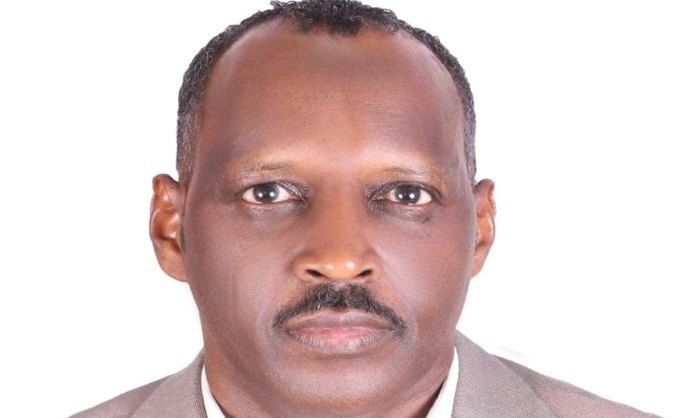
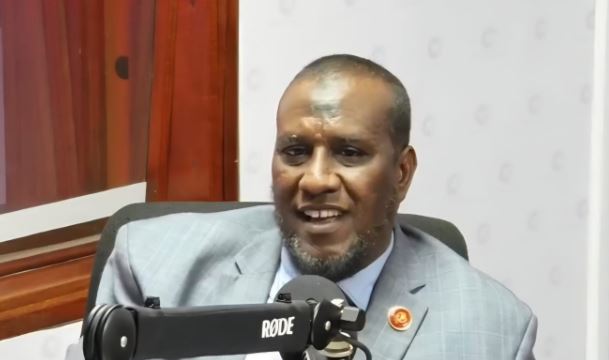
 Abdullahı Maalim, a governance and policy expert with 25+ years of experience in public administration, devolution, and institutional reform. /HANDOUT
The proposed Comprehensive School Model emerging from the National Conference on Education held from May 7 to 9, 2026, at Lake Naivasha Resort is a bold and progressive step towards strengthening leadership, coordination, accountability, and quality in Kenya’s education sector.
The proposal envisions a unified governance structure comprising one Board of Management (BOM), a Head of Institution (HOI), and Deputy Heads responsible for Primary School and Junior School sections. Under this framework, curriculum implementation, learner affairs, assessment and evaluation, administration, and planning would be coordinated under a single institutional umbrella, with the ultimate goal of achieving efficient management, motivated teachers, engaged learners, and quality education for all.
The proposal deserves commendation for recognising the need to harmonise leadership and management across the basic education cycle. For some years now, schools have operated under fragmented structures that have often resulted in duplication of functions, weak coordination, inconsistent planning, and challenges in learner transitions. By bringing Primary School and Junior School under a single governance structure, the proposal seeks to create stronger instructional leadership, improve institutional accountability, optimise resource utilisation, and support smoother progression of learners within the Competency-Based Education framework. This is a reform whose time has come and one that has the potential to significantly improve learning outcomes across the country.
However, as Kenya moves towards operationalising this important reform, it is necessary to pause and reflect on whether the proposed structure is sufficiently comprehensive to achieve its intended objectives. While the model successfully integrates Primary and Junior School, it leaves out Pre-Primary Education (PP1 and PP2), commonly referred to as ECDE. This omission presents a fundamental challenge because a comprehensive school, by definition, should encompass the entire foundational learning pathway. Excluding ECDE risks perpetuating the very fragmentation that the reform seeks to address.
It is appreciated that Kenya’s Constitution assigns responsibility for Early Childhood Development Education to County Governments while Primary and Secondary Education remain under the National Government. This division of functions has served an important purpose within the devolved system of governance. Nevertheless, educational development should not be constrained by administrative boundaries. The learner’s journey does not begin in Grade One; it begins in the early childhood years when critical foundations for cognitive development, language acquisition, social interaction, emotional growth, and learning competencies are established. Consequently, the governance framework should be designed around the learner rather than around institutional mandates.
The exclusion of ECDE from the proposed comprehensive governance structure is likely to have far-reaching consequences for the education sector. It risks creating disconnects in curriculum implementation, learner assessment, transition planning, teacher collaboration, parental engagement, and resource allocation. It may also undermine efforts to strengthen foundational learning, which remains the bedrock upon which the Competency-Based Education system is built. The competencies that Kenya seeks to nurture among learners—including communication, creativity, collaboration, critical thinking, citizenship, self-efficacy, and learning to learn—begin developing long before a child enters Grade One. A governance model that separates these formative years from the rest of the foundational learning continuum risks weakening the coherence required for successful educational outcomes.
International experience offers valuable lessons. Countries with some of the world’s most successful education systems have deliberately prioritised continuity across the learner’s educational journey. Finland’s comprehensive school system is built on strong linkages between early childhood education and basic education, ensuring smooth transitions and coherent learner development. Estonia, one of the highest-performing education systems globally, emphasises close alignment between preschool and primary education as part of a seamless learning continuum.
Scotland’s Curriculum for Excellence is structured around a learner pathway that begins in the early years and continues through secondary education, while Singapore has invested heavily in ensuring that preschool education is aligned with primary school expectations. Although governance arrangements vary across these countries, they share a common understanding that educational success depends on continuity from the earliest years rather than compartmentalised educational structures.
Closer to home, African countries are increasingly embracing integrated approaches to foundational learning. Rwanda has made Early Childhood Development a central pillar of its human capital development agenda by fostering coordination across key systems. South Africa’s emphasis on the Foundation Phase underscores coherent progression from early learning into primary education. Botswana and Mauritius have also strengthened linkages between early childhood and basic education to improve school readiness and learning outcomes. These examples show that effective education systems create continuity and coordination throughout the learner’s developmental journey.
As Kenya considers the implementation of the Comprehensive School Model, it is important that the country gets the governance architecture right before focusing on secondary issues. There is a common saying that one should not put the cart before the horse. The current national conversation appears to be increasingly focused on the qualifications of the head of institution, the eligibility criteria for deputy heads, and questions relating to deployment and staffing. While these issues are important, they are matters that can be addressed once the foundational governance framework has been agreed upon. The more fundamental question is whether the proposed structure adequately reflects the complete learner pathway and provides a governance arrangement capable of delivering a truly comprehensive education experience.
Once the appropriate governance framework is established, including the place of ECDE within the comprehensive school structure, the finer details relating to qualifications, leadership arrangements, reporting mechanisms, and staffing requirements can be effectively addressed through policy and administrative processes. Equally important, the national government and county governments can negotiate and formalise the necessary intergovernmental agreements to operationalise a unified institutional framework while respecting the constitutional mandates of both levels of government. Such arrangements would not diminish devolution but rather strengthen collaboration in pursuit of shared educational outcomes.
Kenya, therefore, has a unique opportunity to build a genuinely comprehensive school model that reflects both the aspirations of Competency-Based Education and the realities of learner development. A truly comprehensive institution should ideally provide a seamless continuum from PP1 through Grade 9 under one governance framework, with appropriate leadership structures for ECDE, Primary, and Junior School sections. Such a model would enhance continuity, strengthen accountability, improve planning and resource utilisation, and ultimately deliver better learning outcomes for all children.
The proposal arising from the National Conference on Education is therefore a commendable and visionary reform initiative. Yet its long-term success will depend on whether it embraces the full spectrum of foundational learning.
If Kenya
is to realise the promise of quality, equitable, and inclusive education for
all, the comprehensive school model must begin where learning begins—in the
early childhood years. Only then can the country truly claim to have
established a comprehensive governance framework capable of nurturing learners
from their earliest developmental stages through the completion of basic
education.
The writer is a governance and policy expert with 25+ years of experience in public administration, devolution, and institutional reform.