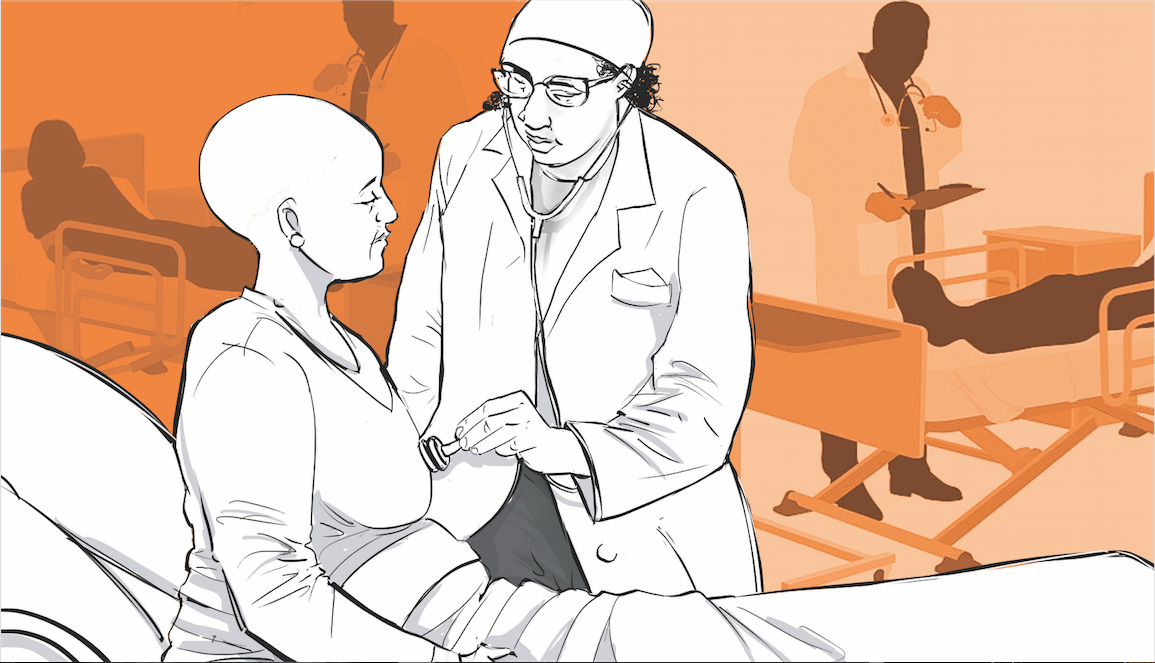
In the medical field, chronic pain and mental health disorders often occur together. Additional research shows that chronic pain and psychological distress reinforce one another.
During one of my night shifts, I received a handover about a patient described as aggressive, confused and suicidal. Those words immediately trigger concern, and thoughts turn to risk, safety, medication, capacity, mental state and what happens next. But as I listened, it became clear that behind those words was a woman in severe pain.
She had advanced soft tissue sarcoma, a rare cancer arising from tissues such as muscle, fat, nerves, or blood vessels. Her tumour was growing near the brachial plexus, the complex network of nerves supplying the arm and shoulder, and the cancer had spread to her lungs. Tumours in this area can cause excruciating pain: burning, shooting, relentless pain that steals sleep, movement, concentration and peace of mind.
By the time she arrived at the acute assessment unit, she was desperate. She said if the pain could not be controlled, she wanted to die. When asked to rate her pain, she answered, “Fourteen.”
On paper, 14 out of 10 sounds impossible. In reality, anyone who has cared for severe cancer pain understands exactly what she meant. Sometimes, ordinary language cannot capture suffering. A standard pain scale becomes inadequate when pain consumes a person’s existence.
Later that night, after receiving stronger pain relief, her pain score dropped to seven out of 10. Still severe, but less all-consuming. She could sit up, speak calmly and explain herself. Most strikingly, she was drinking a cup of tea.
When I asked her about the suicidal thoughts, she was clear, it was the pain speaking. Before the pain became that severe, she had not wanted death. She had been frightened by the diagnosis, but she was also hopeful. In the middle of unbearable pain, however, death had started to look like the only relief.
When people with advanced illness say they want to die, it is not always because they have stopped valuing life. Sometimes they are pleading for relief from suffering. Sometimes, in that moment, life becomes pain, fear, exhaustion and helplessness.
And if clinicians do not listen carefully, patients can be labelled as difficult or as having a psychiatric illness.
We talked about her diagnosis and what she understood about the plan. I explained that her pain was likely coming from the tumour pressing on the nerves supplying the arm. I explained that because the cancer had spread to the lungs, this meant stage 4 disease. I also explained that chemotherapy, treatment given to slow down or shrink cancer cells, may help reduce the tumour and ease some pain. But it may not happen immediately or completely after the first treatment.
In moments like this, cancer care cannot focus solely on chemotherapy and scans. Good care requires strong pain relief, palliative care, psycho-oncology services, nursing input, family support and honest conversations that help the person understand what is happening without taking away all hope.
These conversations are hard because you are not only explaining the disease. You are sitting with someone as they begin to realise that life may not return to what it was.
Advanced cancer not only affects the body. It affects relationships, sleep, independence and a person’s understanding of themselves. Pain leaves little room for anything else. When pain is constant, a person’s world can become smaller until life revolves around the next tablet, the next flare, the next hospital visit, and the fear of getting worse.
That is where mental health and physical pain meet.
Pain worsens anxiety and depression; anxiety and depression intensify pain. Without proper support, patients can become trapped in a cycle of suffering.
That night reminded me that pain management is not just about prescribing medication or reducing a number on a chart. It is about dignity. It is about helping someone sleep, sit up, speak, think and feel safe enough to face the next hour. Sometimes, controlling pain is also mental health care.
During Mental Health Awareness Month, I think about patients like her. Patients whose distress may not fit neatly into a diagnosis, but whose mental health is deeply affected by pain and serious illness. Patients who may appear angry or hopeless, when underneath it all, they are simply exhausted.
As clinicians, we have to be careful not to dismiss distress because someone has advanced disease or assume that suffering should be expected.
Kenyan oncologist currently based in Manchester, UK

![[PHOTOS] The new Ngong –Naivasha Road viaduct](https://cdn.radioafrica.digital/image/2026/06/64d4f771-4432-4aee-ba3c-2f304c4436ec.jpg)









![[PHOTOS] 'Mr Speaker Sir' Gen Z protester in court](https://cdn.radioafrica.digital/image/2026/06/b3e62d8e-25c3-4780-90f9-4eb48b1ce8a7.jpg)