

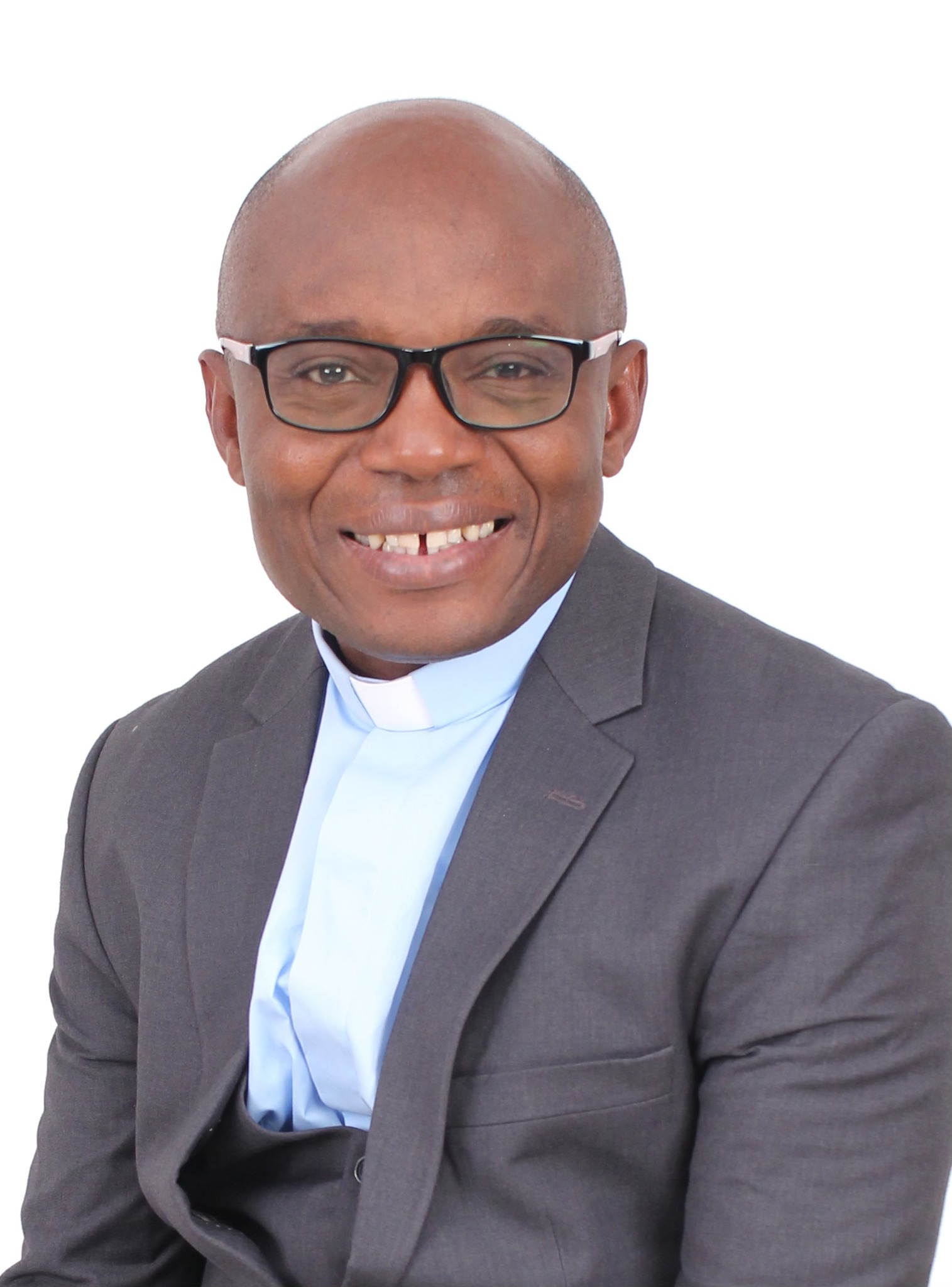
 Fr. Charlie Chilufya, S.J./HANDOUT
As Christmas approaches, Kenya enters one of those rare moments in the year when the noise of life softens. Families prepare to gather.
Choirs rehearse familiar hymns.
And in churches across the country, people find themselves drawn back to a
story they’ve heard since childhood.
It is the story of a young couple far from home, a mother in labour, and a child born in a manger because there was no room anywhere else.
A story of vulnerability and hope—reminding us of the quiet courage required to bring new life into the world. But it is also in this season, when we imagine that young mother in a humble manger, that we confront a painful contradiction.
While we celebrate the miracle of birth, far too many women in Kenya never survive the journey to motherhood.
Recent data show that 5,000–6,000 Kenyan women die each year from pregnancy- or childbirth-related complications—about 16 every single day.
These are deaths we already know how to prevent. Yet when maternal mortality enters public debate, the outcry is fleeting.
A headline flashes, a hashtag trends, an official promises action—and then life moves on. Meanwhile, thousands of families continue to bury women and children whose deaths never make the news.
Nearly five million children die before age five each year. Survival still depends far too much on geography. Ninety percent of maternal deaths occur in low- and middle-income countries, and a child born in sub-Saharan Africa faces eighteen times the risk of dying before age five compared with a child in a high-income country.
These disparities do not reflect the will of God. They reflect choices—about resources, priorities, systems, and whose lives we choose to value. And for every statistic, there is a family with an empty seat at the table this Christmas. A mother who laughed and prayed and hoped.
A child whose first birthday will never be celebrated. If we truly believe, as our faith teaches, that every life is sacred, then their memory should trouble us. It should call us to a deeper responsibility.
Faith Without Action Is Dead
Kenya is a nation of faith. But real faith demands more than words. As the Letter of James reminds us (James 2:14–17): faith without works is dead. It is one thing to pray for safe deliveries; it is another to ensure that every mother has access to quality antenatal care, proper nutrition, and skilled birth attendants who know what to do when complications arise.
It means building referral systems that actually function—systems that can move a mother from danger to safety without delay. And in rural areas, where the nearest hospital may be hours away, it may mean churches and local leaders stepping in to organise emergency transport when no ambulance is coming. Faith communities already accompany families spiritually; now we must accompany them practically.
Many of these deaths are preventable. The solutions exist. What remains is our collective responsibility to implement them with fidelity and urgency.
Take, for example, something as basic as a calibrated V-shaped plastic drape. It accurately measures blood loss and helps prevent postpartum haemorrhage—the complication that still claims nearly 60 percent of the mothers we lose. Lifesaving. Proven. Yet still out of reach for countless Kenyan women.
When a mother survives childbirth, her entire family stands a better chance of surviving and thriving. When she does not, her newborn has only a 37 percent chance of reaching its first birthday.
Accountability: What We Fund Reveals What We Value
If we say that families matter and that mothers are the backbone of our nation, then our budgets must reflect that conviction. Every shilling invested in maternal, newborn, and child health strengthens our health system, builds resilience, and powers economic development. Kenya has taken promising steps: improving monitoring, demanding timely reporting of maternal deaths, and investing in essential maternal and newborn services. These are important commitments. But commitments only matter when they lead to outcomes. Accountability is not about blame; it is about honour. It is about keeping the promises we make to one another as a society.
A Moral Mandate for All of Us
The work of saving mothers’ lives does not belong only to doctors or midwives. It belongs to all of us—national leaders and county governments, faith leaders and elders, fathers and mothers. Because when a mother dies, it is not only a medical failure. It is a tear in the social fabric. A loss that diminishes us morally, spiritually, and economically.
The Church cannot stand at the altar celebrating the birth of Christ while mothers in our pews fear they may not survive their own labour. If Christmas teaches us anything, it is that every birth carries the spark of possibility—every child deserves a chance to grow, to laugh, to learn, to dream.
Choosing Life This Christmas
As we prepare to welcome the Christ Child into our lives and liturgies, let us also commit ourselves to honouring every birth taking place across this country. Let us ensure that the mothers who labour in villages, towns, and cities are met with systems worthy of their courage.
May this season move us beyond sentiment to sustained action. Beyond prayer to purpose. And may we choose, together, to protect the gift of life.
Merry Christmas!