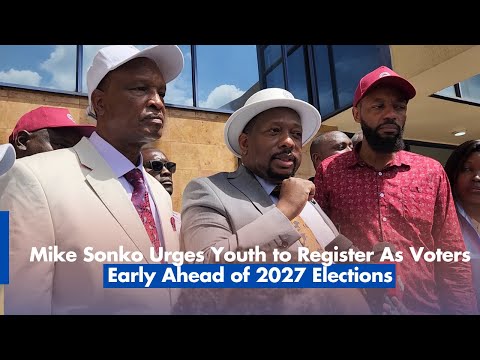
A few days ago, former Nairobi Governor Mike Sonko was widely reported by the media for launching his political party. He was shown receiving the certificate from the Registrar of Political Parties, accompanied by individuals captioned as party officials.
Sonko’s name is not among the officials, but the party is reportedly his. Sonko and others have impeachment issues, and the law says something about such involvement in politics. This was not considered.
Citizens need such basic information from news processors. Half stories by the media are not helping much as expected. The David Makali discussion on issues around the Labour Party of Kenya, and related political dealings and coalition formations, is beyond what average Kenyans can engage in.
However, we still need information to participate meaningfully and vote for our preferred leaders.
The reality is that Kenya’s politics and governance system is brutal, cunning, complex and demanding.
The faint-hearted can barely survive. It has no respect for long-term planning and can be deeply unsettling.
It survives on quick fixes and revolves around a few permanent personalities and government operatives.
Political parties play a fundamental role in democracy and governance, and we must pressure them to strengthen their structures and serve the interests of their members and the nation.
Media and related groups, together with political parties, must disclose enough information to enable citizens, the media and civil society to understand their operations. For this to happen—especially ahead of the 2027 General Election—it is imperative that stakeholders monitor, document and point out gaps, including requesting information on political parties that has implications for Kenya’s democratization process.
Implementation of the Elections Campaign Financing Act will help strengthen accountability and push political parties to develop clear policies, strategies and ideologies that allow citizens to make informed decisions.
Kenya’s political system, just like many others globally, remains a major source of tension and confusion in electoral processes. In-depth and nuanced information is critical if politics is to serve Kenyans.
The same people who have dominated Kenya’s political and economic systems remain leading forces in that sector. Having benefited from a skewed system that keeps them in control, they rarely allow others to join the club.
They have money, violent tools, bribery strategies, connections and impunity that help them sustain influence in the country’s politics.
Many political parties are liberal or socialism-oriented. Given the poverty levels in the country, they promise free social services in their manifestos—funded by heavy taxation or external support.
These free-service promises appear populist, but parties rarely explain how they will be financed in a country where corruption, tax evasion and public wastage are rampant. Kenya’s political culture—dominated by capitalism, patronage, tribalism and now devolved governance—continues to mirror national-level problems.
The legal regime has attempted to introduce structures that instill discipline among politicians so as to bring sanity to the political and economic spheres.
Though big in name, many political parties operate like personal fiefdoms of their founding politicians. Many remain dormant between elections, only resurfacing during election seasons or when seeking funds under the Political Parties Act.
Few abide by the law requiring proactive publication of information on party operations, membership, expenditures and sources of funds.
There is a lot of information under the Election Campaign Financing Act 2013 and the Political Parties Act 2011 that citizens need to understand for meaningful participation. Citizens, the media and civil society must take up the mantle and oversee political parties as public—not private—entities.
As demand for accountability grows, access to information laws are becoming increasingly critical, especially regarding campaign financing.
The Election Campaign Financing Act 2013—which sets limits on campaign funds, regulates contributions, requires campaign finance committees and mandates accounting—needs to be operationalised.
There is a need for extensive public information on IEBC guidelines on candidate selection, donation and spending limits, bookkeeping and disclosure requirements, and enforcement provisions. Adhering to these rules would help bring order to electoral processes and support free, fair, transparent and acceptable elections.
The IEBC regulations stipulate that governor, women representative and senator candidates will be limited to spending between Sh21.9 million and Sh117.3 million, depending on the size and population of the counties. Campaign spending in Turkana is capped at about Sh123 million, followed by Marsabit and Nairobi at Sh114 million and Sh117 million, respectively. Lamu is the lowest at Sh21 million.
There are desirable lessons Kenyans should borrow from. We need to push political parties to help achieve the economic and social goals outlined in their manifestos. These goals are tied to political processes, and the quality of leadership is crucial.
We need leadership from across the country to openly and honestly lead a national conversation. The sobriety and discipline required for such an undertaking remain lacking in our political system.
![[PHOTOS] The new Ngong –Naivasha Road viaduct](https://cdn.radioafrica.digital/image/2026/06/64d4f771-4432-4aee-ba3c-2f304c4436ec.jpg)



![[PHOTOS] 'Mr Speaker Sir' Gen Z protester in court](https://cdn.radioafrica.digital/image/2026/06/b3e62d8e-25c3-4780-90f9-4eb48b1ce8a7.jpg)