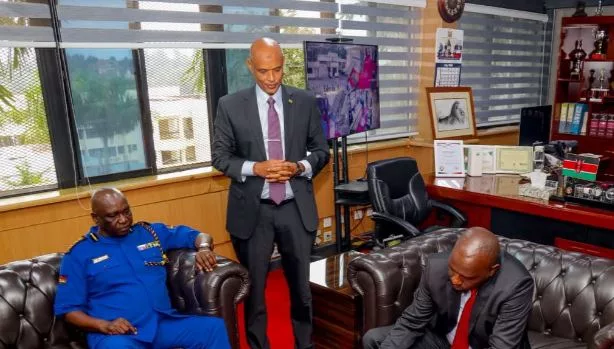
State Department for Children Services PS Carren Ageng’o / HANDOUT
Kenya is strengthening its commitment to protecting Orphans and Vulnerable Children (OVC) through expanded social protection programmes, enhanced family- and community-based care, and improved coordination across government and development partners.
This renewed focus comes at a time when millions of children worldwide face heightened risks from poverty, conflict, disease, displacement and climate shocks.
Globally, an estimated 140–153 million children have lost at least one parent, while HIV/AIDS alone accounts for 13.8 million orphans three-quarters of them in sub-Saharan Africa.
Humanitarian crises continue to expose children to separation, early marriage, child labour and exploitation. Kenya faces the same realities. Data from the Kenya National Bureau of Statistics shows that the country has more than 3.6 million OVC.
For many years, institutional care was viewed as the easiest solution, leading to the establishment of more than 900 Charitable Children’s Institutions (CCIs) that today house about 45,000 children, despite strong evidence that children thrive best in safe, nurturing family environments.
The country also hosts nearly one million refugees in Dadaab and Kakuma, with children accounting for over two-thirds of the population. These dynamics highlight the urgent need to priorities prevention, strengthen families and accelerate care reform.
The risks facing OVC are interconnected, often resulting in poor education outcomes, malnutrition, poor health, psychosocial distress and long-term economic marginalization. Kenya has therefore aligned its approach with global evidence-based models that focus on holistic, integrated child protection and family support.
These include cash transfers, family- and community-based care, education support, psychosocial services, integrated community service delivery, and strengthened legal identity and child protection systems.
One of the most transformative interventions remains the Cash Transfer for Orphans and Vulnerable Children (CT-OVC) Programme. Established in 2006 as a small UNICEF-supported pilot in just four districts, the programme has grown into a nationally funded safety net reaching over 441,000 households in 2024, supported by Sh8.9 billion in government financing.
Anchored in Article 43 of the Constitution, the programme provides a predictable Sh2,000 monthly stipend that has improved food security, enhanced school attendance, boosted clinic visits for children under five, and increased birth registration. Digitized payments through e-Citizen and household registration through the Enhanced Single Registry have improved transparency and accountability, ensuring that vulnerable families receive assistance efficiently.
The impact of the CT-OVC Programme goes far beyond immediate welfare. It directly contributes to progress on the Sustainable Development Goals, including ending poverty and hunger, improving health and education, advancing gender equality, reducing inequalities and strengthening institutions.
By stabilizing low-income households, the programme aligns strongly with the Government’s Bottom-Up Economic Transformation Agenda (BETA). Cash transfers increase household purchasing power, support local markets and strengthen human capital laying the foundation for inclusive, long-term economic growth. As most beneficiaries are women, the programme also enhances female agency and decision-making within households.
Alongside the CT-OVC Programme, the Nutrition Improvement through Cash and Health Education (NICHE) Programme is playing a critical role in improving early childhood development outcomes. Implemented under the Kenya Social and Economic Inclusion Programme (KSEIP), NICHE targets pregnant and lactating women and children under two—delivering cash top-ups alongside nutrition education, hygiene promotion, positive parenting skills and linkages to health and social services.
Initially launched in Kitui, the programme now covers high-vulnerability counties including Turkana, West Pokot, Kilifi, Tana River, Samburu, Marsabit, Garissa, Wajir, Mandera and Isiolo. Early evidence shows significant improvements in exclusive breastfeeding, dietary diversity, maternal health practices and reductions in childhood illness. This is particularly important because the first 1,000 days of a child’s life are critical in shaping long-term wellbeing, learning ability and productivity.
As Kenya expands and modernizes its social protection system, strong partnerships remain essential. The State Department for Children Services calls for deeper collaboration with development partners, county governments, civil society organizations and communities to ensure that vulnerable children grow up in safe, nurturing environments. Protecting OVC is not just a moral obligation it is a strategic investment in the country’s stability, prosperity and future human capital.
With sustained investment, effective coordination and an unwavering commitment to family-based care, Kenya is building a nation where every child regardless of circumstance has the opportunity to survive, thrive and succeed.
By CPA Carren Ageng’o, Principal Secretary, State Department for Children Services.