


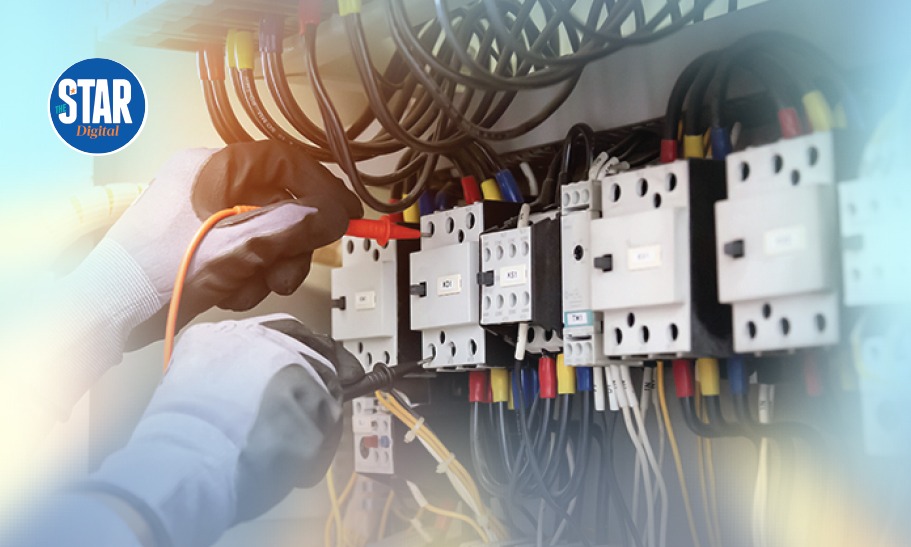
 Electricity installation.
The difference between safety and disaster often comes down to one thing: experience, the quality, and the professionalism of the electrician involved in delivering the service. A fully qualified and experienced electrician brings technical knowledge, safety awareness, and precision to every job.
Work done by an unqualified or inexperienced
electrician may look complete but can hide serious dangers, which expose a
client to fire risk, electrocution, property damage, and potential legal
issues. What seems like a small saving on labour can turn into a costly and
dangerous dilemma.
Here are some of the things that should be taken into
consideration while delivering electrical services to a client, whether for installations or maintenance.
Qualification and competence: Ensure the team fully
understands electrical codes, standards, and local regulations such as the NEC.
Secondly, make sure the team is made up of fully skilled electricians to reduce
the risk of errors, accidents, and system failure. Proper training equals safe
and elegant workmanship.
Understanding the client or industrial requirements: Assess
the power demand, load type, and operating conditions. Identify sensitive
equipment that requires stable power and also take into consideration future
expansion, backup power, and energy efficiency.
Proper planning and design: Before installation, create a
detailed plan showing circuit layouts, load distribution, wire sizing, route
paths, protective devices, isolation, and emergency switches. A good design
ensures efficient performance, easy maintenance, and compliance with safety
codes.
Proper grounding and bonding: Being one of the most critical safety measures, it should be properly done while considering
soil type and environmental conditions, type of electrical system, type of
facility and area, grounding design and placement, bonding conductors,
lightning and surge protection, equipment and structural considerations,
testing and verification, and compliance with standards.
Use of quality materials: Use standard-approved cables,
switches, and breakers. Ensure the components match voltage and current ratings
for the intended application. Quality materials ensure safe and long-lasting
installations.
Safety measures and protective devices: In every electrical
system, install and test protection such as circuit breakers, fuses, residual
current devices (RCDs), surge protectors, and lockout systems (lockout systems
ensure circuits are not energised accidentally during maintenance).
Routine inspection and maintenance: After installation,
perform regular inspections to detect faults early. While doing inspection and
maintenance, check for loose connections, overheating, corrosion, insulation
damage, test breakers, RCDs, protective relays, ensure proper labelling of
circuits, and in solar panels, clean the panels. Proper maintenance prevents
costly downtime and accidents.
Documentation and reporting: Proper documentation of all
work done should be completed and kept. The documents should include all work
done, starting from the diagram design, test results, and maintenance logs.
This documentation helps future technicians understand the system and maintain
safety continuity.
Client education and awareness: The client should be well
informed on how to safely operate the system, what signs indicate a fault, and
emergency procedures.
Conclusion: Safe electrical work is not just about
connecting wires — it’s about protecting lives and property. Proper training,
planning, quality materials, and regular maintenance are the pillars of
electrical safety. Whether for a home or an institution, every task should be
guided by professionalism, precision, and a commitment to safety. In
electricity, prevention is always better than reaction.