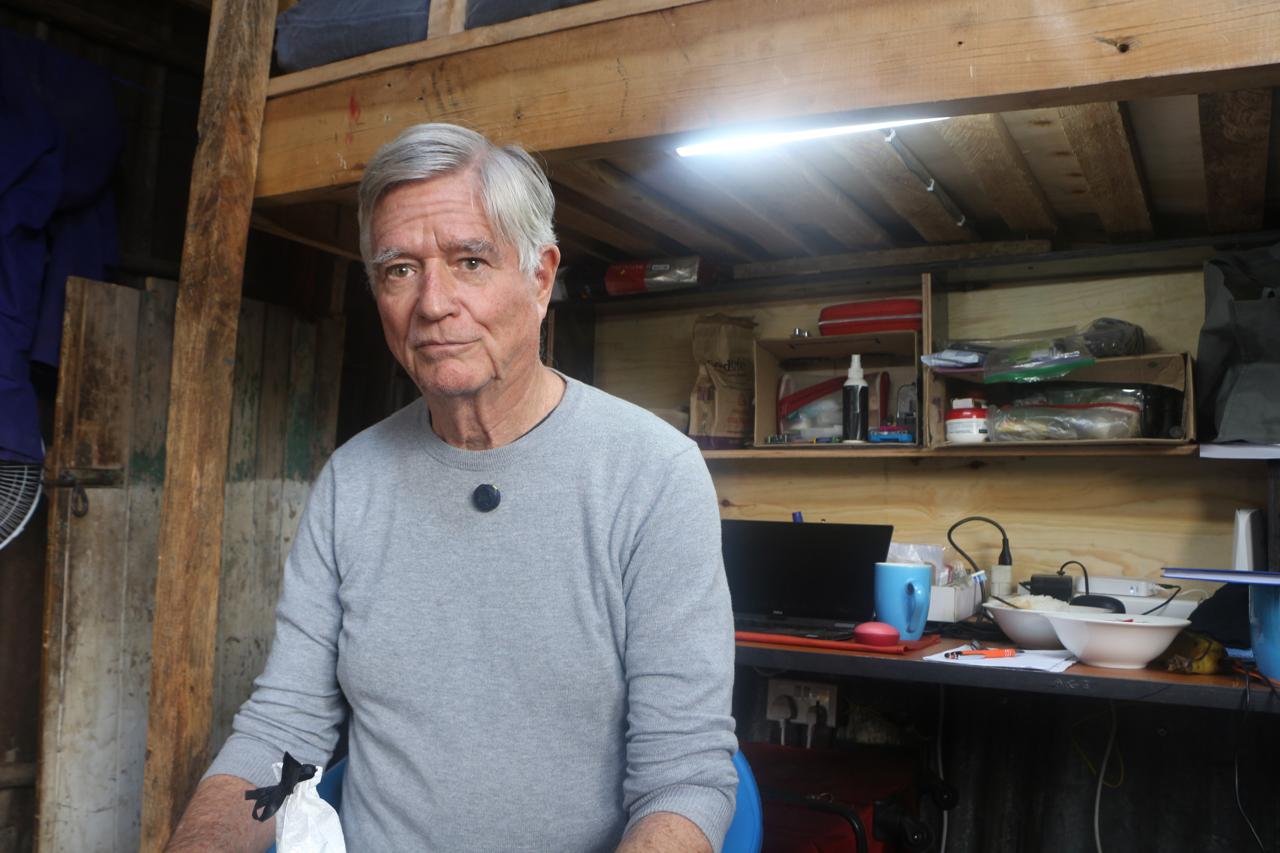
 Kijiji Solutions founder Richard Haukom /HANDOUT
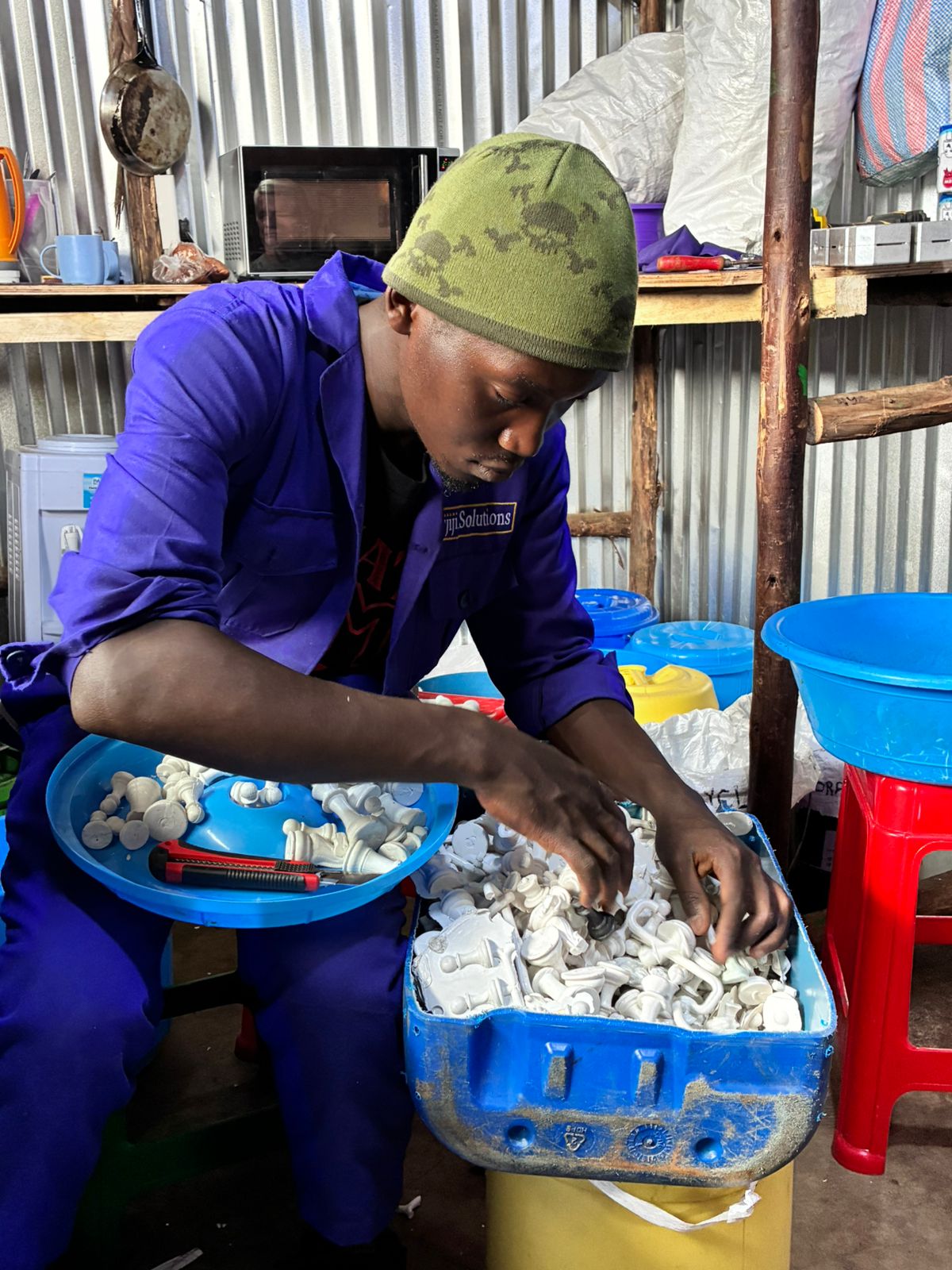
In a small room in Gatwikira, Kibera, three artisans in blue overalls sit carefully shaping tiny black-and-white chess pieces. One smooths the edge of a bishop.
Another carefully molds a knight. Nearby, queens, kings, rooks, and pawns lie neatly arranged in rows. Once complete, the pieces are packed into small gunny bags alongside chess boards stitched from the same material in a familiar green-and-white pattern.
These chess sets have travelled far beyond Kibera. More than 1,000 have already been distributed to schools, prisons, youth groups, informal chess clubs, and the Dadaab Refugee Camp in northern Kenya. They are manufactured in Kibera by Kijiji Solutions and sponsored by The Gift of Chess, a New York-based charity using the game to build communities around the world.
Yet the story behind these chess pieces begins with something far less inspiring: garbage.
Across Kibera, youth groups collect and sort plastic waste through community-based organizations working with Kijiji Solutions. Among them is Isaya Ooko, one of Kijiji’s earliest employees and chairman of Youth with Wings, a local waste management company. Kijiji supports such groups by helping them strengthen their operations, expand their networks, and access vital resources.
The plastic used to make the chess pieces is polypropylene, one of the most common forms of waste in Kenya. It is often found in discarded plastic bags and food containers scattered across informal settlements. Once collected and sorted, the waste is sent to a recycling business in Mathare, where it is processed into polypropylene pellets.
Back in Kibera, the pellets are fed into an extruder machine, which melts them into a thick paste. The material is then poured into molds shaped like chess pieces, cooled in a water bath, and later removed for hand-trimming before packaging.
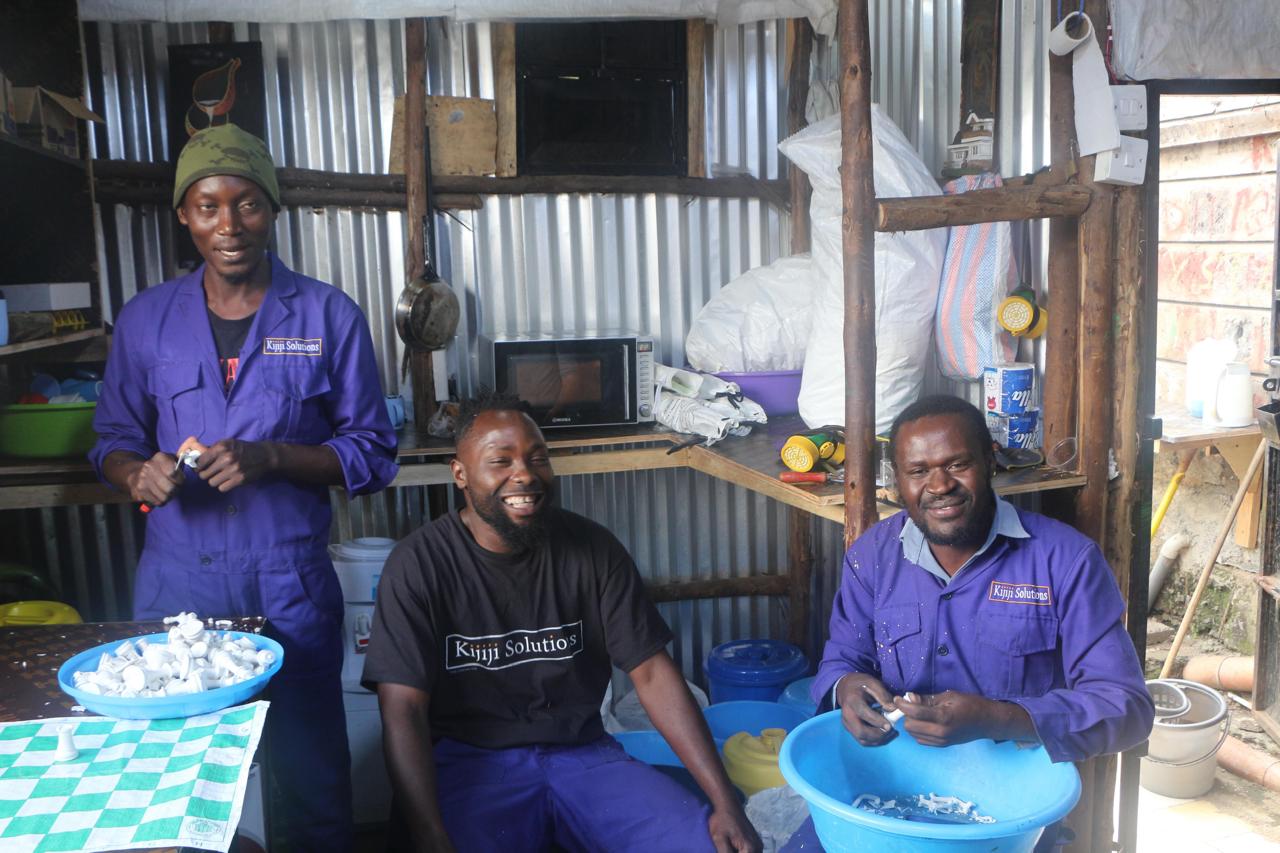 Boaz Mutange, Elisha Osure and Isaya Ooko of Kijii Solutions /HANDOUT
Kijiji Solutions was founded by Richard Haukom, who arrived in Nairobi in 2022 with experience in small-scale manufacturing and business development. His goal was straightforward: to find practical ways to tackle the growing waste challenge in informal settlements.
Working from a modest room in Gatwikira, Richard began collaborating with youth groups and community organizations already engaged in waste collection. Through these networks, he met Ken Kaplan, who was working with schools in Kibera and teaching students how to play chess. One of these was Centre of Hope School, which had already begun producing students competing in the Kenya Chess League, but lacked enough chess sets for regular practice.
In New York, Russ Makofsky, an entrepreneur, had spent more than two decades building chess programmes in public schools across New York City. He founded The Gift of Chess in 2020 during the COVID-19 pandemic, distributing free chess sets to help children reconnect during a time of isolation. The initiative quickly expanded beyond the United States and eventually reached cities across Africa.
Kenya, however, presented a logistical challenge until Russel connected with his friend Ken Kaplan to bridge the gap.
Kijiji offered the answer.
Drawing on Richard’s experience in manufacturing and recycling, the team adapted a locally purchased machine to produce chess pieces from recycled plastic. The first molds were sourced from abroad, although some are now being produced locally by students at an international school in Nairobi under the guidance of their teachers.
Today, Richard works with a five-person team in Gatwikira. Isaya Ooko, who studied environmental science at the University of Nairobi, oversees parts of the recycling process. Elisha Osure contributes engineering expertise, while Boaz Mutange and Joseph Ochieng manage fittings and machinery. Caroline Adhiambo sews the jute bags that hold each complete chess set.
Together, the team produces more than 1,000 chess sets every month from their modest workshop in Kibera.
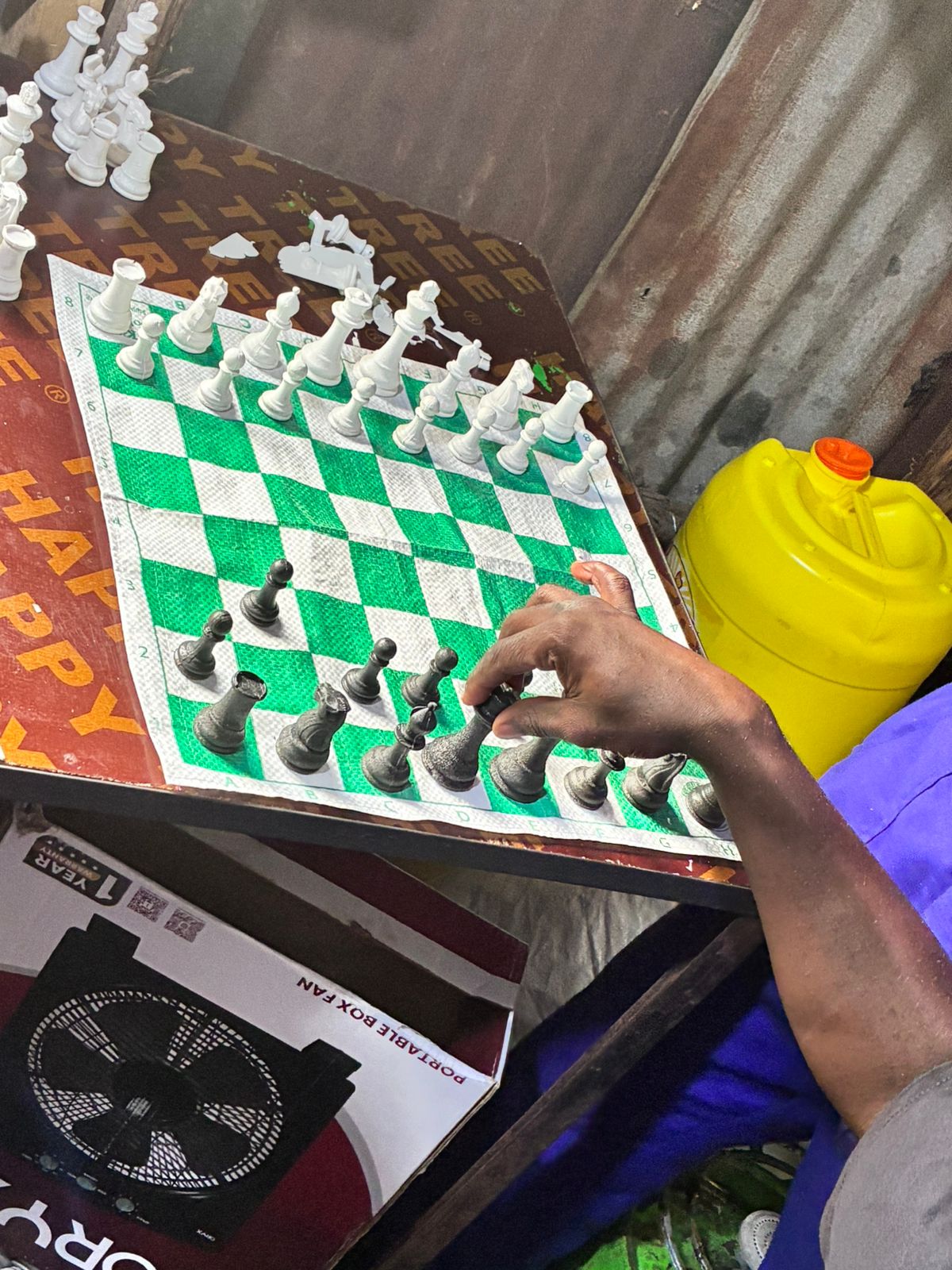
But the broader ambition stretches far beyond manufacturing. Through small clubs in schools and informal settlements, The Gift of Chess hopes to create spaces where children across Africa can gather, compete, and build community through the game. The organization says it has distributed more than 50,000 sets across over 40 African countries, and more than 200,000 globally across 70 countries.
In Gatwikira, however, the impact begins with something simple but powerful: discarded plastic transformed by hand into bishops, knights, and pawns that may one day land on a classroom floor hundreds of miles away. It is a quiet reminder that even waste, when placed in the right hands, can be reshaped into opportunity.
![[PHOTOS] The new Ngong –Naivasha Road viaduct](https://cdn.radioafrica.digital/image/2026/06/64d4f771-4432-4aee-ba3c-2f304c4436ec.jpg)







![[PHOTOS] 'Mr Speaker Sir' Gen Z protester in court](https://cdn.radioafrica.digital/image/2026/06/b3e62d8e-25c3-4780-90f9-4eb48b1ce8a7.jpg)