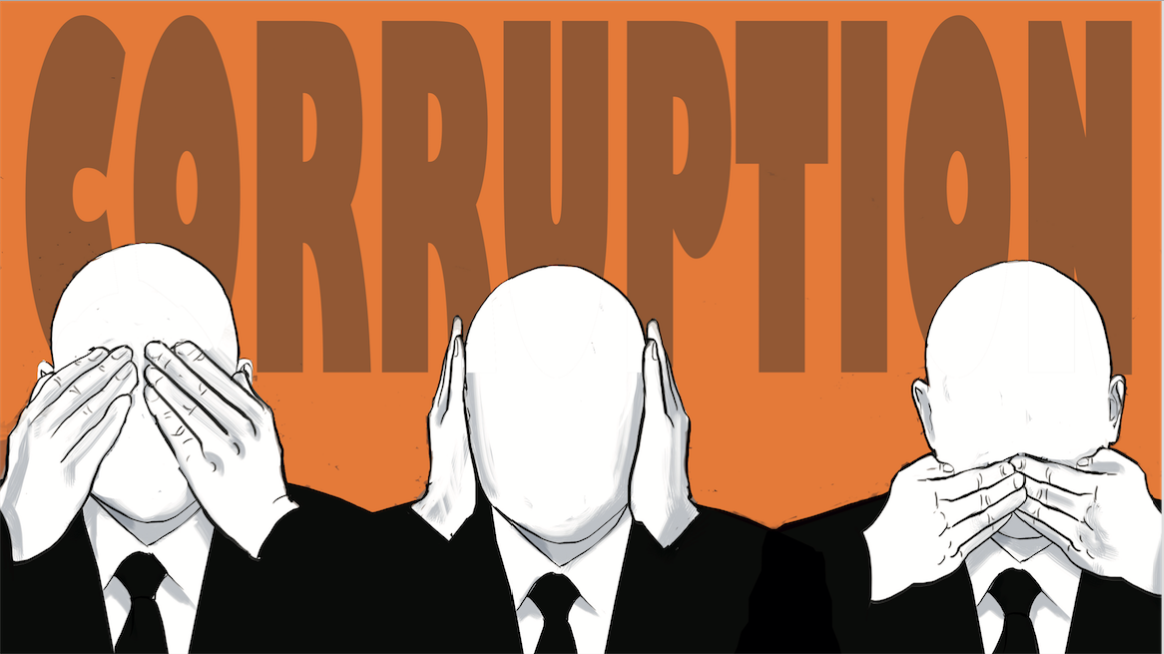
The Kenya National Gender and Corruption Survey 2025 is not a report. It is a mirror held up to a society that has quietly surrendered its moral spine.
Released this April by the Ethics and Anti-Corruption Commission in partnership with UNODC, KNBS, NGEC and Transparency International Kenya, the document does not whisper uncomfortable truths. It screams them: corruption has metastasised from vice to vernacular. Bribery is no longer the exception; it is the operating system of daily Kenyan life.
Consider
the numbers, cold and damning. The national average bribe has jumped 38 per cent to Sh6,724. Eighty-four per cent of these “facilitation fees” are paid before
any service is delivered, because that is simply “how things work”.
Police, land registries, NTSA, civil registration: name the gate and the toll is already priced in. Job seekers in the public sector fork out an average of Sh85,000 just to be considered. Magistrates demand Sh164,000 on average.
And then there is the particularly vile strain of sextortion where 8.4 per cent of Kenyans, women disproportionately, face demands for sexual favours, often multiple times. The survey’s focus groups said it plainly: corruption has “seeped into every corner of governance” and become “a way of life”.
This is not institutional failure. This is ethical collapse at the nucleus level of society. Kenyans have perfected the art of compartmentalising conscience. We rail against “the corrupt” in WhatsApp groups, yet queue to pay the askari so our matatu can jump the queue.
We lecture our children about honesty, then bribe the school clerk for a placement, or a Telegram group admin for exam leaks. We pretend ethics lives in the glass tower of the EACC, while treating the commission as an optional referee we never call.
The
data is merciless: 98.6 per cent of bribe-payers never reported the incident to
any institution. Only a microscopic fraction even thought of the EACC.
Forty-five per cent say they would not report corruption in future because “it’s
useless” or, more damningly, “it’s acceptable practice”.
This is the true scandal. Not that a few big fish loot billions, but that millions of ordinary Kenyans have internalised graft as the cost of breathing. We have outsourced our morality to an institution and then wondered why it feels absent from our homes, offices, churches and classrooms.
Greed is cited as the top driver, yet 78 per cent claim they “would never engage in corruption under any circumstances”. The gap between what we profess and how we behave is not hypocrisy; it is national self-deception on an industrial scale.
The organisations that produced this survey—EACC, UNODC, KNBS, NGEC and TI Kenya—now have a moral obligation that goes far beyond publishing another damning document. They must immediately launch a one-year, high-octane national integrity campaign that drags ethics out of the institutional silo and plants it in the soil of everyday life. No more polite seminars. This must be raw, relentless and unapologetic.
Flood the timelines with influencers who speak Gen Z and Gen Alpha languages, including slogans that mock the bribe culture instead of sanitising it: “84 per cent pay before service. The other 16 per cent still have spines.”
Partner with musicians, comedians, pastors and market traders who reach where press releases never will. Push policy hard: digital payments that starve the cash-under-table beast, iron-clad whistle-blower protections and gender-sensitive reporting that actually works for the women bearing the brunt of sextortion.
But the real battlefield is the classroom. From Grade 1 to university, ethics must stop being an optional values lesson and become a core subject, taught, examined and lived. The EACC already has the skeleton of Integrity Clubs and a partnership with the Kenya Institute of Curriculum Development. Supercharge it. Make every child understand that integrity is not what you do when the EACC is watching; it is who you are when no one is.
Cynics will sneer that another campaign is just more noise. They miss the point. This is not about awareness. It is about cultural surgery. The survey proves the patient is bleeding out. If these five organisations, fresh from their collaborative triumph, fail to seize this moment, they become complicit in the very rot they documented.
Kenya does not lack laws, commissions or reports. What it lacks is a critical mass of citizens who treat ethics as a non-negotiable daily practice rather than an EACC problem.
The data is in. The partners who unearthed it now have 12 months to prove they can do more than diagnose terminal illness. They must lead the surgery, or watch the patient die on the table while we all pretend the stench is normal.
The
choice is no longer abstract. It is existential. Ethics as a way of life, or
corruption as our epitaph. There is no third option.
Social impact adviser, a social consciousness theorist, trainer and speaker, an agronomist consultant for golf courses and sportsfields, and author of The Gigantomachy of Samaismela and The Trouble with Kenya: McKenzian Blueprint


![[PHOTOS] The new Ngong –Naivasha Road viaduct](https://cdn.radioafrica.digital/image/2026/06/64d4f771-4432-4aee-ba3c-2f304c4436ec.jpg)









![[PHOTOS] 'Mr Speaker Sir' Gen Z protester in court](https://cdn.radioafrica.digital/image/2026/06/b3e62d8e-25c3-4780-90f9-4eb48b1ce8a7.jpg)