


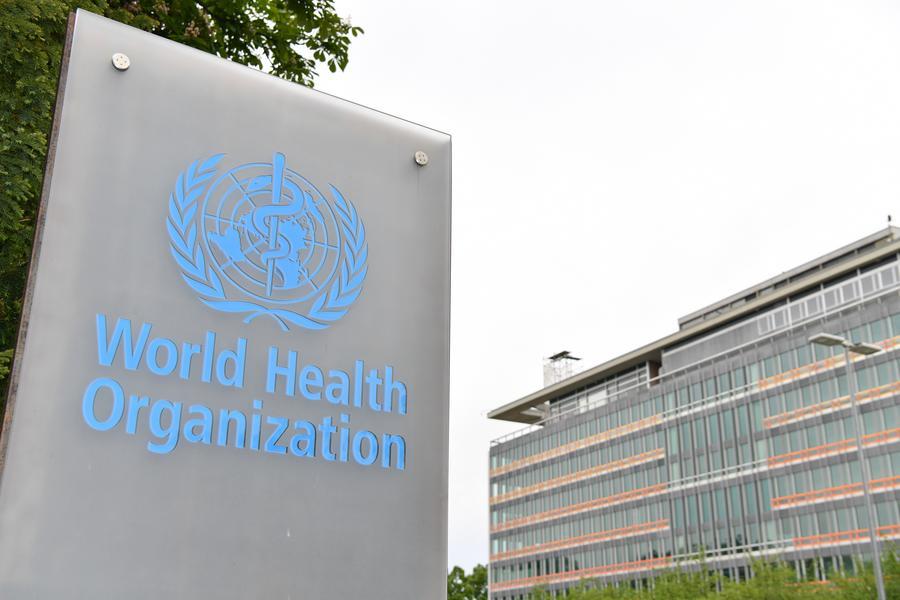
 This photo, taken on May 21, 2023 shows a logo of the World Health Organization (WHO) with the WHO headquarters in the background in Geneva, Switzerland. (Xinhua/Lian Yi)
A World Health Organisation (WHO) body on Monday declined a bid by Taiwan to participate in its annual health assembly as an observer. The development marked yet another diplomatic setback for Taipei amid renewed global focus on the Taiwan question following the recent China-US summit in Beijing.
The decision by the World Health Assembly (WHA), the highest decision-making body of the WHO, cited adherence to the One China principle. Jia Guide, China’s permanent representative and ambassador to the United Nations Office at Geneva and other international organisations in Switzerland, communicated the decision.
Chinese media reports quoted Jia saying that the “issue regarding the Taiwan region's participation in the WHA must be handled in accordance with the One China principle.”
UN General Assembly Resolution 2758 and WHA Resolution 25.1 state that there is only one China and that Taiwan is an inalienable part of China’s territory. The resolutions recognise the Government of the People’s Republic of China as the sole legal government representing the whole of China.
Taiwan had sought inclusion in the assembly agenda as an observer, a push it has made repeatedly over the past nine years. It was the 10th consecutive year that the WHA rejected a Taiwan-related proposal.
Kenya subscribes to the One China principle, a position also backed by at least 52 African countries, reflecting Beijing’s strong diplomatic influence across the continent.
The Taiwan question remains at the core of China’s foreign policy, and countries seen to support Taiwanese independence often face diplomatic or economic consequences from Beijing.
The latest rejection also came against the backdrop of the recent summit between Xi Jinping and Donald Trump in Beijing, where Taiwan emerged as one of the most sensitive issues discussed.
Following the talks, Chinese Foreign Minister Wang Yi said Beijing came away convinced that Washington “understands China’s position” on Taiwan and does not support formal Taiwanese independence.
While the summit produced no major policy shift from the United States, analysts say the tone of the engagement suggested both sides are seeking to manage tensions around Taiwan. They point to a bid to prevent the issue from triggering a wider confrontation between the world’s two largest powers.
For China, international organisations such as the WHO remain critical diplomatic battlegrounds where Beijing continues to insist that Taiwan cannot participate as a sovereign entity under the One China framework.
The latest WHA outcome is therefore likely to be viewed in Beijing as another affirmation of growing international acceptance of its Taiwan position, particularly among developing nations, including many in Africa.
![[PHOTOS] The new Ngong –Naivasha Road viaduct](https://cdn.radioafrica.digital/image/2026/06/64d4f771-4432-4aee-ba3c-2f304c4436ec.jpg)










![[PHOTOS] 'Mr Speaker Sir' Gen Z protester in court](https://cdn.radioafrica.digital/image/2026/06/b3e62d8e-25c3-4780-90f9-4eb48b1ce8a7.jpg)
