

Charred military vehicles
lie twisted along the roadside. Buildings are scarred by bullet impacts.
Abandoned military positions and shards of metal litter the asphalt.
Together, they bear witness to the intensity of clashes between the M23
and the Armed Forces of the DRC (FARDC) along this vital artery
connecting the northern and southern parts of South Kivu province. "WE FLEE WITH WHATEVER WE COULD CARRY" Since
Dec. 2, South Kivu province has been engulfed in fighting on multiple
fronts. The M23 said Wednesday that it had seized control of Uvira city,
triggering a wave of internal displacement across the province. Around
500,000 people have been "on the move" since Dec. 2, according to the
United Nations Office for the Coordination of Humanitarian Affairs. DRC
authorities said more than 400 people have been killed since the new
round of fighting began. At the same time, Burundi announced the closure
of its border posts with the DRC, all located in South Kivu province, a
move that has further deepened an already severe humanitarian crisis. From
Kamanyola, a town about 50 kilometers south of Bukavu, South Kivu's
capital city, the road offers an early glimpse of what lies ahead. Along
its edges, military vehicles remain where they were left, burned out,
torn open and abandoned. In some stretches, travel has become hazardous,
with unexploded ordnance still visible near the roadway. The
signs of conflict accumulate with every passing kilometer: twisted
metal, makeshift shelters, and civilian and military vehicles riddled
with shrapnel or deserted in haste, revealing a population caught off
guard as the territory descended into chaos within hours. In
Luvungi, a resident recalled the first moments of the fighting as he
returned home. "The bombardments started early Tuesday morning. We fled
with whatever we could carry," he said anonymously. Now back with his
family, he believes the situation has eased somewhat. But with the
Burundian border still closed, returning home has sometimes become the
only remaining option. From Luvungi to Luberizi, and through
several villages lining the road toward Uvira, scenes of war scars
repeat themselves. Life remains largely at a standstill despite the
cautious return of some displaced residents, who move carefully, as if
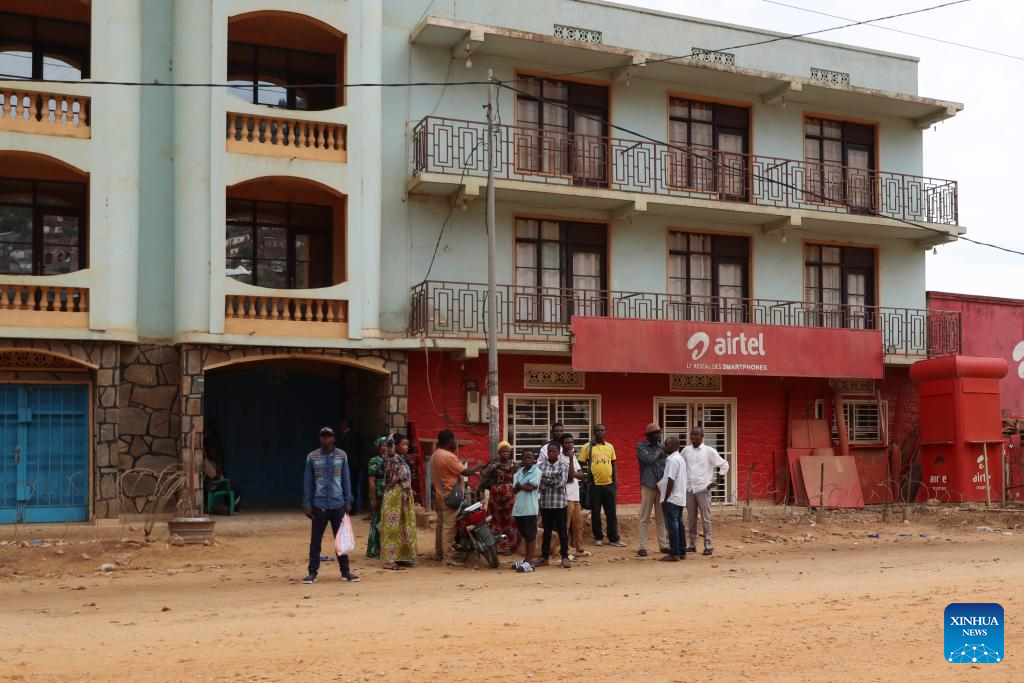
hoping that silence might take hold. FRAGILE CALM UNDER WATCH At
the entrance to Uvira, a fragile calm appears to have settled after
days of heightened tension. Daily activity remains severely disrupted,
but the city is not entirely frozen, as residents slowly reemerge,
stepping cautiously out of their homes as if testing the air. A handful
of shops have reopened and markets are tentatively reorganizing. This
hesitant return is unfolding under a heavy military presence, with M23
fighters deployed around key sites across the city and stationed at
major intersections. Uvira is functioning again, but under close watch,
several residents told Xinhua. Uvira, South Kivu's second-largest
city, served as the provisional administrative center after the
provincial capital Bukavu fell to the M23 in February. In several
neighborhoods of Uvira and in nearby villages, the bodies of
unidentified individuals have been recovered in recent days, according
to the International Committee of the Red Cross, which is overseeing the
operations. The precise circumstances surrounding the deaths remain
difficult to establish, amid restricted access to certain areas and
limited verifiable information on the ground. Speaking to Xinhua
in Uvira, M23 spokesperson Lawrence Kanyuka said investigations would be
conducted to determine the exact causes of the deaths. The
fighting did not directly pit M23 forces against FARDC inside the city
itself, he said, adding that most Congolese troops had already withdrawn
from Uvira by the time rebel fighters arrived. At the regional level, the situation remains highly volatile. Addressing
the United Nations Security Council on Friday, Jean-Pierre Lacroix, UN
under-secretary-general for peace operations, said the DRC continues to
face a deep security and humanitarian crisis, with civilians bearing the
brunt of the violence. He warned that the latest M23 offensive in
South Kivu had "revived the specter of a regional conflagration with
incalculable consequences." Recent developments posed "a serious risk of
fragmentation of the DRC, particularly in its eastern part," he said,
adding that "the conflict is becoming increasingly regionalized." Lacroix
said the direct or indirect involvement of forces and armed groups from
neighboring countries, combined with cross-border movements of
displaced civilians and fighters, significantly heightened "the risk of
regional escalation." Such a trajectory, he noted, threatens not only eastern DRC but the entire Great Lakes region. Between
Dec. 5 and Dec. 9, about 38,000 asylum seekers from eastern DRC crossed
into Burundi to escape the violence, Burundi's National Radio and
Television reported on Wednesday. According to the DRC government,
the presence of hostile forces in Uvira prompted the closure of the
border with Burundi, cutting off a vital supply corridor for food, fuel
and basic goods, and raising fears of shortages. On Friday,
Kinshasa said it would start discussions with Burundi on the possible
establishment of a temporary humanitarian corridor.