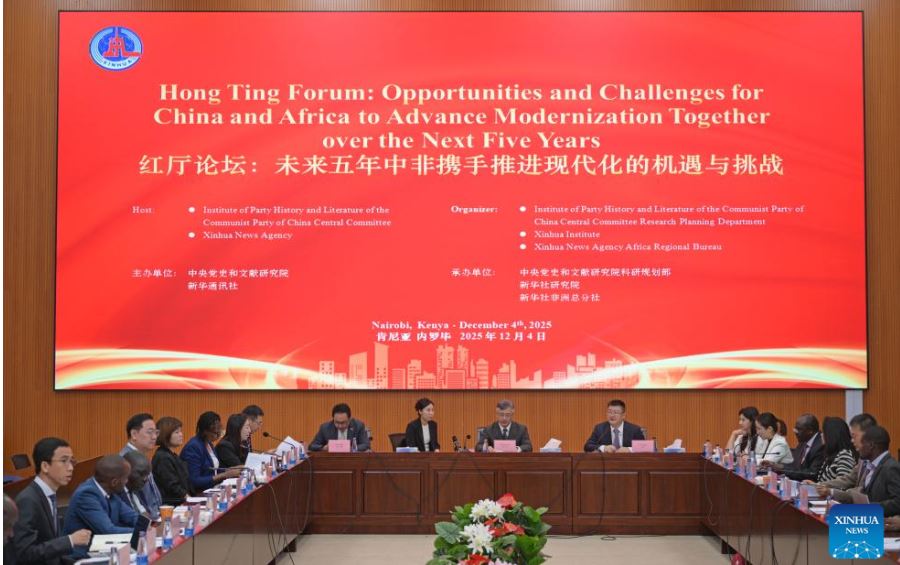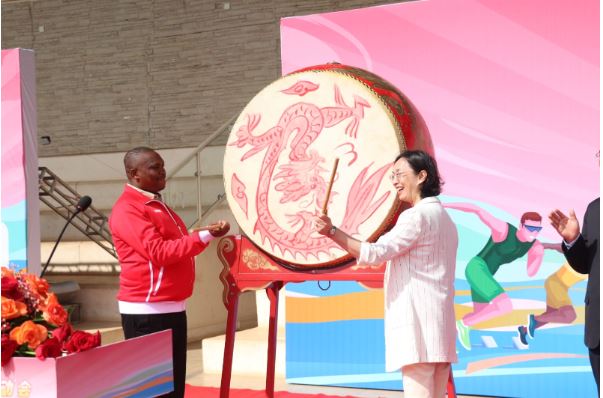
I have just returned from a three-week visit to China, where I took part in an intensive seminar on the Exploration and Practices of Chinese Modernization for Developing Countries. Those weeks gave me far more than theoretical lessons—they offered direct exposure to the cultural roots, historical depth, and practical choices that continue to shape China’s transformation. I also saw lessons that Kenya and many African nations can adapt as we reflect on our own road to modernization.
One message stayed with me throughout the trip is that modernization is never just a technical exercise. It grows from the values, history, and inner strength of a civilization. It is precisely in the exchange between Chinese and African civilizations that new possibilities for development can emerge.
I have drawn several reflections from my observations in China and from the African experience which illustrate why mutual learning between our civilizations is essential for shaping our respective paths to modernity.
First, civilizations modernize best when development remains connected to their people.
China’s transformation draws heavily on long-held principles—collective effort,
social harmony, and a steady commitment to problem-solving. These values guide
everything from rural revitalization to urban planning. Africa also carries a
vast reservoir of cultural wisdom. Ideas such as Ubuntu, communal
responsibility, and respect for elders provide a social foundation that gives
development meaning beyond statistics. When we modernize in ways that respect these
cultural anchors, progress becomes more stable and more humane.
Second, mutual learning flourishes when societies exchange their knowledge systems.
China’s ability to rise has been strengthened by a willingness to learn—from
its own long history as well as from global experiences. Africa, too, is home
to rich knowledge traditions: indigenous environmental practices,
community-based dispute resolution, and deep artistic and spiritual heritage.
When we create more platforms for African and Chinese thinkers, researchers,
artists, and journalists to learn from one another, we enrich both sides. No
civilization modernizes alone.
Third, modernization gains direction when cultural identity is protected.
A striking feature of China’s development is its ability to maintain
continuity—whether in planning, cultural confidence, or national vision.
African nations are increasingly embracing long-term strategies such as Kenya
Vision 2030 and the African Union’s Agenda 2063. The more we draw strength from
our identities while building strong institutions, the more coherent and
credible our modernization journeys become.
Fourth, innovation is a meeting point where ancient civilizations shape the future together.
China’s advances in digital technology, artificial intelligence, and green
industries reflect not only scientific ability but also a cultural habit of
practical innovation. Africa’s own digital energy—visible in Nairobi’s tech
ecosystem, Lagos’ creative industry, Kigali’s digital infrastructure—shows that
innovation is also part of our contemporary identity. Combining Chinese
technological capacity with African creativity can help both sides build
modernization models that are globally competitive yet culturally grounded.
Fifth, shared civilizational values strengthen South–South cooperation.
During the seminar, I interacted with participants from Asia, Latin America,
and the Middle East. Our discussions revealed something important: China–Africa
cooperation is not driven solely by economics—it is strengthened by shared
experiences, similar aspirations, and comparable historical journeys. More
cultural exchanges, more academic programs, more media partnerships, and more
student interactions will deepen this understanding at the human level.
Sixth, sustainable development succeeds when environmental protection becomes part of cultural life.
China’s idea of “ecological civilization” shows how environmental stewardship
can be linked to national values. Africa, with its indigenous knowledge of
land, water, and biodiversity, is also equipped with cultural approaches to
sustainability. When we combine these perspectives, our cooperation on climate
resilience and green development becomes stronger and clearer.
As the next chapter of China–Africa cooperation unfolds, one lesson stands out: our civilizations—ancient, confident, and diverse—have much to offer one another. China demonstrates that modernization can be achieved without abandoning cultural identity. Africa shows that modernization can be deeply human, community-rooted, and spiritually grounded.
Africa is now at a promising crossroads. We have youthful energy, cultural richness, and a growing sense of confidence in our place in the world. With China as a reliable partner and friend, we can draw inspiration from each other’s civilizations while crafting development paths that reflect our unique histories and future ambitions.
Let us continue to walk this journey of modernization together—learning, sharing, and building pathways that honour who we are, and who we hope to become.
The writer is a journalist and communication consultant