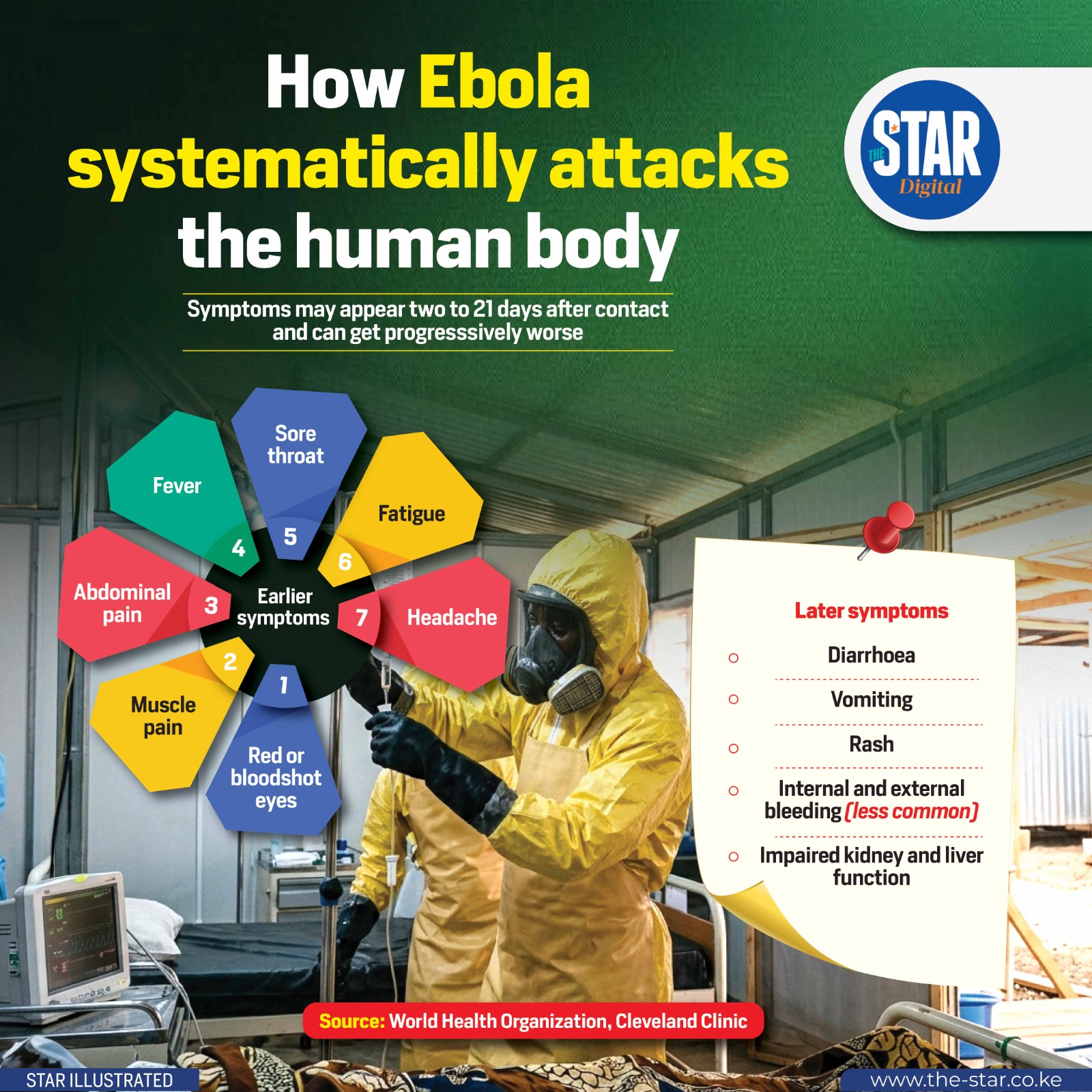
Ebola systematically attacks the human body, with symptoms appearing anywhere from two to 21 days after contact and growing progressively worse over time.
The early stage of the infection is characterised by seven primary symptoms, including red or bloodshot eyes, muscle pain, abdominal pain, fever, a sore throat, fatigue, and headaches.
As the disease develops, later symptoms manifest, presenting severe complications such as diarrhoea, vomiting, and a rash.
The virus can also cause impaired kidney and liver function, alongside internal and external bleeding, which is a less common effect.
These critical medical details are paired with a background photograph of healthcare workers operating in full yellow hazmat protective suits within a clinical environment, emphasising the high-risk nature of managing the illness.

![[PHOTOS] The new Ngong –Naivasha Road viaduct](https://cdn.radioafrica.digital/image/2026/06/64d4f771-4432-4aee-ba3c-2f304c4436ec.jpg)








![[PHOTOS] 'Mr Speaker Sir' Gen Z protester in court](https://cdn.radioafrica.digital/image/2026/06/b3e62d8e-25c3-4780-90f9-4eb48b1ce8a7.jpg)